


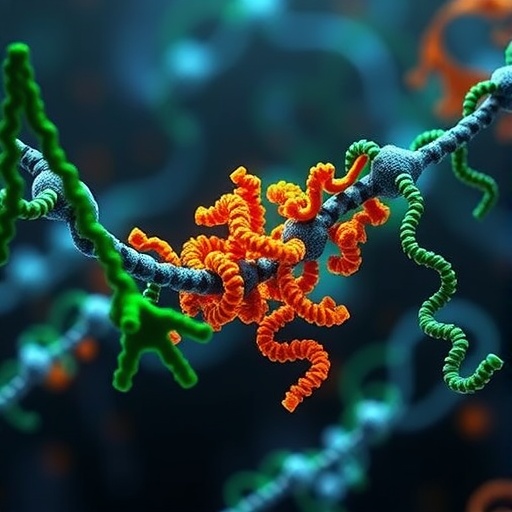
In a groundbreaking study poised to advance the understanding of hepatocellular carcinoma (HCC), researchers Wang, Q., Liao, Z., and Zhang, H. have unraveled the intricate mechanisms behind the ubiquitination of Lamin A, specifically focusing on the role of UBC9 in the regulation of K144 ubiquitination. Their findings, published in the Journal of Translational Medicine, shed light on how these molecular pathways contribute to the pathogenesis of one of the most aggressive forms of liver cancer. As HCC continues to present a formidable challenge in oncology, this study opens new avenues for targeted therapeutic strategies.
Lamin A, a crucial nuclear envelope protein, provides structural support to the nucleus and plays essential roles in gene expression regulation, DNA replication, and cellular signaling. The ubiquitination of Lamin A has emerged as a pivotal post-translational modification that can influence its stability and function. However, the specific consequences of K144 ubiquitination in the context of HCC were poorly understood until this study. The research highlights UBC9 as a vital enzyme that mediates this modification, emphasizing its potential impact on the development of liver tumors.
The team conducted a series of experiments to determine the role of UBC9 in the ubiquitination process of Lamin A. Utilizing both in vitro and in vivo models, they assessed the expression levels of UBC9 alongside the K144 ubiquitination status of Lamin A. The results demonstrated a significant correlation; elevated UBC9 expression led to increased K144 ubiquitination, suggesting a direct regulatory mechanism. This finding is critical, as it establishes a link between UBC9 activity and the pathological modifications of Lamin A in HCC.
Furthermore, the implications of altered Lamin A ubiquitination are profound. The study posits that K144 ubiquitination may affect key biological processes, such as cell cycle regulation, apoptosis, and DNA repair mechanisms. Given that these processes are often dysregulated in cancer, particularly HCC, understanding the role of UBC9-mediated ubiquitination of Lamin A could highlight essential pathways leading to tumorigenesis. The researchers suggest that targeting UBC9 may provide a novel therapeutic intervention point for patients with hepatocellular carcinoma.
The methodology employed by Wang et al. included advanced imaging techniques and quantitative assays, allowing for precise assessment of ubiquitination levels and effective evaluation of cellular responses to various treatments. This rigorous approach strengthens the credibility of their findings, demonstrating a clear mechanistic view of how UBC9 influences Lamin A modifications. Moreover, the integration of computational modeling offers predictive insights into how manipulating UBC9 expression might alter cancer progression dynamics.
While the study yields crucial insights, the authors also acknowledge the complexity of ubiquitin signaling networks. The involvement of additional ubiquitin-conjugating enzymes and ligases presents a challenge for delineating specific pathways. Future research is required to map these interactions comprehensively and to validate the functional consequences of UBC9-mediated K144 ubiquitination in a broader context. The findings laid the groundwork for subsequent investigations into the therapeutic exploitation of these pathways.
In addition to its mechanistic contributions, the study highlights the potential for developing biomarkers based on UBC9 and K144 ubiquitination status. Such biomarkers could enhance diagnostic accuracy and predictive models regarding therapeutic responses in HCC patients. The prospect of personalized treatment strategies based on the molecular profile of tumors signals a paradigm shift in the management of liver cancer.
As hepatocellular carcinoma remains one of the leading causes of cancer-related mortality worldwide, understanding its molecular underpinnings is paramount. The results from this research provide a stepping stone toward identifying new targets for drug development, as well as strategies for early detection and intervention. This work underscores the importance of continued exploration into the molecular machinery governing cancer biology.
The broader implications of this research extend beyond hepatocellular carcinoma. The mechanism of ubiquitination is conserved across various cell types and diseases, suggesting that the findings may resonate within the fields of neurodegeneration, cardiovascular diseases, and other malignancies. Thus, the insights gained from this study may serve as a valuable resource for future investigations into the modulation of ubiquitination pathways across multiple domains of health and disease.
Scientific discourse thrives on the collaborative efforts of researchers who contribute to a more nuanced understanding of complex biological processes. This study is a testament to the power of interdisciplinary research, combining molecular biology, genetics, and bioinformatics to unravel the intricacies of cancer pathology. The implications for patients suffering from liver cancer are profound; novel strategies derived from these findings could transform the landscape of treatment and significantly impact patient outcomes.
In conclusion, the study by Wang, Liao, and Zhang represents a significant leap forward in cancer research, particularly concerning hepatocellular carcinoma. By elucidating the role of UBC9 in the regulation of K144 ubiquitination of Lamin A, these researchers have not only expanded the existing body of knowledge but have also set the stage for future innovations in diagnostic and therapeutic approaches. The intricate dance of cellular processes continues to fascinate scientists, driven by the promise of translating foundational discoveries into tangible benefits for patients worldwide.
The path from basic research to clinical application is often fraught with challenges, yet studies like this one pave the way for promising new strategies. By expounding on the relationship between UBC9, Lamin A, and liver cancer, researchers are forging a new path toward improved patient care, underscoring the necessity for ongoing investment in cancer research and therapeutic development. The journey may be complex, but the potential benefits for patients are indeed worth the pursuit.
In a world where hepatocellular carcinoma poses a significant health risk, the insights gained from this research are essential for steering the future of oncological treatment and enhancing the quality of life for those affected by such devastating diseases. The scientific community eagerly anticipates further developments stemming from this work, with hopes that it will lead to breakthroughs that substantially improve early detection, treatment efficacy, and ultimately, patient survival rates.
With the publication of their findings, the authors encourage further exploration and dialogue among researchers to build on this critical knowledge. As the field evolves, the collaboration and sharing of results will be vital in advancing our understanding and combating the challenges posed by liver cancer effectively. The future of hepatocellular carcinoma research is bright, illuminated by the promising discoveries highlighted in this transformative study.
Wang, Q., Liao, Z., Zhang, H. et al. UBC9-mediated regulation of K144 ubiquitination of Lamin A and its implications for hepatocellular carcinoma.
J Transl Med (2026). https://doi.org/10.1186/s12967-026-07722-0
Cite Scienmag News
Nathaniel Bowman. (January 23, 2026). UBC9’s Role in Lamin A Ubiquitination and Liver Cancer. Scienmag. https://scienmag.com/ubc9s-role-in-lamin-a-ubiquitination-and-liver-cancer/
Nathaniel Bowman. "UBC9’s Role in Lamin A Ubiquitination and Liver Cancer." Scienmag, 23 January 2026, https://scienmag.com/ubc9s-role-in-lamin-a-ubiquitination-and-liver-cancer/. Accessed 4 September 2026.
Nathaniel Bowman. "UBC9’s Role in Lamin A Ubiquitination and Liver Cancer." Scienmag. January 23, 2026. https://scienmag.com/ubc9s-role-in-lamin-a-ubiquitination-and-liver-cancer/


