


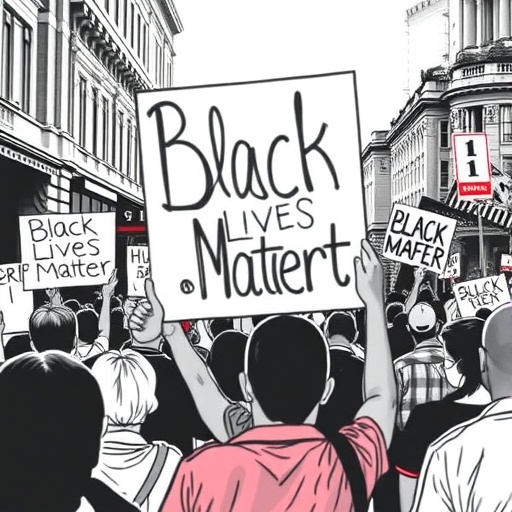
In the landscape of contemporary social movements, few have resonated as powerfully and persistently as the Black Lives Matter (BLM) movement. Initiated in response to the alarming rate of police violence against Black individuals, this grassroots effort transcends geographical and cultural boundaries, invoking a global dialogue on racial injustice. The recent study by Onat, Guler, and Kula provides an in-depth analysis of the sentiments surrounding this movement, examining not only the factors that contribute to public support but also the critical interplay between racial injustice, attitudes toward law enforcement, political affiliations, and media representation.
At the core of their research lies an exploration of racial injustice, a theme that has taken center stage in societal conversations over recent years. The authors meticulously dissect various dimensions of this injustice that permeate the lives of countless individuals. They highlight how systemic racism has manifested through discriminatory policies and practices that disproportionately impact Black communities. By delving into quantitative data and qualitative interviews, the study unveils the intricate realities faced by these communities, thereby providing readers with a nuanced understanding of the scenario.
Understanding public sentiment towards police is another focal point of the research. The relationship between law enforcement and communities of color has been historically fraught, marked by a lack of trust and frequent hostilities. Through the lens of the BLM movement, the authors analyze shifts in public perception toward police practices. Data indicates that many Americans, particularly those from marginalized groups, view law enforcement less as protectors and more as agents of oppression. This significant shift in narrative underscores the urgency of the BLM initiatives aimed at advocating for police reform and accountability.
Political influences significantly shape public opinion and engagement with social movements. The study identifies how political affiliations impact support for the BLM movement, showing a polarized landscape where opinions are often divided along party lines. Individuals aligning with progressive stances tend to support the movement, viewing it as a catalyst for vital social change. In contrast, conservative individuals may express opposition, often framing their arguments around notions of law and order rather than the need for reform. This political dichotomy complicates the communication strategies of BLM advocates, necessitating tailored approaches to engage diverse constituents effectively.
Crucially, the role of media in amplifying or diminishing social movements cannot be understated. The authors explore the portrayal of the BLM movement across various media platforms, examining both mainstream news outlets and social media ecosystems. They posit that media narratives shape public perception significantly, influencing whether the movement is viewed as a legitimate quest for justice or as an unjustified upheaval. The study stresses the need for responsible media representation that acknowledges the complexities of racial issues and provides balanced coverage of the movement’s demands and successes.
The evolution of the BLM movement has also sparked discussions regarding intersectionality, a vital concept that recognizes how various forms of discrimination and privilege overlap. The study highlights that while the movement primarily addresses issues of race, it also intersects with gender, sexuality, and socio-economic status. This intersectional approach illustrates the diverse set of experiences within the Black community, showing how various identities can compound oppression or privilege. This understanding is essential for creating a more inclusive dialogue and ensuring that the movement advocates for all marginalized voices.
As societal perceptions shift, the BLM movement continues to adapt its strategies to maintain relevance and effectiveness. One of the strategies that have emerged is the emphasis on educational outreach and community engagement. The authors underscore how providing information and resources to communities can mobilize support and create informed advocates. By educating individuals about the historical context of racial injustice and the importance of advocacy, BLM supporters have fostered a more engaged and empowered base that is capable of pushing for change at local, state, and national levels.
In addition to grassroots initiatives, partnerships with other organizations have become crucial for the movement’s resilience. The authors note that collaborative efforts between BLM and other advocacy groups have the potential to create a more formidable force against systemic oppression. Joint campaigns and educational initiatives can pool resources, expertise, and reach to amplify the calls for justice. This cooperative strategy enhances visibility and encourages intersections between different movements, illustrating the interconnected nature of social justice issues.
Another critical factor influencing public support for the BLM movement is the impact of global events. The study acknowledges that the international spotlight on racial issues, particularly following high-profile cases of police violence, has galvanized support across the globe. Protests and movements in other countries have shown solidarity with the BLM movement, reinforcing that the fight against racial injustice is not limited to the U.S. but is a global struggle. This international dimension provides a broader context for understanding the movement’s significance and the shared aspirations for justice and equality.
However, despite its significant accomplishments, the BLM movement faces ongoing challenges. The authors highlight the pushback against anti-racist initiatives, often framed as a threat to social cohesion or an undue focus on identity politics. This resistance necessitates a careful navigation of discourse and strategy among advocates. The researchers suggest that a focus on collective humanity and universal civil rights may help bridge divides and foster broader support for the movement’s aims.
In conclusion, Onat, Guler, and Kula’s comprehensive examination of the support for the Black Lives Matter movement presents a critical lens through which to view contemporary issues of racial injustice. As the movement evolves, understanding the complex interplay of attitudes toward police, political affiliations, and media representation will be vital for its sustained impact. Their research encourages ongoing conversations about race and justice, urging society to recognize the multifaceted nature of inequality and the collective responsibility to combat it. The findings serve as an important reminder that while challenges remain, the fight for justice and accountability will continue to inspire and mobilize individuals around the world.
Cite Scienmag News
Courtney Benton. (January 23, 2026). Analyzing Support for Black Lives Matter Movement. Scienmag. https://scienmag.com/analyzing-support-for-black-lives-matter-movement/
Courtney Benton. "Analyzing Support for Black Lives Matter Movement." Scienmag, 23 January 2026, https://scienmag.com/analyzing-support-for-black-lives-matter-movement/. Accessed 3 September 2026.
Courtney Benton. "Analyzing Support for Black Lives Matter Movement." Scienmag. January 23, 2026. https://scienmag.com/analyzing-support-for-black-lives-matter-movement/


