


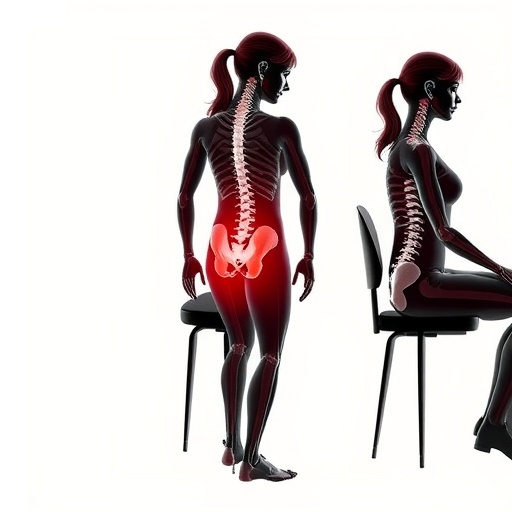
In a groundbreaking study that delves deep into the biomechanics of the human body, researchers led by Han et al. have explored how seated weight-bearing influences the rotational positional alterations of lumbar facet joints. The lumbar spine is a critical structural component that supports the body during various activities. However, little is known about the specific effects of seating posture and weight distribution on the orientation of these joints. This research fills an essential gap in our understanding of spinal mechanics, especially in contexts such as ergonomics and injury prevention.
The lumbar region comprises five vertebrae and numerous joints, including the facet joints, which govern the spine’s stability and flexibility. These joints allow for excessive range of motion but can also be subjected to stress and misalignment under certain conditions. In contemporary society, where prolonged sitting has become commonplace, understanding how this position may affect the health of our facet joints is increasingly vital. The study’s primary objective was to analyze how different seated weight-bearing positions can alter the rotational orientation of these critical joints.
To conduct this study, the researchers employed a combination of experimental and computational methods. A cohort of subjects was assessed using advanced imaging techniques to monitor the rotational changes in their lumbar facet joints as they shifted through various seated weights. This comprehensive approach allowed the researchers to gather robust data regarding how weight distribution—whether central, lateral, or leaning—affects the joints’ alignment and function.
The results indicate that certain sitting postures were more detrimental than others. For instance, leaning to one side while seated generated significant rotational forces on the lumbar facet joints, leading to changes in their natural alignment. This finding is particularly alarming as many people frequently adopt asymmetrical postures during extended periods of sitting, whether at work, in transit, or while engaging in leisure activities. As these changes accumulate over time, they could serve as precursors to chronic pain or other spinal disorders.
Interestingly, the study also observed that symmetrical seated orientations tend to mitigate adverse angular changes in the facet joints. This finding underscores the importance of conscious body mechanics and awareness of posture when seated. Essentially, it makes a compelling case for adopting a proactive stance on ergonomics, especially in office environments where sitting for long periods is commonplace. The implications for ergonomic design are significant, as they suggest that even slight adjustments to seating arrangements could promote better spinal health.
Beyond the immediate implications for workplace ergonomics, this research has broader applications in sports medicine and physical rehabilitation. Athletes and active individuals can benefit from understanding how their sitting positions can inadvertently affect their lumbar health. The study suggests that incorporating variations in seated postures could help in training programs designed to minimize injury and enhance performance, a critical insight for coaches and trainers.
Moreover, this study opens the door to further research avenues on the topic. Investigating the long-term effects of prolonged sitting on facet joint health could yield valuable insights. There might be additional factors, such as age, sex, and pre-existing conditions, that warrant a closer examination in future studies. The goal would be to build a holistic understanding of how lifestyle factors influence spinal health in diverse populations.
The dialogue about sitting as a “new smoking” in health narratives has sparked a surge of interest in finding solutions to mitigate its negative effects. Given the findings of Han et al., a multi-faceted approach that incorporates active adjustments to seated positions could be a game-changer. For example, introducing standing desks or flexible seating options in workplaces might not only elevate productivity but could also foster a healthier spine over time.
Furthermore, public health campaigns could pivot towards educating individuals about the significance of lumbar health, emphasizing proper seated postures. Collaboration among health professionals, ergonomic specialists, and workplace designers could create holistic frameworks that prioritize well-being without sacrificing productivity in various environments.
The findings of this study also reiterate previous research that points towards the necessity of interdisciplinary collaboration. By bringing together experts from fields such as biomechanics, physics, ergonomics, and healthcare, a more comprehensive understanding of the intricacies of human movement can be achieved. This modern approach to research could lead to innovative technologies and solutions that address the growing concern over sedentary lifestyles.
In the age of technological advancement, it is crucial to leverage these insights to create intelligent solutions that foster spinal health. Wearable technology that cues users to adjust their posture might become a reality based on the outcomes of this research. Imagine a future where ergonomic adjustments are automatically recommended through smart devices, thus transforming how we perceive and manage physical health in a sedentary world.
In conclusion, the study led by Han et al. provides valuable insights into a critical yet often overlooked aspect of human health – the rotational positional alterations of lumbar facet joints under varying seated weight-bearing conditions. As we navigate an increasingly sedentary lifestyle, understanding these dynamics becomes imperative. Implementing small changes in our daily habits can lead to monumental improvements in long-term spinal health, making this research not only relevant but urgent in today’s world.
The implications of this research extend into various sectors — from workplaces to educational institutions and even at home. By fostering a culture of awareness and actively promoting proper posture, we can help mitigate potential risks associated with prolonged sitting. This research serves as a crucial stepping stone, paving the way for further investigations and practical applications that can sustain our spinal health.
Cite Scienmag News
Ophelia Keating. (January 22, 2026). Impact of Seated Weight-Bearing on Lumbar Facets. Scienmag. https://scienmag.com/impact-of-seated-weight-bearing-on-lumbar-facets/
Ophelia Keating. "Impact of Seated Weight-Bearing on Lumbar Facets." Scienmag, 22 January 2026, https://scienmag.com/impact-of-seated-weight-bearing-on-lumbar-facets/. Accessed 4 September 2026.
Ophelia Keating. "Impact of Seated Weight-Bearing on Lumbar Facets." Scienmag. January 22, 2026. https://scienmag.com/impact-of-seated-weight-bearing-on-lumbar-facets/


