


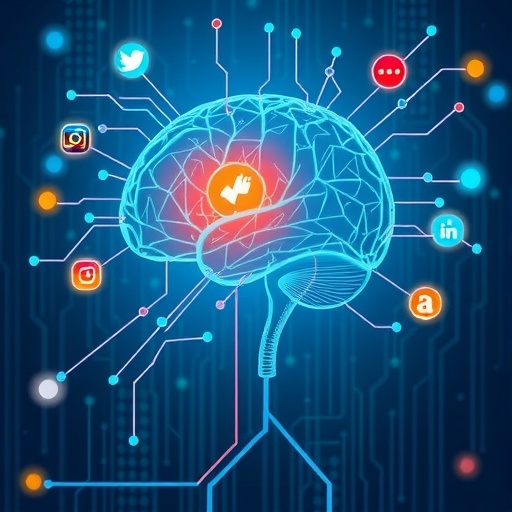
In a groundbreaking study, researchers Lamba, Rani, and Shabaz have ventured into the intricate interplay between social media behavior and mental health prediction. Published in the journal “Discover Mental Health,” their research taps into the potential of explainable machine learning (ML) to enhance our understanding of how online behavior can signal psychological states. The study revolves around two prominent interpretability methods: SHAP (SHapley Additive exPlanations) and LIME (Local Interpretable Model-agnostic Explanations), aiming to decipher the opaque algorithms that underpin machine learning models used for mental health predictions.
The proliferation of social media platforms has created an unprecedented digital landscape where individuals share personal thoughts, emotions, and experiences. This digital behavior can reveal patterns that are indicative of underlying mental health conditions. The researchers embarked on a nested cross-validation study to explore these patterns and validate their predictive accuracy. By examining vast amounts of social media data, they sought to derive insights that could contribute significantly to mental health assessments and interventions.
The use of nested cross-validation in this study is particularly noteworthy. This technique helps to mitigate overfitting, a common pitfall in machine learning, especially when working with complex models like those used in mental health prediction. The study’s design allows for a more robust validation framework, ensuring that the findings are not merely artifacts of the data. Instead, they represent reliable insights into how social media activity correlates with various mental health outcomes.
A central component of their research is the application of SHAP and LIME, which address the issue of interpretability in machine learning. These two methodologies provide a means to understand how specific features influence the predictions made by the models. For instance, SHAP unpacks the contributions of individual data points, allowing researchers to see how a single user’s online behavior affects the overall prediction of their mental health status. Likewise, LIME focuses on local model behavior, offering explanations tailored to individual predictions, which can prove invaluable in real-world applications.
The implications of this research extend far beyond academic interest. As mental health issues continue to rise globally, harnessing the power of social media for early detection could revolutionize treatment approaches. By identifying at-risk individuals through their online activity, mental health professionals can promote timely interventions. This could potentially reduce the prevalence of severe mental health crises, empowering individuals to seek help before reaching a critical state.
Moreover, the integration of explainable AI in mental health prediction is essential for the ethical deployment of technology in sensitive areas. When algorithms influence health decisions, understanding their rationale becomes crucial. The ability to interpret model outputs not only fosters trust among users but also assists clinicians in making informed decisions based on machine learning predictions. This transparency can mitigate the fears often associated with automated systems that appear as “black boxes.”
One of the key challenges that the researchers faced was the variability in social media data.Every individual engages with platforms differently, influenced by numerous factors including culture, age, and personal circumstances. The study emphasizes the importance of accounting for this heterogeneity in online behavior when developing a predictive model. It highlights that while patterns can be discerned, personalized approaches must be tailored to individual circumstances for successful mental health interventions.
Additionally, the study addresses the ethical concerns surrounding privacy and data security. As researchers analyze social media behavior, the need for stringent guidelines and ethical considerations is paramount. Ethical frameworks must be established to ensure that individuals’ privacy is respected and that their data is used responsibly. The researchers advocate for a balanced approach that champions innovation while safeguarding user rights.
Furthermore, the integration of explainable machine learning into clinical practice could set a precedent for future research. By establishing a framework for understanding how algorithms operate, researchers can explore new frontiers in mental health. This could lead to the discovery of niche behavioral indicators or unique user profiles that exacerbate or mitigate mental health issues, thus providing more tailored, effective interventions.
Despite the optimistic outlook presented by this study, it is critical to remain cautious about over-reliance on technology. Mental health remains a deeply personal issue, and no model can replace the compassionate care provided by trained professionals. The synergy between technology and human empathetic intervention promises a brighter future for mental health care, emphasizing that while technology can guide us, it is human connection that ultimately heals.
As this research garners attention, it will undoubtedly spark dialogue among clinicians, technologists, and ethicists. The implications of understanding social media behavior as a window into mental health are vast and transformative. By embracing these insights, the health sector can modernize its approach to mental wellness, aligning with the digital age’s realities while upholding ethical integrity.
Ultimately, this innovative study reveals the potential of explainable machine learning to bridge the gap between algorithmic predictions and human understanding. As further research unfolds in this domain, society stands at the precipice of harnessing technology to foster deeper insights into mental health. The collaborative efforts between tech and mental health disciplines could illuminate paths to preventive healthcare strategies that save lives and enhance well-being.
Cite Scienmag News
Glenn Wilkins. (January 22, 2026). Decoding Mental Health: AI Insights from Social Media. Scienmag. https://scienmag.com/decoding-mental-health-ai-insights-from-social-media/
Glenn Wilkins. "Decoding Mental Health: AI Insights from Social Media." Scienmag, 22 January 2026, https://scienmag.com/decoding-mental-health-ai-insights-from-social-media/. Accessed 4 September 2026.
Glenn Wilkins. "Decoding Mental Health: AI Insights from Social Media." Scienmag. January 22, 2026. https://scienmag.com/decoding-mental-health-ai-insights-from-social-media/


