


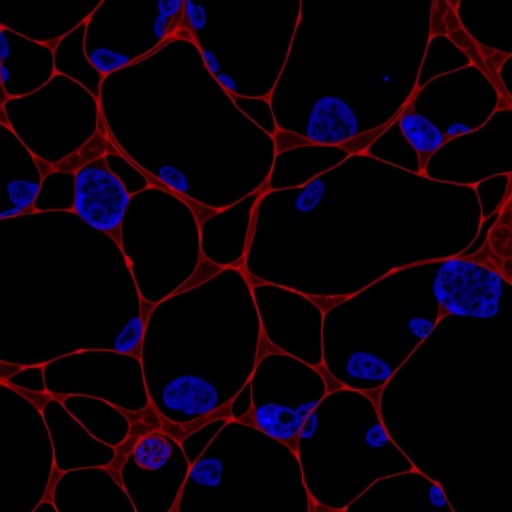
Recent research has unveiled a significant mechanism in the realm of angiogenesis, the process by which new blood vessels form from pre-existing vessels. A pivotal focus of this study is the G protein-coupled receptor GPR182, which has shown a surprising role in negatively regulating sprouting angiogenesis. Researchers have concentrated on how GPR182 interacts with the CXCL12-CXCR4 axis signaling pathway, a critical system in vascular biology that is essential for various physiological and pathological processes. This groundbreaking study by Chen et al. sheds light on the complex interplay between receptor signaling and vascular growth, providing new insights that could influence future therapeutic strategies for diseases characterized by abnormal angiogenesis.
GPR182, a lesser-known member of the G protein-coupled receptor family, has recently been implicated in the modulation of sprouting angiogenesis. The typical role of GPCRs in cellular communication cannot be overstated as they participate in numerous physiological processes. However, the specific influence of GPR182 on angiogenic sprouting adds a new layer of complexity, particularly in how cells sense their environment and respond by forming new vascular structures. The intricate signaling cascades triggered by GPR182 activation appear to inhibit the sprouting mechanisms that would ordinarily promote blood vessel formation, challenging previous notions about GPCR functions.
At the core of the study is the interaction between GPR182 and the CXCL12-CXCR4 axis, which has been recognized as a key regulator of angiogenesis. CXCL12, a chemokine, binds to its receptor CXCR4, triggering various intracellular signaling pathways essential for cell migration, growth, and survival. The research team meticulously dissected this signaling pathway to understand how GPR182 could adversely influence the activities of CXCL12 and CXCR4, presenting evidence that paints a complex picture of receptor dynamics in angiogenesis.
The findings suggest that when GPR182 is activated, it may inhibit the signaling cascade initiated by CXCL12 binding to CXCR4, thereby blocking the promotion of endothelial cell proliferation and migration, both of which are vital for new blood vessel formation. This negative regulation of sprouting angiogenesis has profound implications, as uncontrolled angiogenesis is a hallmark of various diseases, including cancer and retinopathy. By delineating the role of GPR182, this research opens potential avenues for developing targeted therapies that could either activate or inhibit this pathway to regulate blood vessel growth appropriately.
Moreover, the study’s implications extend beyond basic biology into the clinical realm. For instance, targeting GPR182 may yield novel therapeutic strategies to manage conditions characterized by excessive angiogenesis, such as tumor growth and metastasis. Conversely, enhancing GPR182 signaling might provide a means to promote angiogenesis in scenarios where it is beneficial, such as in wound healing or recovery from ischemic injuries.
In addition to the molecular dynamics at play, the researchers employed advanced methodologies to visualize the effects of GPR182 on endothelial cellular behaviors. These included in vitro assays, where endothelial cells were subjected to conditions that mimicked angiogenic stimuli, allowing researchers to observe the direct impact of GPR182 modulation on sprouting and network formation. The results were both compelling and thought-provoking, indicating that the manipulation of this receptor could play a critical role in controlling angiogenic responses.
Another interesting aspect of this research is the study’s potential for cross-disciplinary applications. Understanding the mechanisms behind GPR182’s regulation of angiogenesis can find relevance in fields such as developmental biology, immunology, and regenerative medicine. The research acts as a cornerstone that links together various scientific disciplines under the behaviors of vascular biology and cell signaling.
Furthermore, the implications of this work encourage a reevaluation of existing data regarding GPCR functions, particularly those previously dismissed as non-essential. GPR182, through its novel role in angiogenesis, prompts a reconsideration of its potential as a pharmaceutical target. As scientists continue to dissect the intricacies of GPCR signaling, it’s essential to remain open to the various roles these receptors play beyond traditional paradigms.
On a broader scale, this research illustrates the importance of collaborative efforts in understanding complex biological systems. The intricate nature of angiogenesis mandates a multidisciplinary approach, combining molecular biology, biochemistry, and clinical insights. It is through these collaborative research efforts that substantial advances in treating diseases related to angiogenesis can be achieved.
As the scientific community delves deeper into understanding how GPR182 and the CXCL12-CXCR4 axis interact, it is vital to consider how this knowledge can be transitioned into clinical practice. While the findings are still in their early stages, the groundwork laid down by the researchers could serve as a springboard for developing next-generation therapeutic agents targeting angiogenesis-related disorders.
In summary, the research conducted by Chen et al. offers a fresh perspective on the mechanisms governing sprouting angiogenesis. By elucidating the role of GPR182 in modulating the CXCL12-CXCR4 axis signaling, this study not only uncovers new biological pathways but also suggests practical applications for treating a range of diseases. As further studies explore the clinical implications of these findings, it becomes increasingly clear that understanding GPR182’s function may hold the key to unlocking novel interventions for enhancing or inhibiting blood vessel formation as needed.
Through this exploration, we are reminded of the endless complexities of biological systems and the potential for novel discoveries that can emerge from understanding the most intricate molecular interactions that govern life itself.
Cite Scienmag News
Drew Townsend. (January 22, 2026). GPR182 Impedes Angiogenesis by Modulating CXCL12-CXCR4 Signaling. Scienmag. https://scienmag.com/gpr182-impedes-angiogenesis-by-modulating-cxcl12-cxcr4-signaling/
Drew Townsend. "GPR182 Impedes Angiogenesis by Modulating CXCL12-CXCR4 Signaling." Scienmag, 22 January 2026, https://scienmag.com/gpr182-impedes-angiogenesis-by-modulating-cxcl12-cxcr4-signaling/. Accessed 4 September 2026.
Drew Townsend. "GPR182 Impedes Angiogenesis by Modulating CXCL12-CXCR4 Signaling." Scienmag. January 22, 2026. https://scienmag.com/gpr182-impedes-angiogenesis-by-modulating-cxcl12-cxcr4-signaling/


