


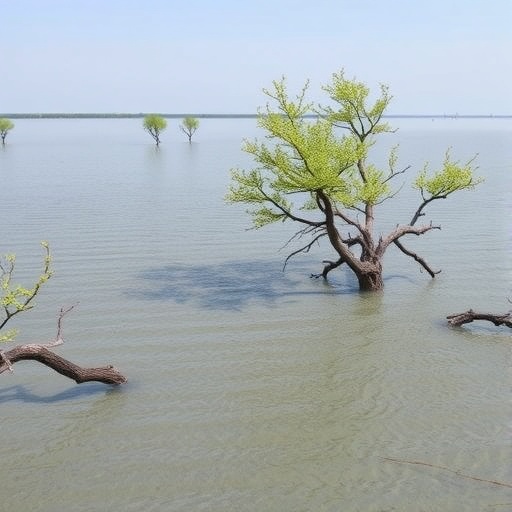
Climate change poses an undeniable threat, transforming landscapes, altering ecosystems, and jeopardizing biodiversity at an alarming rate. The Persian Gulf region, renowned for its unique mangrove ecosystems, faces imminent socio-economic and ecological risks as climate change progresses. In a recent paper, researcher S. Sharifian delves into these threats and outlines urgent policy priorities necessary to safeguard these vital resources. The intricate balance between ecological preservation and economic development in the region has never been more precarious.
Mangroves are not merely trees; they are dynamic habitats that serve as critical buffers against climate impacts. In regions like the Persian Gulf, these mangroves provide essential services such as carbon sequestration, coastal protection, and habitat for diverse marine life. As sea levels rise and storms become more intense due to climate change, the importance of these natural defenses cannot be overstated. The loss of mangrove ecosystems threatens to unleash a cascade of environmental crises, from increased coastal erosion to diminished fish stocks that are vital for local communities.
The socio-economic implications of mangrove degradation are profound. Communities that rely heavily on fishing and tourism are particularly vulnerable to the impacts of climate change. With livelihoods at stake, the urgency of implementing effective policies becomes glaringly evident. Sharifian highlights the need for integrated coastal management strategies and collaborative governance frameworks that encompass multiple stakeholders, from local communities to government agencies and environmental organizations. The lack of coordinated efforts often exacerbates the risks, making it essential to unite various interests around a common goal of sustainability.
Furthermore, Sharifian underscores the significance of raising public awareness about the importance of mangroves and the threats they face. Education and outreach initiatives can empower local populations to become stewards of their environment. When communities are equipped with knowledge about the benefits of mangroves, they are more likely to engage in conservation efforts. Citizen science projects, where locals contribute to monitoring mangrove health, exemplify effective ways to foster community involvement and build a sense of ownership regarding environmental issues.
In addition to community engagement, governmental policies must reflect the urgency of climate adaptation and mitigation strategies. Sharifian advocates for regulatory frameworks that prioritize the protection of mangrove ecosystems and incentivize sustainable land-use practices. These policies should also include provisions for restoring degraded mangrove areas, thereby enhancing resilience against future climate challenges. Restoration projects not only benefit the environment but can also provide well-paying jobs for local communities, further intertwining economic development and ecological health.
The research emphasizes the need for an interdisciplinary approach to tackle the complexities of climate change and mangrove conservation. Environmental scientists, economists, and policy-makers must collaborate to devise innovative solutions that address both ecological and socio-economic dimensions. This collaboration can give rise to new frameworks that integrate scientific research with practical applications, ensuring that policies are not just theoretical but grounded in real-world conditions and community needs.
Considering the growing body of literature on the benefits of ecosystem restoration, Sharifian’s work contributes significantly to the discourse surrounding climate resilience in coastal areas. The evidence is clear: safeguarding mangroves is not only an environmental imperative but also a socio-economic necessity. As such, reinforcing the links between ecosystem health and human well-being is increasingly recognized as central to effective climate action.
Moreover, the study highlights the role of international cooperation in addressing transboundary challenges exacerbated by climate change. The Persian Gulf, bordered by several nations, requires collaborative efforts to manage and protect mangrove ecosystems effectively. Joint initiatives can foster sharing of best practices and resources, ultimately enhancing the collective ability to combat climate threats. As countries grapple with their individual challenges, the need for a unified approach has never been more crucial.
The findings presented by Sharifian also resonate with global discussions on biodiversity loss and climate change adaptation strategies. As nations work toward achieving the Sustainable Development Goals, the protection of mangroves aligns seamlessly with broader environmental and socio-economic targets. The interconnectedness of these goals underscores the necessity for holistic approaches in policy formulation, where environmental health is viewed as foundational to human prosperity and stability.
To complement these initiatives, the paper suggests leveraging technology in monitoring and managing mangrove ecosystems. Advanced satellite imagery and data analytics can provide invaluable insights into the health and extent of mangrove forests, enabling timely interventions when degradation is detected. Additionally, integrating local traditional ecological knowledge with scientific data can enhance resilience strategies, ensuring that management practices are culturally appropriate and effective.
While the challenges posed by climate change are formidable, this research offers a roadmap for navigating the complexities associated with preserving the Persian Gulf’s mangroves. Deliberate efforts focusing on policy priorities, community engagement, and international cooperation can collectively bolster resilience against ecological and economic threats. In a warming world, the stakes are high, and timely action to protect these ecosystems is imperative for sustaining both biodiversity and the livelihoods of those who depend on the rich resources they provide.
With the publication of this critical study, Sharifian not only sheds light on the risks facing mangroves but also emphasizes the transformative potential of proactive policy measures. As the climate crisis evolves, resilience is not merely an objective; it is a necessity for future generations. The time to act decisively to protect the unique ecosystems of the Persian Gulf is now, before these invaluable natural resources are lost forever.
Sharifian, S. Socio-economic and ecological risks of climate change and policy priorities for the Persian Gulf mangroves.
Discov Sustain 7, 101 (2026). https://doi.org/10.1007/s43621-025-02331-1
Cite Scienmag News
Sloane Callahan. (January 20, 2026). Climate Change Impacts on Persian Gulf Mangroves. Scienmag. https://scienmag.com/climate-change-impacts-on-persian-gulf-mangroves/
Sloane Callahan. "Climate Change Impacts on Persian Gulf Mangroves." Scienmag, 20 January 2026, https://scienmag.com/climate-change-impacts-on-persian-gulf-mangroves/. Accessed 3 September 2026.
Sloane Callahan. "Climate Change Impacts on Persian Gulf Mangroves." Scienmag. January 20, 2026. https://scienmag.com/climate-change-impacts-on-persian-gulf-mangroves/


