


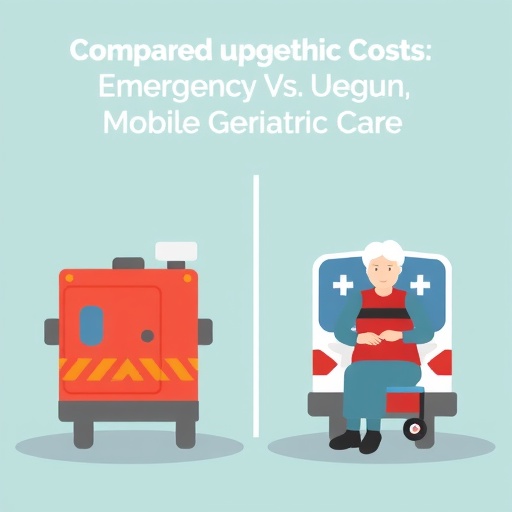
A recent study has stirred significant interest in the field of geriatric medicine by exploring the cost-effectiveness of different healthcare models for older patients. Conducted by a prominent team of researchers including Sawadogo, A.R., Lagrange, A., and Bosetti, A., this research presents a comparative analysis of emergency department-based care versus mobile geriatric care models. As the global population ages, understanding the economic and health outcomes associated with these models is crucial for shaping future healthcare policies aimed at enhancing the quality of life for older adults.
In the context of rising healthcare costs and the increasing prevalence of chronic conditions among the elderly, the need for efficient care delivery systems has never been more pressing. Traditional models that rely heavily on emergency departments often result in long waits and a high volume of patients, many of whom could benefit from alternative care approaches. The researchers aim to bridge this gap by assessing how mobile geriatric care initiatives can lead to improved patient outcomes while simultaneously striving to reduce healthcare expenditures.
The study reveals a stark contrast between the two models. Emergency department-based care tends to be reactive, often addressing health crises in a rushed environment. This setting can exacerbate stress for elderly patients, many of whom may already be dealing with complex health issues. In contrast, mobile geriatric care brings specialists directly to patients’ homes, alleviating the burden of travel and potentially providing a more personalized experience. This proactive approach is not just about convenience; it also emphasizes the importance of continuity of care, which is crucial for managing chronic health conditions.
One of the notable findings of the research is centered on the impact of these two models on hospital readmission rates. Patients receiving care through mobile units showed significantly lower rates of readmission compared to their counterparts treated in emergency departments. This is substantial not only from a health perspective, but economically as well, since frequent hospital admissions can drastically inflate healthcare costs. The study highlights that by investing in mobile care solutions, healthcare systems could divert funds away from emergency services and towards preventive care strategies.
Adopting a mobile geriatric model presents various logistical challenges, yet the benefits appear to outweigh these hurdles. Training healthcare professionals to operate in a mobile capacity involves adapting to an entirely new framework of service delivery. The complexity of geriatric care requires a multidisciplinary approach, where teams often include nurses, social workers, and physicians collaborating on the same case. The study found that when these professionals work in tandem, the collective expertise leads to better, more coordinated care.
Another compelling aspect of the study is its focus on patient satisfaction. Older patients, when given the choice, often prefer the comforts of their homes over the sterile environment of hospitals. The researchers conducted surveys that revealed a higher level of satisfaction among those receiving mobile care. This increased satisfaction not only contributes to a better patient experience but can also improve health outcomes; content patients are more likely to adhere to treatment regimens and follow-up appointments.
Cost comparisons between the two models reveal that mobile geriatric care is often more affordable in the long run. The initial investment required to set up mobile care units may seem substantial, but when considering the savings from reduced hospital admissions and better overall health outcomes, the financial benefits become evident. Healthcare systems are increasingly recognizing that proactive care models can lead to substantial savings while simultaneously improving patient quality of life.
Furthermore, this research sheds light on the growing importance of technology in geriatric care. Mobile units often use telemedicine and digital health monitoring tools to facilitate communication between patients and healthcare providers. This integration of technology allows for quicker response times and better tracking of patient health, making it an essential component of modern geriatric care. The implications of these innovations extend beyond immediate patient care; they could ultimately change how eldercare is structured at a systemic level.
Community engagement plays a significant role in the success of mobile geriatric care. The researchers noted that partnerships with local organizations can enhance outreach and ensure that vulnerable populations are aware of and can access these valuable resources. Involving community stakeholders not only fosters trust but also cultivates a network of support that is vital for effective healthcare delivery.
As public health officials and policymakers evaluate the findings of this study, they are urged to consider the broader implications of shifting healthcare approaches. The transition towards mobile geriatric care models can serve as a pivotal strategy in addressing the unique needs of the aging population. This research does not merely present comparative data; it advocates for a paradigm shift in how society cares for its elders, emphasizing the need for patient-centered, resource-efficient solutions.
In conclusion, the study led by Sawadogo and colleagues provides substantial evidence in favor of mobile geriatric care models. As healthcare systems worldwide grapple with the challenges posed by an aging population, their findings pave the way for a reevaluation of existing practices. By focusing on cost-effectiveness, patient satisfaction, and improved health outcomes, mobile care represents a promising avenue for healthcare delivery in the 21st century. Expanding these services could not only alleviate burdens on emergency departments but also enhance the quality of life for older adults, ensuring that they receive the care and attention they rightly deserve.
The urgency of implementing these findings cannot be overstated, as the demographic landscape continues to evolve. Stakeholders at all levels are encouraged to advocate for this shift, recognizing that better care for older adults is a responsibility we share as a society. The ongoing dialogue around geriatric care must include a commitment to change, rooted in the rich data presented by this transformative study. The future of geriatric care depends on our ability to innovate and adapt, ensuring that we prioritize the health and well-being of our aging population.
In summary, the cost-effectiveness analysis between emergency department-based care and mobile geriatric solutions emphasizes the need for a new approach to elder care. Not only do mobile units provide better outcomes, but they also present a viable solution to the financial strains associated with traditional models. The recognition of these factors is essential as we move forward, placing the elderly at the forefront of our healthcare priorities.
Sawadogo, A.R., Lagrange, A., Bosetti, A. et al. Cost-effectiveness of emergency department-based vs mobile geriatric care models for older patients.
BMC Geriatr (2026). https://doi.org/10.1186/s12877-026-06975-0
Cite Scienmag News
Beatrice Stafford. (January 20, 2026). Comparing Costs: Emergency vs. Mobile Geriatric Care. Scienmag. https://scienmag.com/comparing-costs-emergency-vs-mobile-geriatric-care/
Beatrice Stafford. "Comparing Costs: Emergency vs. Mobile Geriatric Care." Scienmag, 20 January 2026, https://scienmag.com/comparing-costs-emergency-vs-mobile-geriatric-care/. Accessed 4 September 2026.
Beatrice Stafford. "Comparing Costs: Emergency vs. Mobile Geriatric Care." Scienmag. January 20, 2026. https://scienmag.com/comparing-costs-emergency-vs-mobile-geriatric-care/


