


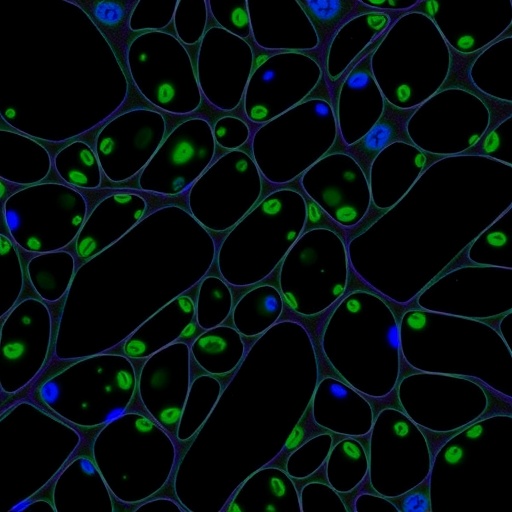
Recent advances in understanding the enigmatic role of polysialic acid (PSA) in various biological processes have opened a new frontier in the field of vascular biology. Researchers have uncovered compelling evidence suggesting that PSA plays a crucial role in the regulation of glomerular microvascular formation through its interaction with vascular endothelial growth factor A188 (VEGF-A188). This groundbreaking research, undertaken by Niculovic, Vicente, Wittek, and collaborators, offers insights that could significantly transform our comprehension of glomerular development and associated pathologies.
The kidney, often regarded as a remarkable organ, serves numerous vital functions, one of which is facilitating the filtration of blood and the formation of urine. Central to its function is the intricate network of microvasculature that ensures the optimal exchange of nutrients and wastes. The development of this microvasculature, especially in the glomerular region, is a complex process affected by numerous molecular players, including growth factors. The latest findings emphasize the pivotal role of PSA in orchestrating this process and highlight its interaction with VEGF-A188, a prominent player in angiogenesis.
VEGF-A188 is an isoform of the vascular endothelial growth factor that has garnered attention for its critical role in stimulating endothelial cell proliferation and migration. These processes are essential for the formation of new blood vessels. The interaction between PSA and VEGF-A188 emerges as a fascinating interface, suggesting that PSA could modulate the effects of VEGF in glomerular microvasculature development. The study indicates that PSA may enhance the effectiveness of VEGF-A188, offering a synergistic effect that could amplify vascularization in the kidneys.
The experimental approach utilized in this study underscores the rigor of the researchers’ methods. By using genetically modified mice, the team was able to manipulate PSA levels specifically within the renal microenvironment. Their investigations included both in vivo and in vitro assays, enabling a comprehensive understanding of how PSA regulates vascular development. The combination of these methodologies has provided robust evidence supporting the hypothesis that PSC has a dynamic role in endothelial cell behavior, particularly regarding differentiation and proliferation.
Interestingly, the research also highlights the differential expression of polysialic acid during various developmental stages. In the early stages of kidney development, high levels of PSA were observed, which declined as the organ matured. This temporal expression pattern suggests that PSA may be crucial during critical windows of kidney development, particularly when the microvascular architecture is being established. Understanding these developmental milestones could provide valuable insight into potential therapeutic avenues for various renal diseases where vascular development is impeded.
Moreover, the implications of this study extend beyond basic science, entering the realm of potential therapeutic interventions. Disorders related to abnormal glomerular microvasculature, such as diabetic nephropathy and focal segmental glomerulosclerosis, are significant contributors to renal failure. By delineating the pathway influenced by PSA in kidney development, this research opens avenues for novel therapeutic strategies that employ either PSA directly or compounds aimed at mimicking its effects on microvasculature formation.
As scientists continue to decode the molecular intricacies of kidney biology, understanding the interactive roles of polysialic acid and VEGF-A188 may pave the way for new treatments. Pharmacological agents that modulate PSA activity could potentially enhance endothelial function in renal tissues, providing a protective effect against pathological changes associated with kidney disease. The prospect of leveraging PSA in clinical settings could represent a paradigm shift in how renal diseases are treated, especially given the rising prevalence of conditions that compromise renal function.
Equally significant is the potential for cross-disciplinary applications of these findings. The principles of vascularization and the biology of polysialic acid may find relevance not only in nephrology but also in fields such as regenerative medicine and tissue engineering. For instance, strategies aimed at harnessing PSA to optimize vascular growth in engineered tissues could significantly advance efforts to create viable organ substitutes or enhance wound healing.
However, as with any pioneering research, several questions remain unanswered. What are the precise molecular mechanisms underlying the interaction between PSA and VEGF-A188? Are there additional signaling pathways influenced by polysialic acid that have yet to be characterized? Continued exploration into these questions will be essential for broadening the scope of knowledge and translating these findings into clinical applications.
The role of carbohydrates, particularly polysaccharides, in influencing biological processes, has gained considerable interest in recent years. The discovery of polysialic acid as a regulator of microvascular development adds another dimension to this narrative, illustrating the multifaceted relationships between glycosylation patterns and cellular behavior. As research in this domain progresses, we may see a shift in focus towards the glycome and its implications for health and disease, thereby fostering a more comprehensive understanding of cellular interactions.
Given the significance of these findings, further investigations are likely to follow, motivating researchers to delve deeper into the functional outcomes of PSA in various organ systems. In doing so, the potential for translating fundamental biological discoveries into applied medical innovations becomes increasingly achievable. The future of polysialic acid research may indeed hold transformative possibilities for understanding and treating a myriad of vascular-related diseases.
In conclusion, the intricate relationship between polysialic acid and VEGF-A188 in glomerular microvascular formation represents a significant advancement in the field of angiogenesis. The collaborative efforts of Niculovic, Vicente, Wittek, and their team have laid the groundwork for future explorations, emphasizing the importance of glycosylation in vascular biology. As this research continues to unfold, the potential for innovative therapeutic strategies targeting PSA to enhance kidney health becomes tantalizingly close.
Cite Scienmag News
Nathaniel Bowman. (January 20, 2026). Polysialic Acid Modulates Kidney Microvasculature via VEGF-A188. Scienmag. https://scienmag.com/polysialic-acid-modulates-kidney-microvasculature-via-vegf-a188/
Nathaniel Bowman. "Polysialic Acid Modulates Kidney Microvasculature via VEGF-A188." Scienmag, 20 January 2026, https://scienmag.com/polysialic-acid-modulates-kidney-microvasculature-via-vegf-a188/. Accessed 4 September 2026.
Nathaniel Bowman. "Polysialic Acid Modulates Kidney Microvasculature via VEGF-A188." Scienmag. January 20, 2026. https://scienmag.com/polysialic-acid-modulates-kidney-microvasculature-via-vegf-a188/


