


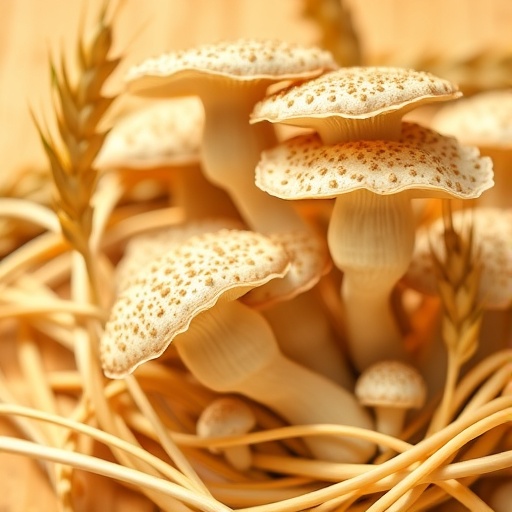
In the ever-evolving world of biotechnology and sustainable practices, innovative approaches to waste management and resource optimization have never been more critical. Recent research has shed light on an exciting advancement in the fermentation processes utilizing kitchen waste to enhance enzyme production. Specifically, a study conducted by Choudhary et al. reveals the remarkable potential of utilizing wheat straw as a substrate in fungal fermentation, leading to the production of endoglucanases, enzymes that play a pivotal role in breaking down cellulose.
Endoglucanases are enzymes that hydrolyze the internal bonds of cellulose chains, making them essential for various applications, including biofuel production, textile processing, and the paper industry. Traditional sources of these enzymes have often relied on costly and resource-intensive processes. However, this new study proposes a novel use of readily available kitchen waste as a fermentation medium, drastically reducing costs while enhancing enzyme yield.
The research employed a specific methodology that involved fermenting kitchen waste mixed with wheat straw. Wheat straw, an agricultural byproduct that is often discarded or used inefficiently, serves as an ideal substrate due to its high cellulose content. By incorporating wheat straw into the fermentation process, researchers have harnessed its natural properties to boost fungal growth and activity, ultimately leading to higher endoglucanase production levels.
The study reveals that the combination of wheat straw and various kitchen waste components created a nutrient-rich environment conducive to the growth of filamentous fungi. The researchers meticulously evaluated different ratios of kitchen waste and wheat straw, analyzing their effects on fungal colonization and enzyme production. Preliminary results suggested that the optimal ratio maximized fungal activity, proving the efficacy of this innovative combination.
In this research, the authors not only focused on the enzymatic activity but also delved into characterizing the fungal strains involved. Leveraging molecular techniques and genomic analysis, the study identified key fungal species capable of thriving in this kitchen waste and wheat straw fermentation medium. Understanding these strains and their specific enzymatic profiles opens up new avenues for tailoring enzyme production to suit industrial needs.
An intriguing aspect of this study lies in its environmental implications. By utilizing kitchen waste, which typically contributes to landfill overflow, researchers are promoting a circular economy. This approach not only alleviates waste disposal challenges but also adds significant value by converting waste into valuable bioproducts. The simultaneous benefits of reducing carbon footprints and creating sustainable resources position this research as a game-changer in the realm of biotechnology.
Moreover, the economic viability presented by this method cannot be overlooked. Traditional enzyme production processes often involve significant costs related to raw materials and energy inputs. This study suggests a path toward a more sustainable and cost-effective model for enzyme production, making it a compelling option for industries seeking to reduce expenses while maintaining high-quality outputs.
The ongoing research indicates that scaling this process up for industrial applications is feasible. Future studies will likely explore larger fermentation systems and continuous production methods, ensuring that the findings from Choudhary et al. can translate effectively into real-world practices. The quest for bioengineered solutions has never been more essential, as the world grapples with environmental challenges that necessitate innovative thinking.
Enzymes produced through this fermentation process are expected to find extensive applications in biofuels, where efficient cellulose breakdown is crucial for maximizing yield. The benefits extend to other sectors, including waste treatment, where endoglucanases can aid in degrading lignocellulosic materials. The versatility of these enzymes marks a significant step toward biotechnological advancements and sustainable industrial practices.
This study adds to the body of knowledge around lignocellulosic waste utilization, highlighting the synergy between agriculture and biotechnology. It emphasizes the importance of interdisciplinary research in addressing global challenges such as resource scarcity and environmental degradation. By bridging gaps between different fields, researchers can unlock the potential of abundant waste materials to create sustainable solutions.
Reactions from the scientific community have been overwhelmingly positive, with many expressing optimism that this approach can lead to larger shifts in waste management practices across industries. By integrating waste streams into biotechnological processes, businesses can cultivate a more sustainable future while driving innovation and efficiency.
The implications of this research extend beyond enzymatic production alone; they challenge the status quo of traditional waste management. The authors of the study advocate for a broader adoption of such bioprocesses, encouraging industries to reconsider their waste sources and explore alternative strategies for resource recovery. This shift requires a rethinking of how we conceptualize waste, viewing it instead as a valuable resource waiting to be exploited.
In conclusion, the study conducted by Choudhary et al. represents an exciting frontier in biotechnology. By merging kitchen waste with agricultural byproducts, the team has opened new pathways for enzyme production, which can ultimately lead to sustainable practices across various industries. As these findings gain traction, they promise to pave the way for a more resilient and environmentally responsible future.
The integration of innovative research like this one is crucial for developing strategies that meet the demands of a rapidly changing world. As we embrace the potential of biotechnology, such studies remind us of the extraordinary possibilities that lie within our grasp when we rethink waste and explore the synergies of natural resources.
The overwhelming benefits of this study establish a foundation upon which future research can build. As the scientific community continues to explore and enhance these methods, the possibilities for sustainable development and environmental stewardship will only expand.
The exploration of kitchen waste fermentation not only provides insights into fungal enzyme production but also serves as a blueprint for sustainable practices that can be replicated across various sectors. The intersection of waste management and biotechnology presents a promising future where waste is not merely discarded but transformed into valuable resources for society.
Ultimately, the research led by Choudhary and colleagues illustrates that innovation and sustainability can go hand in hand. As we strive to develop more eco-friendly solutions, studies like this one inspire us to leverage existing resources, rethink our approaches, and achieve extraordinary results in the field of biotechnology.
Choudhary, P.K., Mishra, A., Singh, R. et al. Wheat straw induced fungal endoglucanase production using kitchen waste-based fermentation medium.
3 Biotech 16, 31 (2026). https://doi.org/10.1007/s13205-025-04631-9
Cite Scienmag News
Alan Morgan. (January 19, 2026). Fungal Endoglucanase Production from Wheat Straw and Kitchen Waste. Scienmag. https://scienmag.com/fungal-endoglucanase-production-from-wheat-straw-and-kitchen-waste/
Alan Morgan. "Fungal Endoglucanase Production from Wheat Straw and Kitchen Waste." Scienmag, 19 January 2026, https://scienmag.com/fungal-endoglucanase-production-from-wheat-straw-and-kitchen-waste/. Accessed 3 September 2026.
Alan Morgan. "Fungal Endoglucanase Production from Wheat Straw and Kitchen Waste." Scienmag. January 19, 2026. https://scienmag.com/fungal-endoglucanase-production-from-wheat-straw-and-kitchen-waste/


