


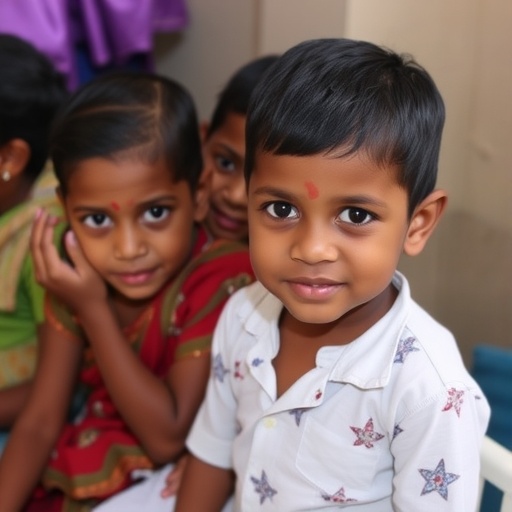
In a world where education shapes the future, a new study sheds light on how parental socio-economic conditions significantly influence access to early childhood education in Bangladesh. Conducted by Ayshi, NEZ.S., and Alam, M.J., this research draws parallels with Japan’s educational landscape, providing meaningful insights into nuances that can bridge gaps in educational accessibility. With the lens of socio-economic disparity, the study aims to understand the impact these factors have on the fundamental framework of education, especially in a developing nation like Bangladesh.
Early childhood education (ECE) is pivotal in laying the groundwork for lifelong learning and development. It is during these formative years that children absorb critical cognitive and social skills, which subsequently influence their readiness for primary schooling. However, in Bangladesh, a country grappling with poverty and inequality, access to quality early childhood education remains a pressing concern. The study highlights that socio-economic conditions dictate not only the availability of educational resources but also the quality of education that can be accessed by children from varying economic backgrounds.
The implications of the parents’ economic status cannot be overstated. Children hailing from affluent families tend to thrive in nurturing educational environments filled with resources, experienced educators, and stimulating curricula. Conversely, children from less privileged backgrounds often find themselves in under-resourced environments, which can stifle their development and limit their future opportunities. The study illustrates how financial constraints lead to disparities in educational access, thereby questioning the equitable distribution of educational prospects across socio-economic strata.
In drawing lessons from Japan, the research offers a comparative analysis that emphasizes the differences in educational investment between countries. Japan consistently demonstrates a commitment to early childhood education, recognized for its well-structured systems that prioritize accessibility and quality. This juxtaposition with Bangladesh accentuates the need for systemic reforms that could improve educational outcomes for disadvantaged children. The findings suggest that policy frameworks in Bangladesh could benefit significantly from examining Japan’s approaches to inclusivity in early education.
Moreover, the research underscores the role of community and government in shaping educational policies that affect young learners. While parents’ socio-economic status plays a critical role, the community’s investment in education can yield solid foundational support for ECE. The study advocates for community-based initiatives that promote awareness and engagement in education, aiming to create holistic solutions that foster an environment conducive to learning, regardless of socio-economic backgrounds.
In Bangladesh, cultural norms and expectations also influence parental involvement in education. The research notes that in many low-income communities, educational aspirations may be undervalued, leading to a cycle of disenfranchisement. By challenging these perceptions, stakeholders can encourage greater participation in early childhood programs and awareness of their long-term benefits. The importance of parental engagement cannot be underestimated, particularly in enhancing children’s educational journeys and reinforcing the value of learning from an early age.
The role of government interventions is pivotal in closing the educational gap. The study explores various frameworks through which the Bangladeshi government can enhance educational accessibility. For instance, increasing funding for public preschool programs, introducing incentives for low-income families, and establishing partnerships with non-governmental organizations could catalyze reforms in this sphere. These actions can be instrumental in creating a more inclusive educational environment that fosters equal opportunities for all children.
The research also touches on innovative solutions to enhance access to early childhood education, emphasizing the integration of technology in learning. In a rapidly evolving digital world, leveraging online platforms can bridge geographical and socio-economic barriers, providing children from diverse backgrounds with valuable educational resources. Implementing hybrid educational models that incorporate both physical and digital education could potentially reshape the landscape of early childhood learning in Bangladesh, providing equitable access to quality education.
The findings of this study hold immense significance beyond Bangladesh, as they resonate with global challenges facing early childhood education. Socio-economic disparities are prevalent in many regions, and the lessons drawn from this research can inform broader dialogues on educational reform worldwide. Understanding the interplay between economic conditions and educational accessibility is crucial to unearthing pathways for effective policy-making aimed at cultivating equitable education systems across varying contexts.
In conclusion, Ayshi and Alam’s research illuminates the urgent need to address the socio-economic disparities impacting early childhood education in Bangladesh. By looking to Japan’s successful practices, this study provides a framework for nurturing a more inclusive educational environment. As countries around the world strive to enhance early childhood education, the insights gleaned from this investigation can guide meaningful interventions aimed at ensuring all children, regardless of their backgrounds, have access to the transformative power of education.
Such proactive steps could pave the way for a generation of learners who are not only equipped with knowledge but also empowered to break the cycle of poverty, contributing to a more equitable society in the process. The call to action is clear: ensuring that education is accessible to all children is not merely a goal but a fundamental right that reflects the values of progress and equality in our rapidly evolving world.
Ayshi, NEZ.S., Alam, M.J. Impact of Parental Socio-Economic Condition on Access to Early Childhood Education in Bangladesh: Lessons from Japan.
IJEC (2026). https://doi.org/10.1007/s13158-025-00482-w
Cite Scienmag News
Courtney Benton. (January 19, 2026). Parental Wealth Shapes Early Childhood Education in Bangladesh. Scienmag. https://scienmag.com/parental-wealth-shapes-early-childhood-education-in-bangladesh/
Courtney Benton. "Parental Wealth Shapes Early Childhood Education in Bangladesh." Scienmag, 19 January 2026, https://scienmag.com/parental-wealth-shapes-early-childhood-education-in-bangladesh/. Accessed 4 September 2026.
Courtney Benton. "Parental Wealth Shapes Early Childhood Education in Bangladesh." Scienmag. January 19, 2026. https://scienmag.com/parental-wealth-shapes-early-childhood-education-in-bangladesh/


