


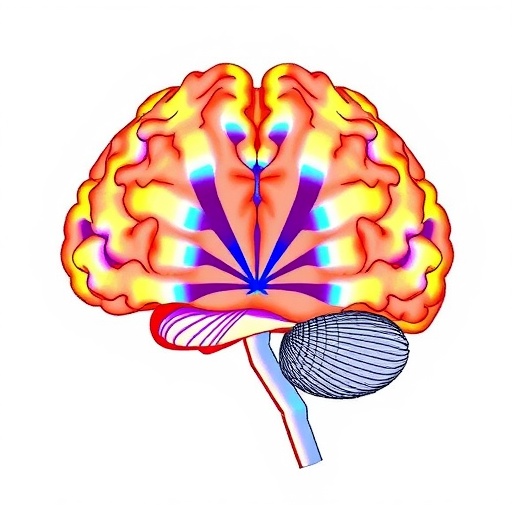
In a groundbreaking study published in Nature Communications, Lee, Hwang, McRiley, and colleagues have unveiled an unprecedented single-nucleus atlas of the human central amygdala—shining a transformative light on the chromatin architecture and gene transcription dynamics underlying alcohol use disorder (AUD). This pioneering work represents a quantum leap in our understanding of the molecular and cellular heterogeneity within the central amygdala, a brain region critically involved in the emotional and addictive behaviors that characterize AUD. By integrating cutting-edge single-nucleus omics technologies, the researchers were able to dissect, at an exquisite resolution, the intricate epigenetic and transcriptomic landscape of human brain tissue affected by chronic alcohol exposure, offering novel insights that could ignite future therapeutic strategies.
The central amygdala (CeA) holds a pivotal seat in the neural circuitry of addiction and emotional regulation, yet its molecular complexity has long eluded comprehensive characterization due to technical limitations. This study surmounts those barriers by leveraging an innovative single-nucleus profiling approach, enabling the identification of discrete cellular populations and the regulatory elements that orchestrate their gene expression programs. Through high-throughput sequencing of isolated nuclei, the team mapped chromatin accessibility alongside transcriptional activity within the CeA of human donors diagnosed with AUD. Their resulting atlas captures the dynamic molecular interplay that not only defines cell identity but also adapts in response to prolonged alcohol exposure.
Crucially, the authors highlight the chromatin remodeling processes that facilitate pathological gene regulation in the context of chronic alcohol use. They document extensive epigenomic reprogramming manifested as differential accessibility of enhancers and promoters pivotal for neuronal and glial function. These findings illuminate how chronic alcohol exposure insidiously reshapes gene regulatory networks, potentially sustaining maladaptive behavioral states. Such detailed chromatin landscapes enable the pinpointing of candidate regulatory elements that could be targeted for therapeutic intervention in AUD, a realm hitherto constrained by insufficient knowledge of cell-type-specific regulatory circuitry in the human brain.
By integrating transcriptomic data with chromatin accessibility profiles, the study elegantly demonstrates the concordance—and, importantly, the discordance—between chromatin states and gene expression patterns across distinct CeA cell populations. This dual-omics perspective reveals that specific neuronal subtypes and glial cells within the CeA undergo unique transcriptional adaptations that correlate with altered chromatin landscapes in AUD patients. The identification of these cell-type-specific molecular signatures promises to refine our understanding of the cellular substrates of addiction, moving beyond bulk tissue analyses that have historically masked critical neuronal diversity.
Among the remarkable discoveries, the researchers observed pronounced transcriptional upregulation of genes implicated in synaptic plasticity, neuroinflammation, and stress responsiveness within discrete neuronal clusters. These transcriptional shifts co-occurred with changes in chromatin accessibility at relevant regulatory loci, suggesting that epigenetic remodeling directly facilitates gene expression changes driving pathological CeA remodeling in AUD. Such mechanistic linkages between chromatin dynamics and gene activity underscore the importance of epigenetic therapeutic targets that might recalibrate aberrant gene networks induced by alcohol abuse.
The methodology at the heart of this study deserves special note. Employing single-nucleus RNA sequencing (snRNA-seq) alongside single-nucleus assay for transposase-accessible chromatin using sequencing (snATAC-seq), the team systematically profiled thousands of individual nuclei from postmortem human brain specimens. This integrative approach enabled a multi-layered reconstruction of molecular states with unparalleled granularity—identifying novel subpopulations of CeA neurons and glia that exhibit AUD-specific epigenetic and transcriptional traits. The rigorous bioinformatic integration of these datasets represents a technical tour de force, highlighting the power of combinatorial single-nucleus modalities in complex psychiatric disorders.
Beyond the descriptive atlas, the authors conducted comparative analyses between AUD-affected and control brains, uncovering robust differential chromatin and gene expression signatures that elucidate the molecular underpinnings of alcohol-related neuropathology. Notably, several key transcription factors emerged as putative master regulators orchestrating these pathological gene programs, revealing candidates whose pharmacological modulation could potentially alter disease trajectories. The elucidation of such regulatory hierarchies gives hope for future precision medicine approaches tailored to the molecular pathology within the CeA.
The implications of this study reverberate across neuroscience and psychiatry. By mapping the intricate epigenetic and transcriptional wiring within a brain region central to addiction, this research bridges a critical gap between genetic susceptibility, environmental influences (such as alcohol exposure), and altered neural circuitry. It will likely serve as a foundational reference for subsequent investigations aiming to decode other neuropsychiatric conditions where chromatin dysregulation and transcriptional misprogramming play cardinal roles.
Furthermore, this atlas provides a valuable resource for the broader scientific community, fostering integrative research endeavors that can cross-reference findings from model organisms and pharmacological studies with human pathology. The identification of human-specific molecular signatures related to AUD enhances translational validity and may accelerate the development of biomarkers for diagnosis, prognosis, and treatment efficacy monitoring. Such advances are paramount given the global burden of AUD and the persistent paucity of effective therapeutics.
Another notable facet of this study is its focus on the interplay between neuronal and glial compartments within the CeA. The researchers observed distinct epigenetic remodeling in astrocytes and microglia that likely contribute to the neuroimmune responses accompanying chronic alcohol exposure. These glial transcriptional changes may exacerbate neuronal dysfunction and synaptic deficits, amplifying the vicious cycle of addiction. This cell-type-specific insight into neuroinflammation broadens the horizon of potential intervention points, possibly shifting therapeutic efforts towards modulating glial activity alongside neuronal targets.
Moreover, the findings highlight considerable heterogeneity not only between major CeA cell types but also within subpopulations, emphasizing that AUD’s molecular pathology is far from uniform. Understanding this complexity is crucial for tailoring individualized treatment strategies, as different cellular targets may govern relapse susceptibility, withdrawal severity, or cognitive impairments associated with AUD. The intricate molecular choreography portrayed here demands a reconsideration of one-size-fits-all approaches in addiction medicine.
In sum, Lee and colleagues have rendered a seminal contribution by charting the single-nucleus chromatin and transcriptional architecture of the human central amygdala in alcohol use disorder. Their comprehensive atlas exposes the nuanced regulatory disruptions underpinning addiction pathology, opening vistas toward targeted interventions that can modify the addictive trajectory at its genomic roots. This study epitomizes the frontier of neuroepigenomics, showcasing how technological innovation and multidisciplinary collaboration unravel the molecular labyrinth of complex brain disorders.
Looking ahead, the integration of this atlas with functional studies employing CRISPR epigenome editing, electrophysiology, and behavioral phenotyping could illuminate causal links between identified regulatory elements and addictive behaviors. Additionally, expanding such single-nucleus atlases across diverse populations and developmental stages will enrich our grasp of AUD’s heterogeneity and inform population-specific therapies. The promise of translating molecular atlases into tangible clinical gains positions this work as a landmark achievement poised to reshape addiction neuroscience.
The journey from these detailed molecular maps to clinical breakthroughs will undoubtedly encounter challenges, but the clarity provided by this atlas charts a course fraught with new possibilities. At a time when alcohol use disorder continues to exact a heavy societal toll, harnessing the power of single-nucleus epigenomics could catalyze a new era of precision therapeutics—transforming lives through molecular insight forged from the very fabric of brain cells.
Cite Scienmag News
Juliet Wilcox. (January 19, 2026). Central Amygdala Atlas Uncovers Alcohol Disorder Genetics. Scienmag. https://scienmag.com/central-amygdala-atlas-uncovers-alcohol-disorder-genetics/
Juliet Wilcox. "Central Amygdala Atlas Uncovers Alcohol Disorder Genetics." Scienmag, 19 January 2026, https://scienmag.com/central-amygdala-atlas-uncovers-alcohol-disorder-genetics/. Accessed 3 September 2026.
Juliet Wilcox. "Central Amygdala Atlas Uncovers Alcohol Disorder Genetics." Scienmag. January 19, 2026. https://scienmag.com/central-amygdala-atlas-uncovers-alcohol-disorder-genetics/


