


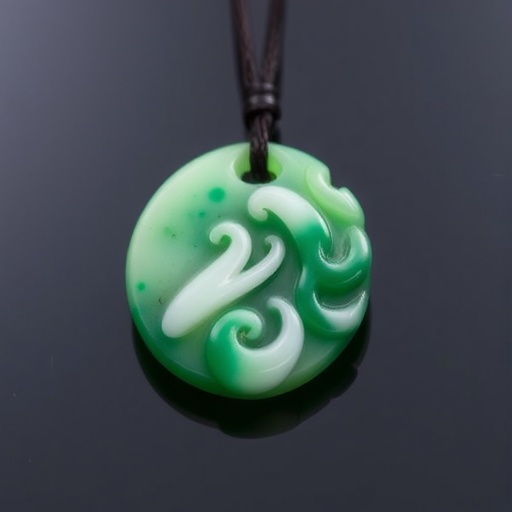
In an intriguing exploration of ancient cultural practices, a recent study examines the significance of jade pendant sets worn during China’s Zhou and Han dynasties. Conducted by P. Pan, this research digs deep into the multifaceted aspects of jade artifact use, reflecting on the social, ritualistic, and personal dimensions intertwined with these historical relics. The research draws from a rich assemblage of archaeological findings, historical texts, and sensory analysis to unveil the profound meanings these jade pieces held for their wearers and the society at large.
The Zhou dynasty, known for its philosophy and governance, laid the foundation for integrating jade into Chinese heritage. It was under this dynasty that jade began to transcend mere decorative attributes, evolving into a potent symbol intertwined with power, status, and spirituality. This gemstone’s significance expanded into various societal spheres, manifesting as a medium for personal expression and communal identity. Pan investigates how these jade pendants were not just worn; they were elements of lived experiences that encapsulated complex social narratives.
Transitioning into the Han dynasty, the research contemplates the continuing evolution of jade’s role across social strata. During this era, the production and distribution of jade artifacts proliferated, suggesting an increased accessibility for various classes. Pan details this shift and explores how jade was incorporated into funerary practices, ceremonial events, and daily life of the Han people. The research emphasizes that understanding these artifacts offers critical insights into the socio-political dynamics of the time, revealing jade’s role as a connector of cultures, beliefs, and people.
Pan’s study employs a sensory framework to analyze how these jade pieces engaged their wearers beyond the visual. The tactile experiences of wearing jade—its weight, temperature, and texture—played crucial roles in how individuals perceived their social identity and spiritual significance. The exploration of these sensory experiences reveals an underlying complexity often overlooked in conventional archaeological interpretations. This approach not only broadens our understanding of artifact use but also reiterates the significance of personal experiences in historical contexts.
A critical section of Pan’s research examines the adornment strategies employed by individuals in these dynasties. The study highlights that jade pendants were often intricately designed and sometimes complemented with other materials, adding layers of meaning and symbolism. This engagement with jade reflects societal norms regarding beauty, morality, and status. The vestimentary practices associated with jade are indicative of broader cultural ideologies, emphasizing the interplay of aesthetics and ethics during these historical periods.
Within the fabrics of these civilizations, jade also emerged as a key element of ritual practices. It was often integral to ceremonies relating to life, death, and cosmic balance. Pan elaborates on how jade served not merely as decorative objects but also as mediators between the physical world and the spiritual realm. The study reveals how jade pendants, during important life events or transitions, were believed to confer protection, luck, and spiritual favor, further anchoring their usage in the cultural and ritual frameworks of the time.
Moreover, this research uncovers the potential gendered dimensions of jade usage in Zhou and Han societies. Women, often the primary wearers of these pendants, faced unique social standings that jade facilitated. Their adornment choices conveyed messages of propriety, virtue, and familial ties, and Pan’s analysis sheds light on historical nuances surrounding femininity and status. This gender perspective enriches our understanding of jade as a site of negotiation for identity and agency amidst ancient Chinese cultural narratives.
The findings of Pan’s study are not limited to the past; they resonate with contemporary discussions on heritage and identity. The reverence of jade in today’s China illustrates a continuity of tradition and cultural appreciation. It provokes inquiries about how historical artifacts inform modern identities and cultural practices. The legacy of jade, as investigated by Pan, serves as an anchor point for examining ongoing cultural continuity and transformation in a rapidly globalizing world.
Exploring the modern implications, the study highlights how the exquisite craftsmanship of jade artifacts continues to fascinate scholars, collectors, and the public alike. This enduring appeal demonstrates jade’s powerful role as a cultural symbol—marrying past realities with present sentiments. The interplay of crafting techniques, aesthetic values, and social functions showcases an ancient art form that transcends temporal barriers.
Additionally, Pan emphasizes the importance of interdisciplinary approaches in studying ancient artifacts. By integrating archaeology with sensory ethnography and historical analysis, Pan constructs a holistic view of jade’s role in society. Such methodologies allow for richer interpretations of material culture, presenting new avenues for future research that marries tradition with contemporary insights.
The comprehensive nature of Pan’s research underscores the demand for a deeper engagement with historical artifacts. Through the lens of jade, research exemplifies how specific materials can encapsulate broader sociocultural themes, instigate reflective conversations about identity, belief, and legacy. The study of jade pendant sets offers a mirror into the values of Zhou and Han dynasties while simultaneously inviting modern viewers to reflect on their own cultural narratives.
In sum, Pan’s exploration is a vital contribution to the field of Asian archaeology, providing a platform for discussions on material culture’s role in civilization’s development. The interplay between jade artifacts and human experiences highlights the intricacies of societal dynamics, enriching our understanding of ancient China. It poses essential questions about identity, heritage, and the enduring relevance of historical practices, laying the groundwork for future inquiries that span across disciplines and bridge time.
The implications of this research extend beyond academic boundaries, urging both scholars and the public to appreciate the richness of cultural heritage preserved in artifacts. As jade continues to symbolize beauty and spirituality, its study invites an ongoing dialogue about memory, continuity, and the lessons that may be gleaned from our past. Pan’s findings call us to reflect on the stories that lie within materials, urging an appreciation of how the legacy of jade, entwined with human experience, fosters connections across generations.
As cultural curiosity continues to thrive, Pan’s research offers valuable insights that challenge perceptions and invites deeper exploration into the ways artifacts shape societal narratives. The legacy of jade pendant sets serves as a testament to how objects can embody the tensions and harmonies of past civilizations, ultimately reflecting the timeless human endeavor to articulate identity, belief, and connection.
Pan, P. Jade pendant set wearing in China’s Zhou and Han dynasties: concepts, practices, and sensorial experiences.
asian archaeol 9, 221–231 (2025). https://doi.org/10.1007/s41826-025-00115-0
Cite Scienmag News
Courtney Benton. (January 19, 2026). Jade Pendant Use in Zhou and Han Dynasties. Scienmag. https://scienmag.com/jade-pendant-use-in-zhou-and-han-dynasties/
Courtney Benton. "Jade Pendant Use in Zhou and Han Dynasties." Scienmag, 19 January 2026, https://scienmag.com/jade-pendant-use-in-zhou-and-han-dynasties/. Accessed 4 September 2026.
Courtney Benton. "Jade Pendant Use in Zhou and Han Dynasties." Scienmag. January 19, 2026. https://scienmag.com/jade-pendant-use-in-zhou-and-han-dynasties/


