


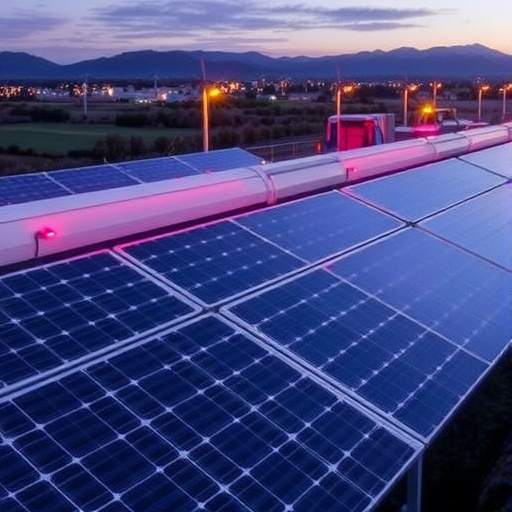
In recent years, the global energy landscape has undergone significant transformations, highlighting the need for synergistic strategies that integrate agriculture and energy management. A promising avenue that has emerged is the alignment of irrigation practices with renewable energy production. This intersection of agricultural irrigation and energy systems presents a unique opportunity to enhance both food security and environmental sustainability during the ongoing energy transition. With climate change intensifying the need for adaptive measures, optimizing irrigation could play a vital role not only in addressing water security challenges but also in reducing greenhouse gas emissions.
The research into this integrated approach is particularly relevant in regions where agricultural irrigation is heavily dependent on energy-intensive systems. As climate variability affects water availability, farmers are increasingly turning to advanced irrigation technologies. However, these technologies, while innovative, often rely on fossil fuels or grid electricity, both of which contribute to carbon emissions. A parallel recognition of the need for renewable energy solutions has led to a growing interest in strategies that combine energy management with agricultural practices. By incorporating the dynamics of both systems, researchers aim to identify pathways that produce co-benefits in energy savings and reduced emissions.
Central to this exploration is the development of the Irrigation Scheduling Optimization Model. This model seeks to align the timing and intensity of irrigation with the availability of renewable energy, which can often be intermittent due to fluctuations in weather patterns. By fine-tuning irrigation schedules to utilize renewable energy during peak production hours, farmers can minimize reliance on conventional energy sources. This not only promotes energy efficiency but also maximizes the use of otherwise curtailed renewable energy. In recent studies, particularly with a focus on China, the implications for greenhouse gas emissions are substantial, with emissions reductions ranging from 11.1% to 25.8% under current energy conditions and potential increases up to 56.9% as renewable energy penetration rises.
Furthermore, the research highlights how up to 92.3% of renewable power that would otherwise be wasted could be harnessed through optimized irrigation strategies. This revelation underscores the transformative potential of integrating agricultural practices with energy systems, particularly as global economies shift toward low-carbon futures. The implications are profound; agricultural operations can emerge as vital contributors to grid resilience by acting as a form of virtual energy storage. This would provide farmers not only with economic incentives through reduced energy costs but also with a tangible role in mitigating climate impacts.
One of the key findings reveals that the efficacy of these strategies peaks when local renewable energy shares reach between 65% and 70%. This specific threshold reflects both a technological and policy crossroads, where the combined effects of renewable energy investment and optimized irrigation can lead to significant climate benefits. Moreover, this insight indicates that targeted investments in renewable infrastructure and the promotion of energy efficiency in agricultural practices are essential to unlocking these co-benefits.
The prospect of achieving substantial reductions in greenhouse gas emissions aligns with global climate goals aiming for net-zero emissions by mid-century. According to the research, a combined strategy that encompasses energy transition, irrigation optimization, and the electrification of diesel operations could yield savings of approximately 42.1 million tons of CO2 equivalent by the 2050s. This ambitious goal highlights the critical interplay between agricultural innovation, energy management, and climate adaptation in shaping sustainable futures.
As agricultural sectors around the world brace for the impacts of climate change, the integration of renewable energy resources into irrigation practices emerges not just as an innovative approach, but as an essential one. The need for resilience in food production systems compels stakeholders from farmers to policymakers to embrace such strategies. By viewing irrigation as more than just a method of watering crops, but as a vital component of energy storage and distribution, we can drive forward a dual agenda of food security and environmental integrity.
The time has come for stakeholders to foster collaborations that transcend traditional sectoral boundaries. By working together, agricultural and energy sectors can innovate pathways that enhance both energy efficiency and food security. Through such interdisciplinary efforts, the resilience of the food system can be strengthened against the backdrop of a changing climate, economic pressures, and shifting energy paradigms.
In conclusion, the integration of irrigation practices with the evolving energy landscape presents profound opportunities for reducing emissions and enhancing sustainability. The research signifies a pivotal movement toward recognizing agriculture’s potential role within the broader energy ecosystem, aligning with global objectives for a low-carbon future. As we move forward, the development and application of such integrative models could not only mitigate the impacts of climate change but also enhance the adaptive capacity of agricultural systems worldwide, heralding a new era where food production complements our energy goals.
With these findings, it becomes clear that optimizing irrigation is not merely a matter of improving agricultural output but also a strategic imperative for climate adaptation and energy management. The confluence of these disciplines stands to redefine how we approach both environmental stewardship and food security, paving the way for a more sustainable and resilient future.
As the research unfolds, it invites further exploration into how other agricultural practices can similarly align with renewable energy initiatives. The implications extend beyond local communities, promising transformative effects on national and global scales as we collectively work towards a sustainable energy transition. By leveraging the potential of innovative technologies and collaborative strategies, we can ensure that agriculture not only survives but thrives in an era defined by climate change and energy transformation.
In examining the evidence, it is clear that the fusion of agricultural irrigation with renewable energy solutions offers an exciting frontier for research, innovation, and policy development. Moving forward, it will be critical to mobilize resources, knowledge, and technology to realize the full potential of this integrated approach. Through a commitment to sustainability and innovation, we can cultivate a future where agricultural prosperity and energy resilience go hand in hand.
In summary, the intersection of agricultural irrigation and renewable energy systems holds immense promise for addressing some of the most pressing challenges of our time. As we aim for a sustainable energy future and resilient food systems, the integration of these domains will be crucial. Stakeholders, including farmers, researchers, and policymakers, must champion this approach, recognizing that a collaborative effort is key to reimagining how we think about energy and agriculture together.
Ultimately, the potential of optimizing agricultural irrigation as a form of virtual energy storage is an idea whose time has come. By embracing this forward-thinking perspective, we stand on the brink of unlocking significant climate benefits and establishing a more sustainable path for future generations.
Cite Scienmag News
Sloane Callahan. (January 16, 2026). Irrigation as Energy Storage Boosts Renewable Transition. Scienmag. https://scienmag.com/irrigation-as-energy-storage-boosts-renewable-transition/
Sloane Callahan. "Irrigation as Energy Storage Boosts Renewable Transition." Scienmag, 16 January 2026, https://scienmag.com/irrigation-as-energy-storage-boosts-renewable-transition/. Accessed 5 September 2026.
Sloane Callahan. "Irrigation as Energy Storage Boosts Renewable Transition." Scienmag. January 16, 2026. https://scienmag.com/irrigation-as-energy-storage-boosts-renewable-transition/


