


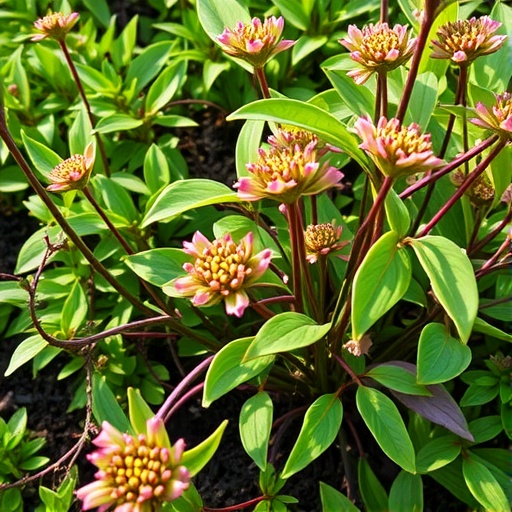
In a groundbreaking study that leverages the power of citizen science, researchers have uncovered intricate signatures of urbanization on climate and soil conditions across Europe using crowd-sensed plant data. This innovative approach harnesses millions of observations contributed by enthusiastic nature observers and cutting-edge plant identification apps, transforming these living organisms into dynamic environmental sensors. The research, published in Nature Cities, demonstrates how plants can reveal nuanced insights into local climate and soil variability, particularly within the context of urban ecosystems.
The study compiled an astonishing 81 million plant occurrence records spanning over 15,000 vascular plant taxa across Europe. These data were gathered through an amalgamation of citizen science platforms, including popular mobile apps such as Flora Incognita and Pl@ntNet, alongside platforms like iNaturalist and numerous national species reporting services. By adopting stringent quality control measures—such as filtering records for geospatial accuracy and limiting coordinate uncertainty—the authors ensured that the dataset’s integrity upheld the rigorous standards necessary for robust scientific analyses.
To translate these occurrences into meaningful environmental indicators, the team integrated ecological indicator values for temperature, soil pH, and other critical soil properties, calibrated specifically for vascular plants. These indicator values were sourced from three comprehensive pan-European systems and harmonized onto a unified scale from 0 to 10, enabling consistent cross-comparison. Notably, 0 and 10 represent theoretical extremes rarely observed in practice due to the complex coexistence of plant species exhibiting diverse tolerances along environmental gradients. This methodology provided a novel bioindication framework that links plant distributions directly to environmental factors, reflecting localized conditions with exceptional granularity.
Spatial mapping of climate and soil variables derived from this bioindication framework was performed at multiple resolutions. For Europe-wide analyses, the authors employed a 10-arcminute grid (~10 km), while urban areas benefitted from a much finer resolution of 0.1 arcminute (~100 m), capitalizing on denser data availability. Urban boundaries were delineated using Eurostat’s city polygons, filtered to include municipalities with populations exceeding 50,000 residents, ensuring a focus on significant urban centers. This dual-scale mapping illuminated detailed patterns of climate and soil variability, revealing how urban land-use types distinctly modulate environmental factors within city landscapes.
Central to the study was an extensive sensitivity and validation effort. The bioindication-derived temperature measures exhibited an outstanding correlation (Spearman’s r = 0.96) with independently measured data from WORLDCLIM, affirming the approach’s reliability. Soil pH bioindications also correlated well (r = 0.86) with SoilGrids predictions, despite recognized limitations in soil pH mapping due to measurement and modeling challenges inherent to soil data. By comparing to expert-validated vegetation plot data, the researchers confirmed that their crowd-sensed plant bioindication was robust against common biases in citizen science datasets, such as species misidentification and regional sampling disparities.
To further interrogate the influence of urban land-use on environmental heterogeneity, the study employed sophisticated mixed-effects statistical modeling. These analyses differentiated contributions from geographic regions—categorized into Nordic, British Isles, Eastern, Central, and Southern Europe—and urban land-use types such as continuous and discontinuous urban fabric, industrial zones, green spaces, and forests. The models revealed that urban landscapes exhibit unique climatic and pedological fingerprints shaped by both regional physiogeographic contexts and localized land-use practices, underscoring the complex interplay between natural and human-altered environments.
Delving into intra- and inter-city variability, the researchers quantified environmental gradients within cities and between paired urban centers. This revealed that local land-use heterogeneity often drives sharper environmental contrasts within cities compared to differences observed between distant urban areas. Moreover, analyses of distance decay patterns demonstrated that urban land uses, especially managed green spaces and forests, tend to homogenize environmental conditions across geographically disparate cities, illustrating how urbanization can blur regional environmental distinctiveness.
This study not only pioneers the use of crowd-sensed plant data to characterize urban climates and soils but also exemplifies the potential of leveraging distributed citizen science contributions for high-resolution environmental monitoring. By effectively turning plants into living sensors, the research opens new avenues for understanding urban environmental dynamics with far-reaching implications for urban planning, biodiversity conservation, and climate adaptation strategies.
The research highlights the importance of maintaining extensive and accurate citizen science networks, emphasizing the need for continued public engagement and technological advancements to capture biodiversity data at unprecedented scales. The integration of plant trait-based ecological indicators marks a significant advance in linking biological data with abiotic variables, providing a holistic perspective on ecosystem functionality amid urban pressures.
By mapping environmental variables at such fine resolutions in urban settings, this work enables urban planners and policymakers to pinpoint micro-scale thermal and soil-related challenges and opportunities. For example, understanding temperature hotspots or soil degradation zones within urban fabrics can guide tree planting initiatives, green infrastructure development, and soil remediation efforts that enhance city resilience and inhabitants’ quality of life.
The findings also shed light on how different urban land-use categories distinctly shape their microclimates and soil environments. Industrial and highly urbanized areas tend to exhibit elevated temperature profiles and altered soil conditions, whereas green urban areas and urban forests maintain cooler and more natural-like soil characteristics. These urban ecological signatures not only influence local biodiversity but also affect ecosystem services such as air quality and water regulation.
Furthermore, the approach’s cross-validation with multiple independent datasets solidifies confidence in the bioindication method. While challenges such as data sparsity in certain regions and saturation effects in modeled soil pH remain, the continued refinement of plant indicator databases and advancement in remote sensing technologies promises to overcome these hurdles, making bioindication a cornerstone methodology in urban environmental science.
The breadth of taxa analyzed and the extensive geographic coverage underscore the scalability and adaptability of this approach to other continents and biomes. Future studies can replicate and expand this framework to address environmental questions linked to global urbanization trends, habitat fragmentation, and climate change impacts on urban flora.
Ultimately, this landmark research exemplifies the intersection of community engagement, big data analytics, and ecological theory to generate actionable knowledge on how urbanization imprints itself on the environment through subtle but measurable changes in plant indicators. It invites a paradigm shift whereby the public actively contributes to monitoring and managing the ecosystems they inhabit, fostering an inclusive and informed stewardship of urban nature.
Cite Scienmag News
Denise Maddox. (January 15, 2026). Crowd-Sensed Plants Reveal Urbanization’s Climate Impact. Scienmag. https://scienmag.com/crowd-sensed-plants-reveal-urbanizations-climate-impact/
Denise Maddox. "Crowd-Sensed Plants Reveal Urbanization’s Climate Impact." Scienmag, 15 January 2026, https://scienmag.com/crowd-sensed-plants-reveal-urbanizations-climate-impact/. Accessed 4 September 2026.
Denise Maddox. "Crowd-Sensed Plants Reveal Urbanization’s Climate Impact." Scienmag. January 15, 2026. https://scienmag.com/crowd-sensed-plants-reveal-urbanizations-climate-impact/


