


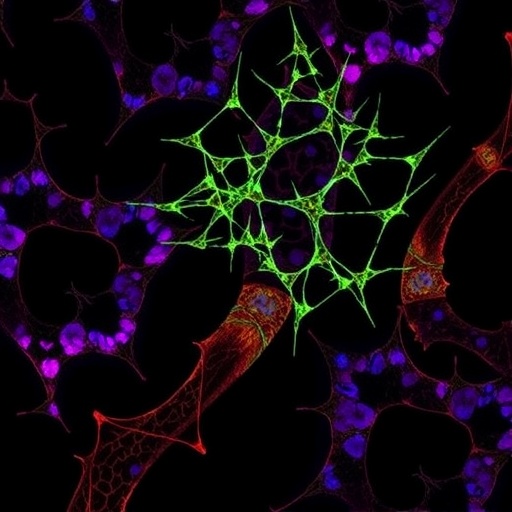
In the realm of cancer research, a novel and promising advancement has emerged from the scientific exploration of matrine derivatives. A recent study led by Wang, Xie, and Hu has unveiled a particular derivative known as B10, showcasing its profound anti-liver cancer effects both in vitro and in vivo. This groundbreaking research shines a light on the potential of targeting specific signaling pathways to combat this lethal disease, offering new hope for therapeutic approaches in hepatocellular carcinoma treatment.
Liver cancer remains one of the most significant global health challenges, ranking among the leading causes of cancer-related mortality. Hepatocellular carcinoma (HCC), which represents the most prevalent form of liver cancer, often emerges partly due to chronic liver diseases, including viral hepatitis and cirrhosis. Conventional treatment methods, including surgical resection, radiofrequency ablation, and systemic therapies, have been hindered by factors such as late-stage diagnosis and inherent resistance to treatments. These conditions underline the pressing need for the development of innovative therapeutic agents capable of overcoming these barriers.
The compound B10, derived from matrine, has garnered attention in the scientific community due to its unique structural properties and biological activities. Matrine itself is a natural alkaloid found in the Sophora genus of plants, which has previously demonstrated various pharmacological effects, including anti-inflammatory and anticancer activities. The research team’s objective was to elucidate the mechanisms underlying the anti-cancer properties of B10, specifically its interaction with the FGFR3/PI3K/AKT signaling pathway, known to play a critical role in tumor growth and survival.
The study utilized a combination of in vitro assays and in vivo animal models to rigorously assess the efficacy of B10. These methodologies provided a comprehensive understanding of how B10 influences cellular behaviors associated with cancer cells, such as proliferation, migration, and apoptosis. The results indicated a significant inhibition of these malignant properties when cells were exposed to B10. The findings underscore the compound’s ability to disrupt the proliferative signaling of cancer cells, offering a multi-faceted approach to combating liver cancer.
At the molecular level, B10 was shown to specifically target the FGFR3 (Fibroblast Growth Factor Receptor 3), a receptor tyrosine kinase often implicated in various tumorigenic processes. Through binding with FGFR3, B10 initiates a cascade of intracellular signaling that subsequently affects the downstream PI3K/AKT pathway. This activation leads to an array of cellular responses conducive to growth and survival; thus, the blockade of this pathway is integral for the anti-cancer effects observed with B10.
Further investigation into the PI3K/AKT signaling pathway revealed that B10 effectively induces apoptosis in liver cancer cells, urging a shift from proliferative to death pathways. This dual mechanism—combining inhibition of cellular proliferation and promotion of apoptosis—positions B10 as a vigorous contender in the fight against HCC. Notably, the in vivo studies corroborated these findings, showcasing B10’s ability to impede tumor growth and enhance survival rates in animal models afflicted with liver cancer.
Additionally, the research encompassed the exploration of potential side effects and toxicity levels of B10. Ensuring the safety profile of any therapeutic agent is paramount, particularly in cancer treatments where patients are already experiencing debilitating conditions. The study identified a favorable safety profile for B10, suggesting that it could be developed not only as a therapeutic agent but also as a potential combination partner in existing treatment regimens for liver cancer.
This innovative work by Wang and colleagues marks a significant stride in cancer research, providing a scaffold on which future therapeutic strategies may be built. The dual-targeting mechanism of B10 highlights a paradigm shift in how treatments can be approached, focusing on not just combating the disease but also understanding its cellular mechanisms. As cancer biology continues to evolve, such derivatives hold promise for enhanced specificity in targeting tumor cells while sparing healthy tissue.
The researchers emphasize the need for continued exploration and clinical validation of B10. As with many preclinical findings, the transition from bench to bedside remains a critical juncture that requires thorough investigation in human trials. The collective insights from this study and future research endeavors may pave the way for impactful advancements in liver cancer management, ultimately leading to improved outcomes for patients globally.
In conclusion, the exploration of B10 as a novel anti-liver cancer agent represents an exciting development in the field of oncology. As the scientific community further delves into the complexities of cancer signaling pathways, the implications of this research extend beyond just the mechanisms of B10. It symbolizes the broader narrative in cancer research—the quest for targeted therapies that not only thwart tumor growth but also improve the quality of life for patients facing formidable challenges.
While the current study lays a solid foundation, the potential applications of B10 and similar compounds could indeed reshape the clinical landscape of liver cancer treatment in the years to come. Collaborations between researchers, clinicians, and pharmaceutical developers will be vital in harnessing the full potential of these findings, ensuring that discoveries not only remain confined to the laboratory but translate into real-world solutions for patients battling liver cancer.
Overall, this significant research contributes a new chapter in the fight against one of the most challenging cancers, embodying the spirit of innovation and perseverance that characterizes modern scientific inquiry.
Wang, X., Xie, Y., Hu, Z. et al. A novel matrine derivative B10 exerts its anti-liver cancer activity in vitro and in vivo via targeting FGFR3/PI3K/AKT signaling pathway.
Mol Divers (2026). https://doi.org/10.1007/s11030-025-11460-8
Cite Scienmag News
Nathaniel Bowman. (January 15, 2026). Matrine B10 Targets FGFR3 Pathway to Fight Liver Cancer. Scienmag. https://scienmag.com/matrine-b10-targets-fgfr3-pathway-to-fight-liver-cancer/
Nathaniel Bowman. "Matrine B10 Targets FGFR3 Pathway to Fight Liver Cancer." Scienmag, 15 January 2026, https://scienmag.com/matrine-b10-targets-fgfr3-pathway-to-fight-liver-cancer/. Accessed 6 September 2026.
Nathaniel Bowman. "Matrine B10 Targets FGFR3 Pathway to Fight Liver Cancer." Scienmag. January 15, 2026. https://scienmag.com/matrine-b10-targets-fgfr3-pathway-to-fight-liver-cancer/


