


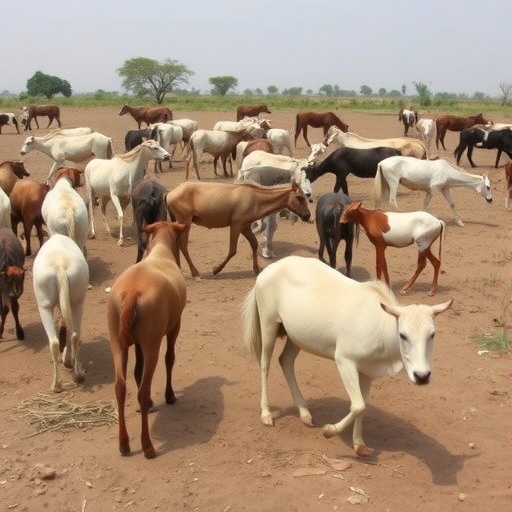
In the arid landscapes of the Southwest region of Somalia, an urgent crisis is unfolding as meteorological droughts continue to devastate pastoralist communities. These groups, traditionally reliant on livestock, face an existential threat that undermines their way of life and economic stability. The latest research conducted by Wardhere and Mahamed sheds light on the intricate relationship between drought conditions and the livelihood assets of these pastoralist populations, offering valuable insights that could facilitate effective interventions.
The study reveals that the frequency and intensity of droughts have increased in recent years, largely attributed to climatic changes and unsustainable land management practices. The pastoralists, who depend heavily on seasonal rains to sustain their herds, are now caught in a vicious cycle of drought and economic hardship. This shift threatens not only their immediate survival but also their cultural heritage, which is intrinsically linked to pastoralism.
Key findings indicate that the declining availability of water and pasture represents a significant blow to livestock health and productivity. The researchers highlight how diminishing herd sizes directly correlate with reduced social status and economic power among pastoralist families. As animals perish due to scarce resources, the community’s resilience crumbles, revealing a stark picture of desperation as families struggle to provide for themselves.
Moreover, the investigation delves into the broader implications of drought on pastoralist livelihood assets. Financial resources, including income from livestock sales, have plummeted, leaving families vulnerable and exposed. Staple crops once cultivated to supplement their diets have also failed, leading to heightened food insecurity. The effects are not only immediate but also long-lasting; families merely survive on the edge of subsistence, with little hope for recovery.
Importantly, the research emphasizes the social fabric of these communities, which is experiencing significant strain under the pressures of drought. Traditional support mechanisms that have long upheld these groups are being eroded as resources dwindle. The emotional and psychological toll of prolonged drought conditions cannot be overstated, with increased levels of distress reported among pastoralists. As hope wanes, there is a growing sense of despair that permeates through families and communities.
Furthermore, the ramifications of these meteorological challenges extend beyond the pastoralists themselves. Social structures and relationships are disrupted, as migration patterns shift in search of survivable land. This migratory pressure creates tensions with neighboring communities, sometimes resulting in conflicts over dwindling resources. The community dynamics, once based on cooperation and mutual support, are now fragile and tense, a transformation deeply rooted in ecological change.
The research posits that adaptations may be necessary for the survival of these communities. Diversification of income, the introduction of alternative livelihoods, and methods of sustainable land management are posited as potential pathways through these difficult times. Community engagement in decision-making processes is highlighted as crucial, fostering resilience not only through adaptation but also through a reaffirmation of their cultural identity that is at risk of being lost.
It is essential to recognize the role of policy interventions in addressing these alarming trends. A multi-faceted approach is critical, engaging various stakeholders including governmental agencies, non-governmental organizations, and the pastoralist communities themselves. Strategic planning must be grounded in scientific data and community insights to ensure that the solutions implemented are effective and sustainable.
Understanding the socio-economic realities faced by pastoralists also requires a shift in how drought impacts are perceived. It is not merely an environmental issue but a complex interplay of socio-economic factors that must be considered. By centering pastoralist voices in the discourse around drought impacts, a more holistic understanding emerges, paving the way for meaningful action.
As we digest the findings of Wardhere and Mahamed’s research, it becomes evident that the future of pastoralist communities in Southwest Somalia is precarious. Yet, there is still a glimmer of hope. By recognizing the essential relationship between ecological health and social well-being, targeted interventions that honor and support the pastoralist way of life can emerge. Moreover, the integration of traditional knowledge with modern scientific practices can offer pathways to resilience that honors their heritage.
The echoes of this research resonate beyond the boundaries of Somalia, as similar climatic challenges face pastoralists across the globe. The lessons learned here could serve as a roadmap for other vulnerable regions where communities are grappling with the impacts of climate change. In the urgency of the present moment, the call for action rings clear, underscoring the need for immediate interventions accompanied by long-term strategic planning.
With future research, continued collaboration among scholars, policymakers, and the communities at risk will be crucial as we aim to build adaptive strategies that bolster these resilient populations. The survival of pastoralist communities in Southwest Somalia hangs in the balance, and swift action is paramount if they are to continue thriving amid the challenges that lie ahead. Their fate offers a critical lesson for us all, reminding us of our interconnectedness with nature and the urgent need for sustainable coexistence.
In conclusion, the impact of meteorological drought on pastoralist livelihood assets in Southwest Somalia cannot be underestimated. The study by Wardhere and Mahamed provides a stark but necessary overview of this pressing issue, highlighting that the fight against climate change is as much a social battle as it is an environmental one. Only through coordinated efforts can we hope to alleviate the suffering of these pastoralists, ensuring that they retain their livelihoods and cultural heritage in the face of adversity.
Wardhere, M.A.H., Mahamed, M.A.S. Impact of meteorological drought on pastoralist livelihood assets in the Southwest of Somalia.
Discov Sustain (2026). https://doi.org/10.1007/s43621-026-02616-z
Cite Scienmag News
Violet Maxwell. (January 15, 2026). Drought’s Effects on Pastoral Livelihoods in Southwest Somalia. Scienmag. https://scienmag.com/droughts-effects-on-pastoral-livelihoods-in-southwest-somalia/
Violet Maxwell. "Drought’s Effects on Pastoral Livelihoods in Southwest Somalia." Scienmag, 15 January 2026, https://scienmag.com/droughts-effects-on-pastoral-livelihoods-in-southwest-somalia/. Accessed 4 September 2026.
Violet Maxwell. "Drought’s Effects on Pastoral Livelihoods in Southwest Somalia." Scienmag. January 15, 2026. https://scienmag.com/droughts-effects-on-pastoral-livelihoods-in-southwest-somalia/


