


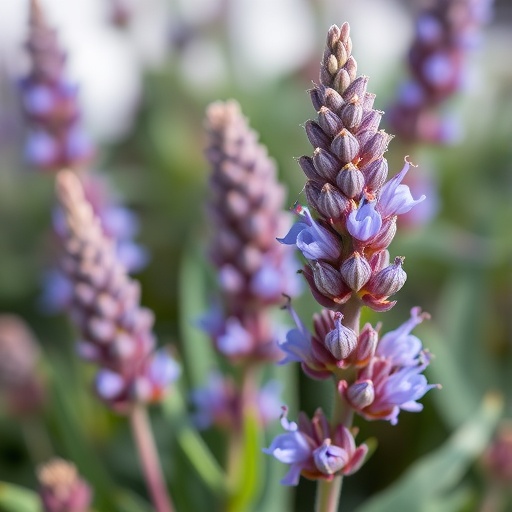
In a surprising turn of events, a research article published in 2026, which explored the harmful effects of carbon tetrachloride (CCl4) on renal and hepatic functions in experimental mice, has been officially retracted. The study, originally carried out by a team of researchers led by Fahmy et al., aimed to highlight the potential of Egyptian Salvia officinalis L essential oil as a protective agent against the oxidative stress induced by this chemically notorious substance. The current situation underscores the complexities and challenges faced by scientific research, especially in fields concerned with toxicology and phytotherapy.
Carbon tetrachloride has long been recognized as a potent environmental contaminant, notorious for its hepatotoxic and nephrotoxic effects. When introduced into biological systems, it undergoes metabolism primarily in the liver; this process produces free radicals and reactive oxygen species (ROS) that contribute to cellular damage. The implications of such toxicity extend beyond individual organ systems, posing a significant threat to health and environmental safety. It is within this framework that the original study underscored the urgency of identifying effective antidotes and protective compounds against CCl4’s harmful effects.
The retraction of the article invites scrutiny into the initial methodologies employed by the researchers. The study aimed to delineate the protective effects of Salvia officinalis L essential oil, commonly known as sage, against CCl4-induced toxicity. Sage has garnered attention for its high antioxidant content, which includes a variety of compounds such as flavonoids and phenolic acids. Such compounds are believed to neutralize oxidative stress effectively and mitigate tissue damage, thus presenting an interesting avenue for further research and therapeutic applications.
The importance of evaluating the safety and efficacy of any substance before recommending its use cannot be overstated. In light of the retraction, the academic and medical communities are urged to reassess findings that hinge upon the efficacy of herbal remedies in counteracting chemical toxicity. The increasing reliance on plant-based treatments necessitates rigorous testing and validation, particularly when results are linked to health implications for both humans and wildlife.
As Stein et al. has highlighted, the pathway from experimental findings to clinical application is fraught with hurdles. The combination of extensive experimental protocols and peer review is supposed to serve as a safeguard against the dissemination of faulty scientific claims. However, the reality is that mistakes can occur, necessitating a transparent process for retraction and correction of published literature. The academic world must continually improve its structures around publication ethics to maintain credibility.
The research landscape is rife with examples where preliminary data suggested potentially groundbreaking discoveries, only to be met with disappointment post-retrospection. The case of Fahmy et al. is a sobering reminder of the rigor and scrutiny required within the field. Researchers are encouraged to adopt an unwavering commitment to methodological accuracy, relinquishing biases and ensuring that every experiment adheres to the highest standards of integrity.
Public trust in scientific literature is paramount, especially in an age defined by misinformation and skepticism. The ramifications of retracted studies extend beyond academic walls, influencing public perception and the discourse surrounding health and wellness. Thus, the retraction serves as a wake-up call both for researchers and the institutions guiding them. A call for rigorous checks and balances resonates across scientific communities in every discipline.
Moreover, the ramifications of toxic substances such as carbon tetrachloride are profound not only in the context of laboratory investigations but also in the realm of environmental policy and public health. Identifying the long-term effects of exposure to such chemicals must remain a priority, given their prevalence in industrial applications. The conversation around safer alternatives is more critical now than ever. As biodiversity is increasingly threatened by pollutants, the development and approval of effective bio-remedial agents are a necessity.
Simultaneously, the fascinating properties of plants such as Salvia officinalis L must be cultivated with scientific skepticism and optimized through rigorous testing. Understanding how these antioxidants operate on a molecular level can offer insights that further integrate traditional knowledge with contemporary scientific inquiry. This interdisciplinary approach paves the way for a more holistic understanding of how to combat environmental pollutants effectively.
In conclusion, while it is disappointing to see promising research retracted, it is a necessary step toward greater scientific integrity. The lesson reinforces the importance of transparency, collaboration, and diligence within the research community to avoid promulgation of potentially misleading findings. As we continue to study the complex interplay between environmental toxins and potential antidotes, the drive for methodological excellence must remain at the forefront of scientific pursuits.
Ultimately, this incident serves as a clarion call to uphold rigorous standards in the scientific process. The intricacies of research make it vulnerable to oversight and misconceptions, but a commitment to ethical research can guide the path toward more accurate knowledge. Future studies focused on carbon tetrachloride, Salvia officinalis L, and similar research topics should take heed of this experience as they craft the narrative surrounding toxicology and the protective potential of botanicals.
While the research community navigates this particular setback, the focus must remain on progressive discovery. The need for innovative solutions to combat chemical toxicity has never been more pressing. Further investigations into both the risks associated with substances like CCl4 and the benefits of natural extracts will be critical in shaping future health recommendations. As researchers rally to uphold the standards of their field, the broader implications of this retraction will reverberate through ongoing studies, discussions, and applications in this crucial area of scientific inquiry.
Fahmy, M.A., Diab, K.A., Abdel-Samie, N.S. et al. Retraction Note: Carbon tetrachloride induced hepato/renal toxicity in experimental mice: antioxidant potential of Egyptian Salvia officinalis L essential oil.
Environ Sci Pollut Res (2026). https://doi.org/10.1007/s11356-026-37434-3
Cite Scienmag News
Violet Maxwell. (January 15, 2026). Salvia Officinalis Essential Oil Mitigates CCl4 Toxicity. Scienmag. https://scienmag.com/salvia-officinalis-essential-oil-mitigates-ccl4-toxicity/
Violet Maxwell. "Salvia Officinalis Essential Oil Mitigates CCl4 Toxicity." Scienmag, 15 January 2026, https://scienmag.com/salvia-officinalis-essential-oil-mitigates-ccl4-toxicity/. Accessed 3 September 2026.
Violet Maxwell. "Salvia Officinalis Essential Oil Mitigates CCl4 Toxicity." Scienmag. January 15, 2026. https://scienmag.com/salvia-officinalis-essential-oil-mitigates-ccl4-toxicity/


