


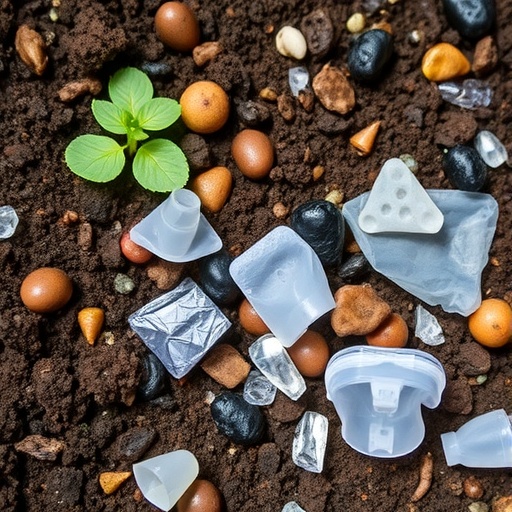
As the world becomes increasingly conscious of environmental issues, the spotlight on microplastics contamination in various ecosystems intensifies. An alarming study emerging from Delhi, India, reveals the extent to which microplastics permeate soil across different land-use types, underscoring the urgent need for public awareness, scientific scrutiny, and proactive measures to combat this invisible threat. This research not only frames microplastics as a pressing challenge for urban landscapes but also emphasizes their potential long-term impacts on soil health and the broader environment.
Microplastics, which are tiny plastic particles smaller than five millimeters, have become ubiquitous in our environment, infiltrating terrestrial and aquatic systems alike. They arise from a variety of sources, such as the breakdown of larger plastic debris, synthetic fibers from textiles, and microbeads found in personal care products. Delhi, a bustling metropolis with a rapidly growing population, is particularly vulnerable to microplastic pollution due to its diverse land-use types, ranging from agricultural fields to urbanized landscapes and industrial sites. This study depicts how these factors converge, creating a complex web of microplastics contamination that poses severe risks to both human health and agricultural productivity.
Researchers conducted a comprehensive analysis in which soil samples were collected from various land-use types within the city. By meticulously investigating microplastic concentrations across these diverse contexts, the study provides a revealing snapshot of contamination levels that threaten not only the environment but also food safety and public health. The findings suggest that soil in areas with high human activity, such as urban parks and residential neighborhoods, harbors significantly higher concentrations of microplastics compared to less disturbed soils in agricultural regions.
The implications of these findings are profound. Soil serves as the foundation for our ecosystems, supporting plant growth and, by extension, the food chain. When microplastics enter the soil, they can alter its physical properties, hinder plant development, and cause potential leaching of hazardous chemicals into food crops. This contamination cycle creates a risk for both humans and wildlife, as microplastics can accumulate in the food we consume, thereby entering our bodies and possibly leading to adverse health effects.
Furthermore, the study uncovers that the types of microplastics present in the soil vary according to land-use. For instance, urban areas predominantly contain microplastics derived from various domestic sources, while agricultural lands exhibit microplastics originating mainly from agricultural practices, including the use of plastic films and containers. This divergence points towards the need for targeted interventions that address the specific sources of microplastic pollution in different contexts.
As microplastics become increasingly recognized as a public health concern, there is a pressing call for more stringent regulations regarding plastic waste management and disposal practices. Policymakers must act decisively, crafting strategies that reduce plastic consumption and improve waste treatment to curtail microplastic entry into soil systems. Public awareness initiatives should be ramped up to educate communities about the impacts of plastic pollution on soil health and the environment at large.
In addition to regulatory efforts, there is a critical need for enhanced scientific research to understand the long-term effects of microplastics on soil microbiomes and ecosystems. Studying the interactions between microplastics, soil organisms, and plants will be vital in determining how these particles influence nutrient cycling, water retention, and overall soil fertility. This line of inquiry will not only inform remediation strategies but also guide agricultural practices that aim to minimize microplastic contamination.
The study’s authors emphasize the complexity of microplastics as an environmental issue that transcends local boundaries and requires collaborative efforts spanning academic, governmental, and community levels. To meaningfully address microplastic pollution, integrated approaches that consider the interconnectedness of land-use, waste management, and human behavior will be crucial.
As urban centers like Delhi continue to grow, the challenge of managing microplastic pollution will only intensify. The findings from this research serve as both a wake-up call and a roadmap for steering future actions aimed at safeguarding soil health. With proactive measures, it is possible to mitigate the spread of microplastics and protect the fundamental resources that sustain life on Earth.
The persistent threat of microplastics looms over global environmental health, with disturbing implications for agricultural productivity, food safety, and human well-being. This research lays bare the reality of contamination in urban soils and highlights the need for comprehensive efforts to combat pollution proactively. The call to action is clear—society must rally together to address the pervasive issue of plastic pollution, ensuring a healthier planet for future generations.
In conclusion, the investigation into microplastics contamination in soil across varying land-use types in Delhi provides a critical insight into the environmental challenges we face. By taking actionable steps to understand and combat this phenomenon, societies can pave the way toward a sustainable future, protect their ecosystems, and ensure the health of every inhabitant.
By unveiling the hidden menace of microplastics, researchers have not only contributed new knowledge to a pressing environmental issue but also empowered communities to take charge of their surroundings. As the call to action reverberates, it is essential to shift behaviors, enhance policy advocacy, and embark on a pathway towards cleaner, healthier soils.
Singh, A., Singh, P., Singh, S.P. et al. Soil the silent sink: unveiling microplastics contamination across different land-use types in Delhi, India.
Environ Monit Assess 198, 127 (2026). https://doi.org/10.1007/s10661-026-14992-0
Cite Scienmag News
Violet Maxwell. (January 14, 2026). Unveiling Microplastics in Delhi’s Diverse Soils. Scienmag. https://scienmag.com/unveiling-microplastics-in-delhis-diverse-soils/
Violet Maxwell. "Unveiling Microplastics in Delhi’s Diverse Soils." Scienmag, 14 January 2026, https://scienmag.com/unveiling-microplastics-in-delhis-diverse-soils/. Accessed 4 September 2026.
Violet Maxwell. "Unveiling Microplastics in Delhi’s Diverse Soils." Scienmag. January 14, 2026. https://scienmag.com/unveiling-microplastics-in-delhis-diverse-soils/


