


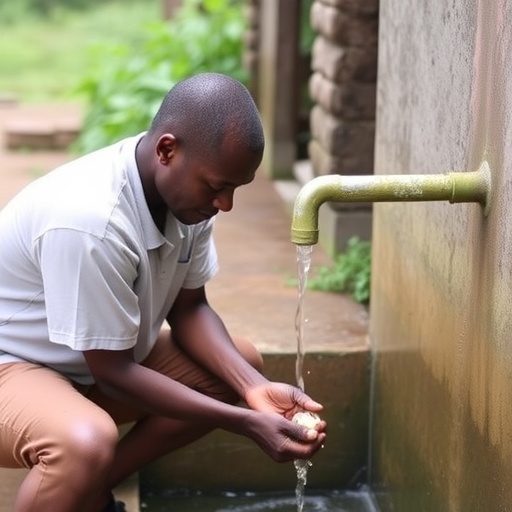
In a remarkable study set to pave the way for improvements in public health, a research team comprised of experts M. Fentie, E. Assefa, and T. Tena explores the pressing issue of drinking water quality and service delivery within educational and healthcare institutions in rural Amhara, Ethiopia. Their findings, published in “Discover Sustainability,” contribute to a growing body of research that underscores the crucial intersection of environmental health, education, and sustainable development in resource-poor settings.
The study emerges at a pivotal moment when the global community is increasingly aware of the systemic challenges posed by inadequate access to safe drinking water. It highlights an alarming gap in service delivery in rural areas where educational and healthcare facilities serve as critical lifelines for underprivileged demographics. The implications of the findings are profound, potentially influencing policy formulations aimed at enhancing drinking water standards in settings where they are desperately needed.
Fentie and colleagues utilized a robust methodology to assess the quality of drinking water across multiple sites, employing both qualitative and quantitative measurement techniques. Their comprehensive approach encompassed microbiological assessments, chemical testing, and user surveys to gauge perception and satisfaction levels among stakeholders in these institutions. This tripartite analysis not only painted a vivid picture of existing conditions but also served as a valuable tool for identifying specific areas requiring urgent attention.
One striking discovery was the extent of contamination observed in various water samples collected during the study. Microbial presence far exceeded WHO guidelines, raising critical concerns regarding the health impacts on vulnerable populations, particularly children and patients in healthcare settings. The researchers cautioned that untreated water can exacerbate existing health burdens, fostering a cycle of illness that perpetuates inequality and stifles community development.
Equally troubling were the findings related to infrastructure deficiencies in these institutions. The study documented instances of inadequate water supply systems, aging infrastructure, and poor maintenance practices that collectively undermined efforts to provide safe drinking water. By identifying systemic failures and their repercussions, the research provides a foundation for targeted interventions aimed at rehabilitating or replacing obsolete water systems that are no longer fit for purpose.
In addition to the technical evaluations, the authors spotlight the importance of community engagement in addressing water quality issues. They emphasize that without fostering a sense of ownership among local populations, initiatives aimed at improving water access may struggle to gain traction. Empowering communities to take an active role in managing their water resources could yield sustainable benefits and engender a culture of responsibility that extends beyond individual institutions.
The timing of this research is particularly significant given the ongoing challenges posed by climate change. As environmental shifts disrupt traditional water sources, rural communities in Ethiopia face an uncertain future regarding their water security. The authors argue that bolstering local resilience through adaptive management strategies must be prioritized to ensure long-term access to safe drinking water, especially in healthcare and educational contexts.
Moreover, the study’s findings resonate within the broader framework of the United Nations’ Sustainable Development Goals (SDGs), particularly Goal 6, which aims to ensure availability and sustainable management of water and sanitation for all. By aligning local efforts with these global objectives, stakeholders can better mobilize resources and garner support for initiatives designed to enhance water infrastructure and public health outcomes.
To facilitate the necessary changes highlighted in the study, the authors call for a multi-faceted strategy that combines technical solutions with improved governance frameworks. Policymakers must adopt a holistic approach that addresses the intertwined challenges of water quality, service delivery, and community engagement. This paradigm shift is essential to create an enabling environment that fosters innovative solutions and encourages public-private partnerships in water management.
Intriguingly, the research incorporates insights from a diverse array of stakeholders, including local government officials, healthcare providers, educators, and community members. By amplifying these voices, the authors offer a nuanced perspective that underscores the importance of inclusivity in developing effective water management policies. This participatory model could serve as a blueprint for similar studies in disparate contexts, ensuring that solutions are tailored to the unique circumstances of each community.
While the study is undeniably groundbreaking, it also opens the door to further inquiry. Future research could delve into longitudinal analyses of water quality and health outcomes, providing crucial data to track the impact of interventions over time. Investigating the economic implications of water quality improvements could also yield valuable insights into the cost-benefit ratios of investing in public health infrastructure.
In conclusion, the extensive examination conducted by Fentie and colleagues spotlights a critical public health issue impacting rural Amhara, Ethiopia, and lays the groundwork for necessary advancements in water quality and service delivery. Their findings serve as a clarion call for urgent action to address the multifaceted challenges of drinking water access, particularly as these challenges are magnified by growing population pressures and climate variability.
The study not only informs local stakeholders but also contributes invaluable knowledge to the global dialogue on sustainable development and health. As the world continues to grapple with complex environmental and social challenges, research like this provides a beacon of hope and a framework for actionable solutions that could ultimately transform lives in some of the most vulnerable settings.
Fentie, M., Assefa, E., Tena, T. et al. Evaluation of drinking water quality and service delivery in educational and healthcare institutions in rural Amhara, Ethiopia.
Discov Sustain (2026). https://doi.org/10.1007/s43621-025-02573-z
Cite Scienmag News
Violet Maxwell. (January 14, 2026). Assessing Water Quality in Rural Amhara Institutions. Scienmag. https://scienmag.com/assessing-water-quality-in-rural-amhara-institutions/
Violet Maxwell. "Assessing Water Quality in Rural Amhara Institutions." Scienmag, 14 January 2026, https://scienmag.com/assessing-water-quality-in-rural-amhara-institutions/. Accessed 3 September 2026.
Violet Maxwell. "Assessing Water Quality in Rural Amhara Institutions." Scienmag. January 14, 2026. https://scienmag.com/assessing-water-quality-in-rural-amhara-institutions/


