


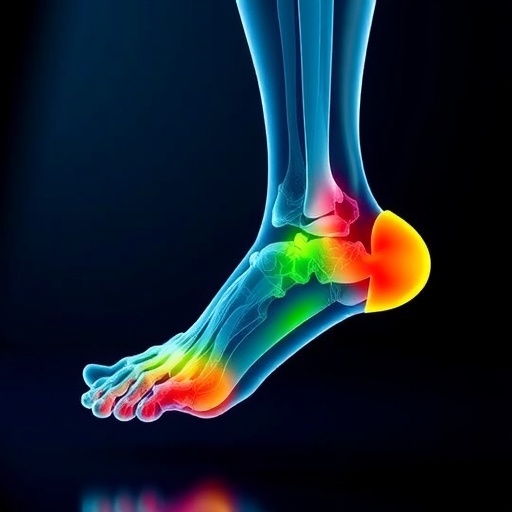
In a groundbreaking study, researchers from Japan have developed an advanced biomechanical model that simulates the mechanics of the human foot during walking. This remarkable study is significant not only for the fields of biomechanics and biomedical engineering, but also for those interested in enhancing our understanding of human movement and improving injury rehabilitation strategies. By employing a forward dynamic finite element model, the team aimed to create a detailed representation of human foot dynamics that can contribute immensely to both clinical and athletic applications.
Foot mechanics is a complex interplay of bones, muscles, tendons, and soft tissues. The intricacies of how these components work together to facilitate movement are significant, yet not fully understood. The development of this anatomically detailed model allows researchers to analyze how the foot behaves under various conditions, including different walking speeds and terrains. This level of detail is essential for devising effective interventions aimed at alleviating foot pain or preventing injuries connected to abnormal gait mechanics.
The researchers employed a finite element analysis (FEA) approach, which is a powerful computational method used to predict how structures respond to external forces. By breaking down the anatomy of the foot into finite elements, the team was able to simulate the various stress and strain patterns that emerge while walking. This process yields valuable data regarding how forces propagate through the foot’s complex structure, which is pivotal for understanding injury mechanics and optimizing foot function.
To construct this innovative model, the researchers began by gathering anatomical data derived from high-resolution imaging techniques. They meticulously recreated the three-dimensional geometry of the foot bones, joints, muscles, and connective tissues. This anatomical fidelity allowed for more accurate simulations, reflecting realistic human foot dynamics in a physiologically relevant manner. The researchers also incorporated biomechanical properties that characterize various foot tissues, making the model sensitive to the nuances of human walking.
Once the finite element model was established, the team conducted simulations to observe how the foot responds under varying conditions. One of the significant findings of this research was that different walking speeds generated distinct loading patterns throughout the foot’s anatomy. For instance, faster walking speeds induced higher peak forces in specific areas of the foot, promoting valuable insights for clinicians focusing on sports injuries and rehabilitation regimens.
Another critical aspect of this study was the examination of the effects of surface irregularities on foot mechanics. The model enabled the researchers to simulate walking on surfaces with varying degrees of friction and compliance, revealing how the foot adapts to changes in terrain. Such understanding is vital for designing footwear that enhances performance while minimizing the risk of injuries associated with unstable walking surfaces.
The potential applications of this research extend beyond understanding foot mechanics. This information can significantly influence the design of orthopedic devices, custom footwear, and rehabilitation protocols for patients recovering from foot injuries. With a clearer understanding of how forces travel through the foot during normal walking, clinicians can make more informed decisions regarding treatment and rehabilitation strategies.
Additionally, by applying this model to athletic performance, coaches and trainers can develop better training regimens that enhance the mechanics of running and walking. By addressing biomechanical inefficiencies, athletes can improve their performance while reducing the likelihood of sustaining injuries related to poor biomechanics.
Moreover, the detailed simulations provided insights into common foot ailments, such as plantar fasciitis and Achilles tendinopathy. Understanding the underlying mechanics contributing to these conditions can foster the development of better preventive measures and therapeutic approaches. Clinicians and researchers can devise targeted treatment protocols, tailoring strategies to address the specific mechanical imperfections identified through the model.
As the research progresses, the team anticipates further refinements and validations of the model to encompass a broader spectrum of human movement patterns. Incorporating additional gait variations, such as running or changing directions, will enhance the model’s utility. Subsequent studies may also involve incorporating real-time feedback mechanisms, potentially leading to interactive systems for monitoring foot mechanics during physical activity.
This pioneering study underscores the profound impact that computational modeling can have on biomechanical research. By merging technology with clinical knowledge, researchers are paving the way for innovations in both rehabilitation and athletic training. As we continue to uncover the complexities of human biomechanics, our capacity to enhance performance, prevent injuries, and promote overall foot health will undoubtedly progress significantly.
Ultimately, the implications of this research are far-reaching, offering insights that resonate beyond the realm of biomechanics. The study stands as an exemplar of interdisciplinary collaboration, where engineering principles intersect with medical insights, inspiring further inquiry and exploration into the mechanics of human movement. As we delve deeper into the intricacies of the human foot, the potential to revolutionize healthcare practices and enhance athletic performance becomes increasingly attainable.
The research team hopes that their work will encourage further studies aimed at unraveling the complexities of human biomechanics. Future collaborations may lead to enhanced modeling techniques and broader applications, propelling the momentum of innovation within this field. The promises held by this study inspire not only the academic community but also athletic organizations and healthcare professionals who seek to elevate human performance while safeguarding health and wellness.
In conclusion, this comprehensive study on foot mechanics represents a significant step forward for both biomechanical research and clinical practice. The detailed simulations, paired with a foundation of anatomical accuracy, allow a deeper understanding of walking dynamics. As we look to the future, the potential applications of this research could profoundly influence the realms of injury prevention, rehabilitation, and performance enhancement.
Cite Scienmag News
Ophelia Keating. (January 14, 2026). Modeling Human Foot Mechanics in Walking Dynamics. Scienmag. https://scienmag.com/modeling-human-foot-mechanics-in-walking-dynamics/
Ophelia Keating. "Modeling Human Foot Mechanics in Walking Dynamics." Scienmag, 14 January 2026, https://scienmag.com/modeling-human-foot-mechanics-in-walking-dynamics/. Accessed 6 September 2026.
Ophelia Keating. "Modeling Human Foot Mechanics in Walking Dynamics." Scienmag. January 14, 2026. https://scienmag.com/modeling-human-foot-mechanics-in-walking-dynamics/


