


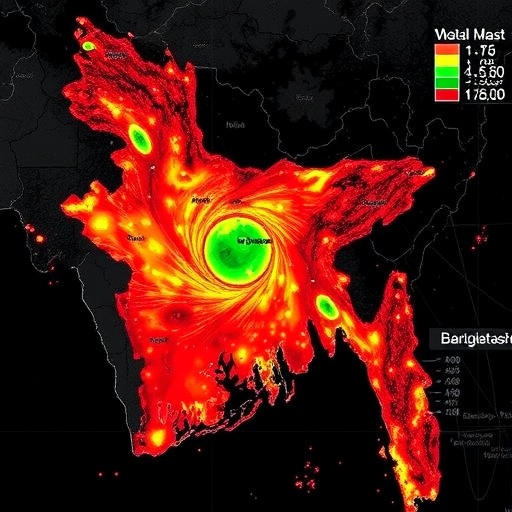
In an age where climate change poses one of the greatest existential threats to humanity, nations around the world are scrambling to adapt and mitigate its effects. For Bangladesh, a country already grappling with the adverse impacts of climate change, accurate and timely data on carbon dioxide emissions is crucial. Researchers from Bangladesh have employed innovative machine learning techniques to develop a novel approach for nowcasting CO2 emissions, which aims to provide real-time updates on the nation’s carbon footprint. This methodology is unprecedented in the region and offers a promising avenue for environmental monitoring.
Machine learning, a subset of artificial intelligence, utilizes algorithms to analyze data and make predictions or decisions without human intervention. In their groundbreaking study, Hossain et al. have harnessed this technology to create predictive models that can provide real-time estimates of CO2 emissions. Traditional methods of measuring emissions often rely on periodic data collection, which can lag significantly behind real-world scenarios. In contrast, nowcasting offers a continuous stream of data, allowing policymakers and researchers to respond more effectively to changing conditions.
The significance of this research lies in its potential to transform environmental policy in Bangladesh. The country, characterized by its dense population and rapid urbanization, faces unique challenges when it comes to managing its carbon emissions. By employing machine learning to create a nowcasting framework, the researchers are not only addressing the urgent need for accurate data but also providing a toolkit for guiding sustainable development. This innovation could empower government officials, NGOs, and the private sector to make informed decisions that impact the country’s climate strategy.
Throughout the study, the researchers utilized diverse datasets, including historical emissions data, meteorological information, and socioeconomic indicators. By feeding this rich array of information into their machine learning models, they were able to uncover complex patterns and relationships that traditional analytical methods might overlook. These models can adjust and recalibrate in real-time, ensuring that the estimates remain relevant as new data comes in. Such adaptability is essential for policy-making, as the landscape of CO2 emissions is continually evolving.
Furthermore, the implications of this research stretch beyond Bangladesh. As developing nations often lack the robust infrastructure for emissions monitoring, the machine learning framework presented by Hossain et al. could serve as a scalable solution for other countries facing similar challenges. The idea of cross-border applications raises the prospect of a global network of real-time emission monitoring, potentially leading to more effective international climate agreements and initiatives.
One of the most intriguing aspects of this research is its intersection with social equity. By understanding emissions on a granular level, stakeholders can identify the most significant sources of pollution and prioritize interventions in the areas that require them most urgently. This data-driven approach has the power to bridge gaps in policy execution, particularly in marginalized communities that often bear the brunt of environmental degradation. It emphasizes the necessity for inclusive dialogue in climate action, catering to the voices of those historically neglected.
Moreover, the nowcasting method can considerably enhance public awareness of CO2 emissions. With digital tools being more prevalent than ever, raising awareness and educational outreach via real-time emission data could foster greater public support for environmental policies and sustainable practices. Citizens armed with data can advocate for cleaner technologies and demand accountability from industries and government entities.
In parallel, the research team has emphasized the importance of collaboration among various stakeholders. The integration of machine learning techniques into environmental studies is a multidisciplinary endeavor, drawing insights from computer science, environmental science, and public policy. The effectiveness of their models depends significantly on partnerships with governmental bodies, academia, and industrial sectors. This collaborative spirit could pave the way for innovative solutions tailored to specific regional challenges.
As Bangladesh aspires to meet its climate commitments outlined in international agreements like the Paris Accord, the role of accurate CO2 nowcasting cannot be overstated. Meeting these targets not only aims to sustain the environment but also presents economic opportunities in emerging green technologies. Hossain et al. have positioned their research within this broader context, showcasing how machine learning can facilitate a transition towards sustainable energy sources and practices.
Beyond the immediate benefits, investing in nowcasting technologies can yield long-term advantages. Improved data transparency can help streamline regulatory frameworks, making them easier to enforce and adapt as technology advances. This can foster a culture of accountability among corporations and governments alike, pushing them toward more responsible climate practices.
In conclusion, the implications of Hossain et al.’s research extend well beyond the borders of Bangladesh. It represents a potential paradigm shift in the way carbon emissions are monitored and managed in developing countries. With machine learning as a cornerstone, the future of environmental data collection could be more dynamic, responsive, and inclusive. The study exemplifies how innovative technology can address pressing global challenges while underscoring the need for collective action.
Moving forward, the researchers hope that their framework will spur additional research on integrating machine learning into sustainability efforts across various sectors. They are optimistic that their pioneering work will inspire future developments, ultimately contributing to a more comprehensive understanding of climate change and its solutions worldwide.
As the world stands on the precipice of impending climate crises, studies like this one illuminate pathways toward innovative responses that can effectively curb greenhouse gas emissions and foster resilience in vulnerable nations. The journey toward a sustainable future is fraught with challenges, but with the tools of machine learning at our disposal, there is hope for tangible progress in the fight against climate change.
In summary, the nowcasting CO2 emissions study conducted by Hossain, Abdulla, Rahman, and colleagues serves not only as a critical insight into the mechanics of emissions through advanced technology but also as a rallying cry for enhanced collaboration in climate action. The integration of such cutting-edge research into policy can catalyze meaningful change, holding the potential to lead Bangladesh and other nations tackling similar hurdles towards a more sustainable and environmentally just future.
Hossain, M.M., Abdulla, F., Rahman, A. et al. Nowcasting CO2 emissions in Bangladesh: a machine learning approach.
Discov Sustain (2026). https://doi.org/10.1007/s43621-025-02579-7
Cite Scienmag News
Blake Davidson. (January 13, 2026). Machine Learning Tracks CO2 Emissions in Bangladesh. Scienmag. https://scienmag.com/machine-learning-tracks-co2-emissions-in-bangladesh/
Blake Davidson. "Machine Learning Tracks CO2 Emissions in Bangladesh." Scienmag, 13 January 2026, https://scienmag.com/machine-learning-tracks-co2-emissions-in-bangladesh/. Accessed 4 September 2026.
Blake Davidson. "Machine Learning Tracks CO2 Emissions in Bangladesh." Scienmag. January 13, 2026. https://scienmag.com/machine-learning-tracks-co2-emissions-in-bangladesh/


