


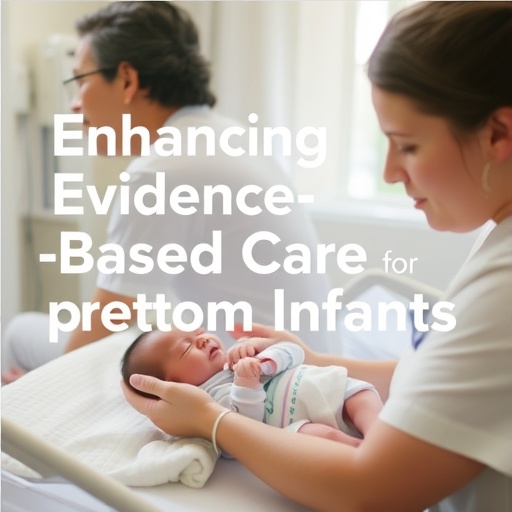
In a groundbreaking new meta-analysis published in BMC Nursing, researchers Zhang, Wang, and He, along with their collaborators, have revealed the profound impact that family integrated care (FIC) can have on the treatment of preterm infants in neonatal intensive care units (NICUs). This comprehensive systematic review synthesizes data from numerous studies, providing compelling evidence that supports the adoption of FIC as a standard practice in NICUs. The exploration of this approach promises to revolutionize the care provided to vulnerable newborns and their families, ultimately aiming to improve health outcomes and foster a more supportive environment during critical early life stages.
The traditional framework of neonatal care has often created a divide between parents and the healthcare team. Historically, parents have been relegated to the role of passive observers, frequently feeling detached from the complex medical processes that their infants endure. However, the introduction of family integrated care shifts this paradigm, emphasizing parental involvement in the care of their newborns. This new model empowers families, allowing them to take on active roles in their children’s medical journey, resulting in enhanced emotional and psychological well-being.
Research has consistently shown that when parents are involved in their infants’ care—engaging with the medical staff, participating in caregiving tasks, and being present during key medical interventions—there is a significant improvement in the infants’ health outcomes. Preterm infants who receive care from their parents in conjunction with healthcare professionals tend to experience shorter hospital stays, reduced incidences of chronic health issues, and lower rates of hospital readmissions, establishing a clear link between parental involvement and better clinical results.
The findings of the systematic review underscore the various ways in which family integrated care contributes to enhanced evidence-based practices in NICUs. Engaged parents are more likely to understand and implement recommendations related to feeding, hygiene, and other aspects of care. The emotional bonds forged between parents and infants through this interactive approach further create a nurturing environment that is critical for the development of preterm infants, who often face significant health challenges due to their underdeveloped systems at birth.
Moreover, the meta-analysis highlights the necessity of training healthcare professionals in effective communication and partnership-building techniques with families. Healthcare teams need to prioritize education and support for parents who may initially feel overwhelmed by the unfamiliar and intimidating environment of the NICU. By equipping medical staff with the skills to facilitate family integration, institutions can create a culture of collaboration that eases the anxiety felt by families and promotes a more holistic approach to neonatal care.
Despite the clear advantages of family integrated care, the transition to incorporating this model has posed challenges in several settings. The study emphasizes that healthcare systems must be adaptive, creating supportive policies that encourage parent engagement and remove barriers to participation. Factors such as staff shortages, high patient-to-nurse ratios, and limited parental resources can impede the implementation of FIC practices. Therefore, addressing these barriers is essential to ensure consistent and effective application of the family integrated care model across various NICUs.
In addition, the review explores the psychological implications of FIC on both infants and their parents. The emotional stability provided by consistent and meaningful parental involvement has been shown to reduce stress levels in preterm infants, thereby aiding their overall development. For parents, being involved in their children’s care significantly mitigates feelings of helplessness and anxiety, fostering a sense of agency that can lead to better mental health outcomes during the neonatal period and beyond.
The authors of the study also acknowledge the need for further research to understand the long-term outcomes associated with family integrated care. The goal is to expand upon current knowledge regarding the benefits of this model and explore how it can be adapted to meet the needs of diverse populations within different healthcare settings. Such insights are vital for refining FIC practices and ensuring that they are accessible to all families, regardless of their circumstances.
As healthcare continues to evolve, the implications of the findings from this meta-analysis are profound. The adoption of family integrated care is not merely a trend but rather a necessity in the contemporary healthcare landscape. By embracing a familial approach to neonatal care, healthcare systems have the potential to make significant strides in improving both clinical outcomes and parental satisfaction, ultimately fostering the well-being of one of society’s most vulnerable populations—preterm infants.
The study provides critical insights into the systemic changes needed to implement family integrated care widely. Stakeholders in the healthcare system, including policymakers, administrators, and practitioners, must work collaboratively to advocate for and facilitate these changes. Increased funding, targeted training, and the development of supportive infrastructures are essential to transition towards a more family-centric model of care in NICUs.
In conclusion, the systematic review by Zhang et al. represents a pivotal moment in the evaluation of neonatal care practices. Their findings advocate for a shift from traditional, paternalistic approaches to one that embraces partnership with families. The evidence presented makes a strong case for family integrated care as a fundamental component of neonatal intensive care. As such, it is imperative that healthcare institutions worldwide reassess their approaches to infant care, ensuring that families are at the forefront of this vital aspect of healthcare delivery.
This transformative shift in care philosophy is not without its proponents and adversaries. However, as data continues to mount in favor of family integrated care, it is increasingly evident that inclusive practices not only positively influence infants’ health outcomes but also serve to empower and support families during one of the most challenging times of their lives.
By prioritizing family integrated care, NICUs stand to enhance the developmental trajectories of preterm infants while simultaneously fostering resilience and well-being within their families. As this research continues to gain traction, it will undoubtedly influence how neonatal care is perceived and delivered, marking a significant advancement in the ongoing quest to provide the highest quality care to our most vulnerable populations.
The call to action is clear: for the sake of our future generations, we must embrace the concept of family integrated care within neonatal settings, fostering an environment where families are seen as integral partners in the health and nurturing of premature infants.
Cite Scienmag News
Harold Sullivan. (January 13, 2026). Enhancing Evidence-Based Care for Preterm Infants. Scienmag. https://scienmag.com/enhancing-evidence-based-care-for-preterm-infants/
Harold Sullivan. "Enhancing Evidence-Based Care for Preterm Infants." Scienmag, 13 January 2026, https://scienmag.com/enhancing-evidence-based-care-for-preterm-infants/. Accessed 7 September 2026.
Harold Sullivan. "Enhancing Evidence-Based Care for Preterm Infants." Scienmag. January 13, 2026. https://scienmag.com/enhancing-evidence-based-care-for-preterm-infants/


