


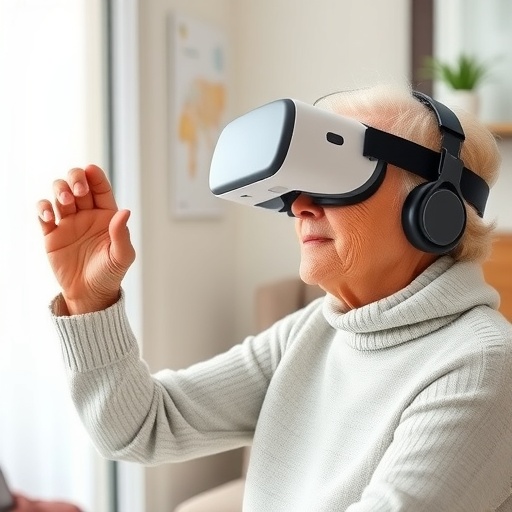
Immersive virtual reality (VR) is changing the landscape of therapeutic interventions for older adults, specifically those grappling with mild cognitive impairment (MCI), dementia, or cognitive frailty. As these conditions become increasingly prevalent within the aging population, innovative technological solutions are emerging that hold the potential to enhance cognitive function and improve overall quality of life. A recent systematic review by Kubota et al. sheds light on the efficacy of immersive VR experiences for older adults, marking a promising frontier in geriatric care.
At the outset, it’s essential to understand what defines mild cognitive impairment, dementia, and cognitive frailty. MCI serves as a transitional phase where individuals may experience noticeable memory and cognitive difficulties, yet retain the ability to perform most daily activities. As the condition progresses, it can lead to dementia, a more severe decline that affects not just memory but also thinking and social abilities. Cognitive frailty, meanwhile, refers to the co-occurrence of cognitive deficits and physical frailty, complicating health outcomes. Given this backdrop, the integration of VR technology into therapeutic regimens presents an intriguing opportunity.
The systematic review conducted by Kubota and colleagues meticulously collates existing literature to evaluate the impact of immersive VR interventions. Ranging from virtual reality games to simulated environments designed to evoke memories, the study includes various types of immersive experiences tailored to engage older adults. One standout finding reveals that these interventions not only foster cognitive engagement but also promote social interaction among participants, which is vital for emotional well-being.
Researchers have documented that VR can serve as a valuable tool for stimulating cognitive functions, including attention, memory, and problem-solving skills. In many instances, the immersive nature of VR captivates older adults, drawing them into experiences that distract from their cognitive limitations. Activities such as virtual gardening or exploring familiar locations can rekindle enjoyment and motivation, essential elements often diminished by cognitive decline.
Moreover, the social aspect of VR is particularly compelling. One of the most significant adverse effects of cognitive impairments is social isolation; older adults often withdraw from social activities. Virtual reality can break down these barriers by enabling group experiences, such as multiplayer games and joint virtual excursions. The emotional connections fostered during these shared experiences can enhance the quality of life, reducing feelings of loneliness and depression.
Considering the technical components, the VR systems employed in these studies often feature haptic feedback, 3D visualizations, and even voice-activated controls, allowing older adults to navigate experiences intuitively. These technological advancements not only make VR more accessible but also enhance user engagement, which is pivotal for therapeutic efficacy. As the technology evolves, the analytics derived from user interactions can fine-tune VR experiences, tailoring interventions to meet individual cognitive needs more accurately.
Despite the promising results, the systematic review has identified certain limitations inherent in the current body of research. Many studies focus on small sample sizes or lack rigorous methodological designs, raising questions about the generalizability of findings. Furthermore, there exists a notable gap in long-term studies assessing the sustained benefits of VR interventions. Understanding the duration of cognitive enhancement and whether these benefits persist post-intervention are crucial for validating the efficacy of VR therapy for older adults.
In concluding, the findings from the review by Kubota et al. illuminate a thought-provoking narrative on the intersection of technology and geriatric care. The prospects of immersive VR as a means to enhance cognitive functions, alleviate social isolation, and enrich the daily lives of older adults are undeniably promising. As research in this field continues to unfold, real-world applications and clinical integrations are likely to follow, ushering in a new era of therapeutic interventions powered by virtual reality.
Moreover, the ethical implications of using VR technology with older adults require careful consideration. Issues related to consent, data privacy, and potential dependency on virtual experiences must be addressed as practitioners look to implement these innovative therapies into routine care. A balanced approach that weighs the benefits against the ethical considerations will be crucial to ensure the responsible use of VR in geriatrics.
The burgeoning field of immersive technology for cognitive disorders is not without its challenges and questions, but the growing body of evidence signifies its importance. As health care professionals embrace these innovative solutions, ongoing collaboration between technologists, healthcare practitioners, and researchers will be essential to bridge the gap between technological advancements and real-world clinical applications. Through continued exploration, the aim is to transform the caregiving landscape and empower older adults in both their cognitive functions and daily lives.
In summary, the systematic review by Kubota et al. presents a comprehensive look at the potential of immersive virtual reality interventions for older adults with mild cognitive impairments and dementia. The findings underscore the need for further research while shedding light on the practical implications of integrating VR technology into therapeutic settings. As we stand at the precipice of a technological revolution in geriatric care, the promise of immersive virtual reality technology beckons—a tool that could redefine how we support the cognitive health and social engagement of our aging population.
Kubota, K., Katayama, T., Takamaru, K. et al. Immersive virtual reality for older adults with mild cognitive impairment, dementia, or cognitive frailty: a systematic review and narrative synthesis (2019–2025).
BMC Geriatr (2026). https://doi.org/10.1186/s12877-025-06957-8
Cite Scienmag News
Beatrice Stafford. (January 13, 2026). Exploring VR Benefits for Seniors with Cognitive Challenges. Scienmag. https://scienmag.com/exploring-vr-benefits-for-seniors-with-cognitive-challenges/
Beatrice Stafford. "Exploring VR Benefits for Seniors with Cognitive Challenges." Scienmag, 13 January 2026, https://scienmag.com/exploring-vr-benefits-for-seniors-with-cognitive-challenges/. Accessed 4 September 2026.
Beatrice Stafford. "Exploring VR Benefits for Seniors with Cognitive Challenges." Scienmag. January 13, 2026. https://scienmag.com/exploring-vr-benefits-for-seniors-with-cognitive-challenges/


