


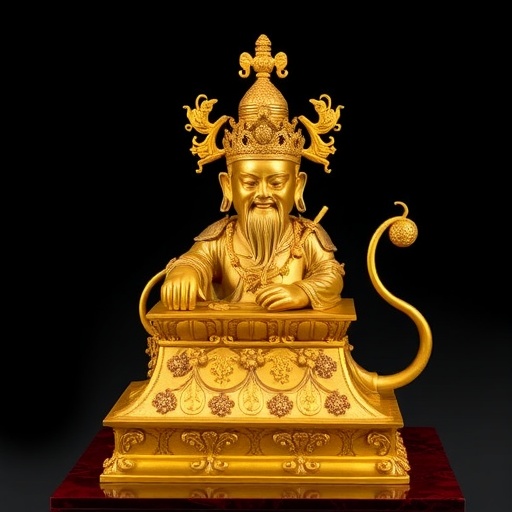
In a groundbreaking study, researchers have turned their focus to the opulence of the Tang dynasty, specifically examining the granulation techniques employed in the creation of royal adornments and reliquaries. This fascinating paper by Tan, Li, and Wei uncovers not only the intricate methods used in the fabrication of gold artifacts but also sheds light on their sourcing and historical significance during one of China’s most illustrious periods, spanning from 618 to 907 CE. The authors embark on a quest to demystify the artistry of granulation that characterizes these exquisite objects, bringing to light the sophisticated skills possessed by ancient artisans.
The study reveals how granulation—an ancient technique involving the fusion of tiny gold beads onto a surface—was not merely an aesthetic choice but a display of wealth and power. The intricate use of granulated gold can be seen as an embodiment of the Tang dynasty’s rich culture and robust economic standing. This style was emblematic of the artistry that characterized the period, showcasing the artisans’ technical prowess while also signaling the status of the elite who adorned themselves and their possessions with such gold craftsmanship.
Understanding the granulation process is key to appreciating these artifacts. The researchers elaborate on the meticulous nature of creating granulated gold, which involves systematic heating and cooling to ensure that these beads bond seamlessly to the underlying surface. This method requires an intimate understanding of materials and a steady hand, as even the slightest error in temperature can result in devastating effects on the final product. The craftsmanship reflects not only technical skills but also a deep cultural significance intertwined with social hierarchies in Tang society.
In addition to exploring the techniques of granulation, the paper delves deeper into the sourcing of gold used in these artifacts. The authors present evidence suggesting that gold was sourced from various locations, indicating a sophisticated trade network during the Tang dynasty. Their findings align with historical records that detail extensive trade routes connecting China to Central Asia and beyond, facilitating the exchange of precious materials and ideas. This aspect of their research emphasizes the interconnectivity of ancient civilizations and enhances our understanding of the global landscape during the period.
Artifacts studied range widely in terms of form and function, from ornate jewelry worn by nobility to reliquaries that housed sacred relics. Each object tells a story, revealing the complexities of life in the Tang era. By focusing on specific items, the authors provide a window into the spiritual and secular beliefs held by the society, making the findings not just about the objects but about the life and culture that surrounded them. This intricate intersection of art, belief, and daily life illustrates a vibrant society where material culture played an unprecedented role.
The authors also draw parallels between Tang dynasty craftsmanship and practices in other cultures, pointing out similar methods employed in ancient Egypt and Greece. This comparative analysis allows for a broader understanding of granulation as a universal technique that transcends cultural boundaries. By connecting these practices, the researchers emphasize the universality of human creativity and the shared heritage of artistry, enabling a dialogue between seemingly disparate global cultures.
Moreover, the investigation into the granulation process also raises questions about innovation in ancient technology. The ability to manipulate gold to achieve such intricate designs starkly contrasts with the more rudimentary tools thought to have existed at the time. This insight challenges preconceived notions about technological advancement and artistry, suggesting that the artisans of the Tang dynasty may have possessed skills and techniques that were undeniably advanced for their era.
Alongside the technical analysis, the researchers employ a multidisciplinary approach, bringing in insights from archaeology, history, and material science. They present data collected through various methodologies, including examinations of chemical compositions, metallurgical analysis, and artistic interpretations. This comprehensive perspective not only strengthens their findings but also underscores the importance of collaborative research in uncovering historical narratives.
The results of this research hold implications beyond academic circles. They invite artisans and contemporary goldsmiths to revisit traditional methods, potentially inspiring a renaissance of ancient techniques in modern jewelry design. By connecting the past with present practices, the study acts as a catalyst for cultural exchange and appreciation of heritage crafts.
Ultimately, the research encapsulates the transformative nature of gold artifacts from the Tang dynasty, blending beauty with historical significance. As they continue to unravel the complexities of ancient craftsmanship, the authors encourage a deeper appreciation for the stories behind these objects. By illuminating the past, they also pave the way for future exploration of ancient technologies and their relevance today.
In conclusion, the study by Tan, Li, and Wei represents a critical advancement in our understanding of the Tang dynasty’s artistic legacy. Their meticulous analysis of granulation, trade networks, and cultural significance builds a compelling narrative that highlights the ingenuity of ancient artisans. Policymakers, educators, and enthusiasts alike should engage with this research, as it offers rich insights into cultural heritage and the enduring nature of human creativity.
As we navigate through contemporary discussions about art and technology, this historical inquiry challenges us to reflect on our own practices and values. In an age marked by rapid technological change, the artistry embedded in the goldsmiths of the Tang dynasty serves as a reminder of the timeless connection between craftsmanship and culture. This research profoundly impacts our understanding of history and celebrates the continuous thread of creativity that links humanity through the ages.
Cite Scienmag News
Courtney Benton. (January 13, 2026). Explore Gold in Tang Dynasty Royal Artifacts. Scienmag. https://scienmag.com/explore-gold-in-tang-dynasty-royal-artifacts/
Courtney Benton. "Explore Gold in Tang Dynasty Royal Artifacts." Scienmag, 13 January 2026, https://scienmag.com/explore-gold-in-tang-dynasty-royal-artifacts/. Accessed 3 September 2026.
Courtney Benton. "Explore Gold in Tang Dynasty Royal Artifacts." Scienmag. January 13, 2026. https://scienmag.com/explore-gold-in-tang-dynasty-royal-artifacts/


