


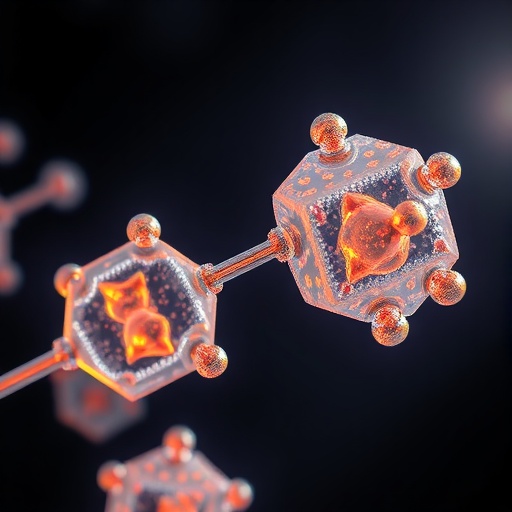
The quest for efficient photocatalysts has taken a significant leap forward with the recent breakthroughs in the ABO₃ class of perovskite materials. Photocatalysis, the process whereby light energy is harnessed to drive chemical reactions, has immense potential for green energy solutions, pollution control, and carbon dioxide reduction. Among various materials explored, perovskites, particularly those with the general formula ABO₃, have emerged as game changers due to their unique structural properties and tunable electronic characteristics.
Research has revealed that by strategically modifying perovskite materials, their photocatalytic performance can be notably enhanced. Strategies to improve these properties revolve around both compositional and structural adjustments. In the ABO₃ framework, ‘A’ and ‘B’ represent cations of different sizes and electrochemical properties, influencing the material’s overall photocatalytic activity. The careful selection of these cations can lead to improved charge carrier dynamics which are critical in photocatalytic applications.
One promising approach is the incorporation of dopants into the perovskite structure. Doping provides a way to introduce additional charge carriers that can facilitate the excitation of electrons, crucial for photocatalytic activity. Elements like alkaline earth metals or transition metals can effectively modify the electronic band structure, thereby enhancing light absorption properties. This can lead to a significant improvement in the material’s ability to drive photocatalytic reactions.
Additionally, structural modifications such as lattice distortion or the formation of heterojunctions can also lead to superior photocatalytic performance. Heterojunctions, where two semiconductor materials with differing band gaps are combined, can create new pathways for electron transfer. This not only increases the absorption of light but also helps in reducing the recombination rate of charge carriers, a major challenge in photocatalysis. Enhancing the interaction between carrier and adsorbate can effectively boost the overall efficiency of the photocatalytic reaction.
Moreover, morphological control of the perovskite materials can also yield significant advantages. Nanostructures like nanoparticles, nanowires, or nanosheets have been shown to increase the surface area, which can enhance light adsorption and catalytic sites available for reaction. A higher surface area allows for more efficient absorption of reactants and increased interaction with light, thus amplifying the photocatalytic effectiveness.
Thermodynamic stability is another key factor that must be taken into account when modifying perovskite materials for photocatalysis. Many perovskite materials are sensitive to environmental changes, such as temperature and humidity, which can lead to degradation and reduced efficacy. Therefore, researchers are focused on developing stable perovskite formulations that can withstand operational conditions, thereby ensuring consistent photocatalytic performance over time.
Characterization techniques play a pivotal role in unveiling the properties of modified perovskite materials. Advanced techniques such as X-ray diffraction (XRD), scanning electron microscopy (SEM), and transmission electron microscopy (TEM) allow for the detailed analysis of the structural and morphological properties of these materials. In addition, spectroscopy methods provide insight into the electronic transitions and band structures which are instrumental in assessing photocatalytic potential.
The implications of these advancements are significant. Effective photocatalytic materials are essential for tackling pressing environmental issues such as air and water pollution, as well as for synthesizing renewable fuels. The development of stable and efficient photocatalysts can lead to practical applications in solar energy conversion and carbon capture technologies. Furthermore, as nations globally strive to meet sustainability goals, the localization of efficient photocatalytic systems presents a crucial step in achieving a circular economy.
Industry partnerships are also forming around these innovations, enabling the translation of laboratory discoveries into scalable technologies. By collaborating with businesses involved in energy and environmental technologies, researchers hope to facilitate the integration of advanced photocatalytic materials into existing systems. This could have a transformative effect not only on the industry but also on the way communities harness renewable energy.
The race to optimize photocatalytic materials is not just an academic exercise; it is a necessary step towards a sustainable future. As the research in ABO₃ perovskite modifications progresses, the potential for these materials to contribute toward a cleaner planet becomes increasingly tangible. The scientific community is charged with the responsibility of ensuring these findings lead to real-world solutions, proving once more the indelible link between scientific research and societal advancement.
In conclusion, the modifications of ABO₃ perovskite materials for photocatalysis represent a frontier of significant scientific and technological advancement. As researchers delve deeper into material science, our understanding of how to tailor these complex structures will continue to grow. This knowledge not only paves the way for greater efficiencies and innovative solutions in photocatalysis but also fortifies the foundation for broader applications in energy and environmental sustainability.
The future looks bright for photocatalytic technologies as the innovative strategies employed in modifying ABO₃ perovskite materials are poised to unlock a myriad of possibilities for sustainable energy solutions. With continued research and collaboration, the objective of achieving a carbon-neutral society may be within reach, heralding a new era of environmental consciousness and scientific achievement.
Soni, A., Surolia, P.K. & Vaya, D. Modifications strategies for ABO3 class of perovskite materials for effective photocatalytic activity.
Ionics (2026). https://doi.org/10.1007/s11581-025-06941-7
Cite Scienmag News
Denise Maddox. (January 12, 2026). Enhancing ABO3 Perovskites for Superior Photocatalysis. Scienmag. https://scienmag.com/enhancing-abo3-perovskites-for-superior-photocatalysis/
Denise Maddox. "Enhancing ABO3 Perovskites for Superior Photocatalysis." Scienmag, 12 January 2026, https://scienmag.com/enhancing-abo3-perovskites-for-superior-photocatalysis/. Accessed 5 September 2026.
Denise Maddox. "Enhancing ABO3 Perovskites for Superior Photocatalysis." Scienmag. January 12, 2026. https://scienmag.com/enhancing-abo3-perovskites-for-superior-photocatalysis/


