


Pioneering AI-powered research on butterflies has probed the under-studied evolution of females and adds to a debate between the founding fathers of evolution.
The University of Essex study – published in Communications Biology – explores a controversy between Victorian scientists Charles Darwin and Alfred Russel Wallace.
Darwin thought males had more variation, as females often chose mates based on male appearance.
Whereas Wallace thought natural selection across sexes was the biggest factor in difference.
For over a century, scientists have mostly studied males because their differences are more obvious, while females, with more subtle evolutionary changes, had been less studied.
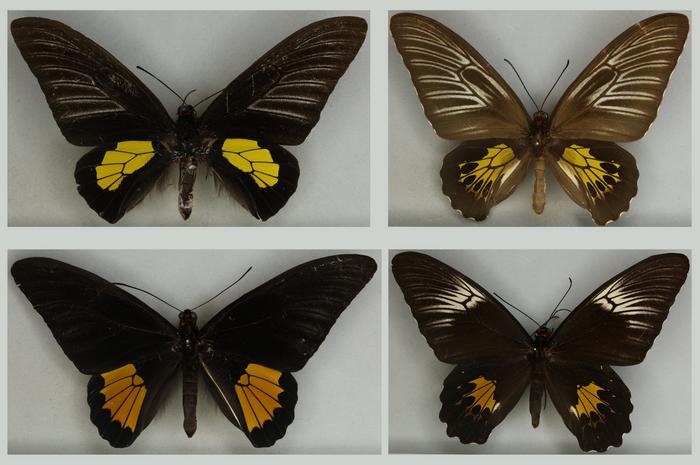
By using high-tech machine learning Dr Jennifer Hoyal Cuthill examined more than 16,000 male and female birdwing butterflies, with collaborators from the Natural History Museum and AI research institute Cross Labs, Cross Compass.
This is the first time the visual differences between sexes have been explored across the species, which live in Southeast Asia and Australasia.
Birdwing butterflies were chosen for this study because of their spectacular wing colour patterns and differences between males and females.
Dr Hoyal Cuthill, from the School of Life Sciences, said: “This is an exciting time, when machine learning is enabling new, large-scale tests of longstanding questions in evolutionary science.
“For the first time we are able to measure the visible extents of evolution to test how much variation is present in different biological groups and among both males and females.
“Machine learning is giving us new information on the evolutionary processes which generate and maintain biodiversity, including in historically neglected groups.”
The study looked at photographs of butterflies from the Natural History Museum collections, which show a range of traits, like wing shapes, colours, and patterns, across several species.
It found that while males often have more distinct shapes and patterns, both males and females contribute to the overall diversity.
The research showed evolutionary patterns predicted by both Darwin and Wallace were found in the butterflies.
Showing that both males and females contribute to diversity among species.
The males showed more variation in appearance, which fits with Darwin’s idea that females choose mates based on these traits.
However, the deep learning also found subtle variation in females, matching Wallace’s predictions about natural selection allowing diversity in female phenotypes.
Dr Hoyal Cuthill said: “Birdwings have been described as among the most beautiful butterflies in the world. This study gives us new insights into the evolution of their remarkable but endangered diversity.
“In this case study of birdwing butterfly photographs, it is sex that appears to have driven the greatest evolutionary change, including extreme male shapes, colours and patterns.
“However, within the group of birdwing butterflies, we found contrasting examples where female birdwing butterflies are more diverse in visible phenotype than males, and vice versa.
“High visible diversity among male butterflies supports the real-word importance of sexual selection from female mate choice on male variation, as originally suggested by Darwin.
“Cases where female butterflies are more visibly diverse than the males of their species, support an additional, important role for naturally selected female variation in inter-species diversity, as suggested by Wallace.
“Large-scale studies of evolution using machine learning offer new opportunities to resolve debates that have been outstanding since the founding of evolutionary science.”

Credit: Natural History Museum. 2024. Birdwing butterflies (from Collection specimens). Licensed under CC-BY-4.0.
Pioneering AI-powered research on butterflies has probed the under-studied evolution of females and adds to a debate between the founding fathers of evolution.
The University of Essex study – published in Communications Biology – explores a controversy between Victorian scientists Charles Darwin and Alfred Russel Wallace.
Darwin thought males had more variation, as females often chose mates based on male appearance.
Whereas Wallace thought natural selection across sexes was the biggest factor in difference.
For over a century, scientists have mostly studied males because their differences are more obvious, while females, with more subtle evolutionary changes, had been less studied.
By using high-tech machine learning Dr Jennifer Hoyal Cuthill examined more than 16,000 male and female birdwing butterflies, with collaborators from the Natural History Museum and AI research institute Cross Labs, Cross Compass.
This is the first time the visual differences between sexes have been explored across the species, which live in Southeast Asia and Australasia.
Birdwing butterflies were chosen for this study because of their spectacular wing colour patterns and differences between males and females.
Dr Hoyal Cuthill, from the School of Life Sciences, said: “This is an exciting time, when machine learning is enabling new, large-scale tests of longstanding questions in evolutionary science.
“For the first time we are able to measure the visible extents of evolution to test how much variation is present in different biological groups and among both males and females.
“Machine learning is giving us new information on the evolutionary processes which generate and maintain biodiversity, including in historically neglected groups.”
The study looked at photographs of butterflies from the Natural History Museum collections, which show a range of traits, like wing shapes, colours, and patterns, across several species.
It found that while males often have more distinct shapes and patterns, both males and females contribute to the overall diversity.
The research showed evolutionary patterns predicted by both Darwin and Wallace were found in the butterflies.
Showing that both males and females contribute to diversity among species.
The males showed more variation in appearance, which fits with Darwin’s idea that females choose mates based on these traits.
However, the deep learning also found subtle variation in females, matching Wallace’s predictions about natural selection allowing diversity in female phenotypes.
Dr Hoyal Cuthill said: “Birdwings have been described as among the most beautiful butterflies in the world. This study gives us new insights into the evolution of their remarkable but endangered diversity.
“In this case study of birdwing butterfly photographs, it is sex that appears to have driven the greatest evolutionary change, including extreme male shapes, colours and patterns.
“However, within the group of birdwing butterflies, we found contrasting examples where female birdwing butterflies are more diverse in visible phenotype than males, and vice versa.
“High visible diversity among male butterflies supports the real-word importance of sexual selection from female mate choice on male variation, as originally suggested by Darwin.
“Cases where female butterflies are more visibly diverse than the males of their species, support an additional, important role for naturally selected female variation in inter-species diversity, as suggested by Wallace.
“Large-scale studies of evolution using machine learning offer new opportunities to resolve debates that have been outstanding since the founding of evolutionary science.”
Journal
Communications Biology
Method of Research
Imaging analysis
Subject of Research
Animals
Article Title
Male and female contributions to diversity among birdwing butterfly images
Article Publication Date
1-Jul-2024
Cite Scienmag News
Gavin Prescott. (July 1, 2024). AI-powered study explores under-studied female evolution. Scienmag. https://scienmag.com/ai-powered-study-explores-under-studied-female-evolution/
Gavin Prescott. "AI-powered study explores under-studied female evolution." Scienmag, 1 July 2024, https://scienmag.com/ai-powered-study-explores-under-studied-female-evolution/. Accessed 3 September 2026.
Gavin Prescott. "AI-powered study explores under-studied female evolution." Scienmag. July 1, 2024. https://scienmag.com/ai-powered-study-explores-under-studied-female-evolution/

