


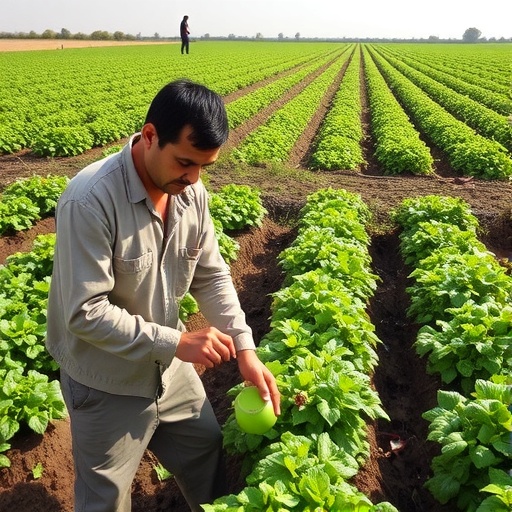
In a world increasingly defined by the urgent need for sustainability and adaptation to climate change, the adoption of climate-smart agriculture (CSA) is becoming a pivotal focus for researchers and policymakers alike. A recent study conducted by Bakhshoudehnia, Farhadian, and Saadvandi explores how Iranian farmers can incorporate climate-smart practices through an extended technology acceptance model. This research exemplifies the intersection of behavioral science and agriculture innovation in a rapidly changing global climate.
The study underscores that climate-smart agriculture encompasses practices that can increase productivity while also enhancing resilience to climate change impacts. Given Iran’s diverse climates and agricultural practices, implementing CSA not only has the potential to improve food security but also to support the livelihoods of millions of farmers. As such, understanding the factors that influence farmers’ acceptance of these technologies becomes crucial for any successful agricultural policy or program.
One of the study’s core findings is the critical role of farmers’ perceived ease of use and perceived usefulness of new technologies in their adoption decisions. Farmers in Iran are often skeptical of unfamiliar practices, and this skepticism can hinder the transformation toward more sustainability. The researchers emphasize that to instill confidence in climate-smart practices, extension services and educational programs must effectively demonstrate how CSA can lead to improved crop yields and income stability.
Additionally, the study highlights the significance of social influence in technology acceptance. In rural areas of Iran, word-of-mouth and community endorsements can have a profound impact on whether a farmer feels inclined to adopt a new practice. By leveraging peer networks and engaging early adopters, proponents of climate-smart agriculture could effectively catalyze broader acceptance across communities.
The research also reports a growing awareness among farmers regarding the repercussions of climate change on agriculture. As observable changes in weather patterns affect yields, farmers are increasingly seeking adaptive strategies. This shift presents a unique opportunity for policymakers to step in with supportive infrastructure and resources that facilitate the transition to CSA.
One of the critical components examined in the study is the need for tailored communication strategies. Farmers engage with information on CSA differently based on their cultural background, education level, and personal experiences. Thus, the study advocates for customized outreach that speaks to the unique concerns and interests of various farmer demographics. This approach not only increases the relevance of the information but also encourages greater participation in sustainability initiatives.
Another noteworthy point raised by the researchers is the importance of financial incentives in influencing the farmers’ decision-making processes. While many farmers recognize the need for sustainable practices, the initial costs associated with adopting climate-smart techniques can be daunting. Developing policies that provide financial support, such as subsidies or low-interest loans, could significantly enhance adoption rates, making CSA more accessible to a wider range of farmers.
Future-oriented thinking is essential in this context. The study makes it clear that continuous evaluation and adaptation of CSA strategies will be needed as climate conditions evolve. Policymakers and agricultural experts will have to remain flexible and responsive to shifts in climate patterns, ensuring that farmers are equipped with the latest tools and resources to manage these challenges effectively.
Moreover, the researchers emphasize that collaboration between governmental bodies, research institutions, and the farmers themselves is necessary to achieve successful adoption rates. By fostering partnerships, stakeholders can share insights and resources that guide the development of impactful programs tailored to local needs.
The implications of this research extend beyond Iran, as the findings can inform similar initiatives globally. Countries facing similar agricultural challenges in light of climate change may find parallels in the barriers to adopting CSA that Iranian farmers experience. As nations strive to meet international sustainability goals, understanding local contexts and the human element behind agricultural practices will be essential.
In conclusion, the study by Bakhshoudehnia and colleagues sheds light on the nuanced dynamics of adopting climate-smart agriculture in Iran. Their findings underscore the complex interplay between technology acceptance, social influence, financial considerations, and the need for effective communication. As the agricultural sector faces mounting pressures from climate change, it is incumbent upon all stakeholders to create an environment where sustainable practices can thrive, ensuring food security and resilience for future generations.
This research not only enhances our understanding of the factors driving technology adoption in agriculture but also offers a roadmap for how to effectively foster these changes in practice. As the global community seeks solutions to one of the most pressing issues of our era, the insights gleaned from such studies may be vital for informing effective policy responses and advancing the principles of sustainability.
Bakhshoudehnia, N., Farhadian, H., Saadvandi, M. et al. Adoption of climate-smart agriculture among Iranian farmers based on an extended technology acceptance model.
Discov Sustain (2026). https://doi.org/10.1007/s43621-026-02595-1
Cite Scienmag News
Alan Morgan. (January 11, 2026). Embracing Climate-Smart Agriculture: Iranian Farmers’ Journey. Scienmag. https://scienmag.com/embracing-climate-smart-agriculture-iranian-farmers-journey/
Alan Morgan. "Embracing Climate-Smart Agriculture: Iranian Farmers’ Journey." Scienmag, 11 January 2026, https://scienmag.com/embracing-climate-smart-agriculture-iranian-farmers-journey/. Accessed 3 September 2026.
Alan Morgan. "Embracing Climate-Smart Agriculture: Iranian Farmers’ Journey." Scienmag. January 11, 2026. https://scienmag.com/embracing-climate-smart-agriculture-iranian-farmers-journey/


