


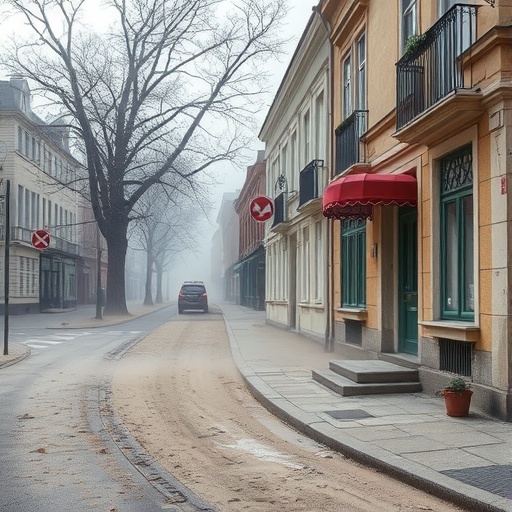
Organic pollutants are an invisible menace lurking beneath our feet, particularly within urban environments. In a comprehensive study led by researchers Velázquez-Gómez, D’Amico, and Lacorte, the street dust of a prominent European metropolitan area has been scrutinized, revealing unsettling insights into the quality of our urban habitats. Such findings not only contribute to our understanding of urban pollution but also raise crucial questions regarding public health, environmental policies, and the role citizens play in mitigating contamination. As urban populations expand, the need for rigorous investigations into localized pollution becomes increasingly critical.
Pollutants can originate from a multitude of sources, including vehicles, industrial activities, and even domestic practices. The study conducted by the team emphasizes that street dust is a composite of various materials, including soil, plant debris, and, most alarmingly, chemicals that pose significant health risks. This dust acts as a repository for harmful substances, which can be resuspended into the air, thereby adversely impacting human health. Understanding these pathways is essential, as it allows city planners and environmental scientists to devise sound strategies to combat pollution.
The analysis employed advanced techniques for assessing the concentration levels of organic pollutants in the studiously collected dust samples. By utilizing gas chromatography and mass spectrometry, the researchers could precisely identify and quantify a wide array of organic compounds. These included polycyclic aromatic hydrocarbons (PAHs), endocrine disruptors, and volatile organic compounds (VOCs), all of which have proven adverse effects on human health. By pinpointing these pollutants, the study highlights the urgent need to reassess urban management practices and regulatory measures regarding emissions.
Urban dust doesn’t merely reflect pollution from the immediate environment but also carries a legacy of emissions from past activities. When considering the urban landscape’s historical context, one realizes that the streets we traverse often carry the remnants of industries long gone—as well as modern contributors to air and soil pollution. This transference highlights that the solutions to urban pollution require a dual emphasis: addressing current pollution sources while simultaneously remediating past contaminants.
The implications of the study extend beyond the immediate findings. They open a dialogue on the interconnectedness of urban pollution and public health. As the streets are swept clean or washed down after rainfall, the residues transported back into the atmosphere could contribute to respiratory issues among urban dwellers, particularly vulnerable populations like the elderly and children. Therefore, an understanding of street dust composition does not merely add to academic knowledge; it directly correlates to community health outcomes.
Another vital aspect of the research revolves around public awareness and the role individuals can play in combatting pollution. It is easy for urban populations to overlook the impact of their daily activities on dust composition, but this study emphasizes the consequences of seemingly innocuous behaviors. Raising awareness about the sources of these pollutants and their consequences for health is essential. Moreover, it invites citizens to engage with local environmental initiatives aimed at reducing both airborne and soil-borne contaminants.
The traumatic effects of acute exposure to high levels of pollutants are well-documented, but chronic exposure also presents serious risks. The study underscores the potential for long-term health complications arising from frequent interactions with contaminated street dust, making it imperative to establish clear regulations surrounding emissions and street cleaning practices. The researchers argue for a more integrative approach to urban planning, where ecological considerations are incorporated into development agendas alongside social and economic factors.
This research also provides a useful framework for future studies aiming to assess urban environments worldwide. While it focuses on a specific European city, the methodologies and findings can be translated to other metropolitan landscapes with unique contamination challenges. The alarming presence of organic pollutants is not restricted to one region; rather, it’s a universal issue demanding an international collaborative response.
As global climate concerns escalate, the effects of urban pollution cannot be decoupled from broader environmental trends. This study serves as a reminder that climate change exacerbates pollution levels and, conversely, that urban pollution projects can influence climate-related factors. The relationship between air quality, social behavior, and environmental health needs further exploration to build more resilient urban spaces in the face of changing climate conditions.
Furthermore, the economic ramifications of ignoring urban pollution must be taken into account. Cities that fail to address pollution will likely incur greater health care costs in the long run, as higher incidence rates of pollution-related diseases translate into increased expenditure. The researchers propose that investment in sustainable urban development practices could ultimately prove more cost-effective than managing the fallout from widespread pollution.
Strategic urban planning rooted in comprehensive empirical data must pave the way forward. Policymakers can lean on findings from studies such as this to shape future regulations, ensuring that living conditions improve for everyone. Integrating insights into urban environmental health studies can ultimately lead to more sustainable and equitable cities.
To combat organic pollutants in urban environments, innovative solutions must be embraced. From green infrastructure—such as vegetation that absorbs toxic compounds—to smarter waste management systems, a host of strategies exists to reduce pollution levels. Encouraging local communities to participate in urban gardening or cleanup initiatives can empower citizens to take charge of their environments while also fostering a sense of ownership and responsibility towards local ecosystems.
In conclusion, the investigation into organic pollutants found in street dust is a clarion call for action, instilling a sense of urgency to address urban pollution comprehensively. The findings from this crucial study pave the way for critical discussions about public health, urban planning, and environmental stewardship. If we are to create healthier urban environments for future generations, it is necessary for researchers, policymakers, and citizens alike to galvanize collective action against this pressing issue.
Velázquez-Gómez, M., D’Amico, M. & Lacorte, S. Organic pollutants in the street dust of a European Metropolitan area.
Environ Sci Pollut Res (2026). https://doi.org/10.1007/s11356-025-37355-7
Cite Scienmag News
Violet Maxwell. (January 11, 2026). Street Dust in Europe: Hidden Organic Pollutants Revealed. Scienmag. https://scienmag.com/street-dust-in-europe-hidden-organic-pollutants-revealed/
Violet Maxwell. "Street Dust in Europe: Hidden Organic Pollutants Revealed." Scienmag, 11 January 2026, https://scienmag.com/street-dust-in-europe-hidden-organic-pollutants-revealed/. Accessed 3 September 2026.
Violet Maxwell. "Street Dust in Europe: Hidden Organic Pollutants Revealed." Scienmag. January 11, 2026. https://scienmag.com/street-dust-in-europe-hidden-organic-pollutants-revealed/


