


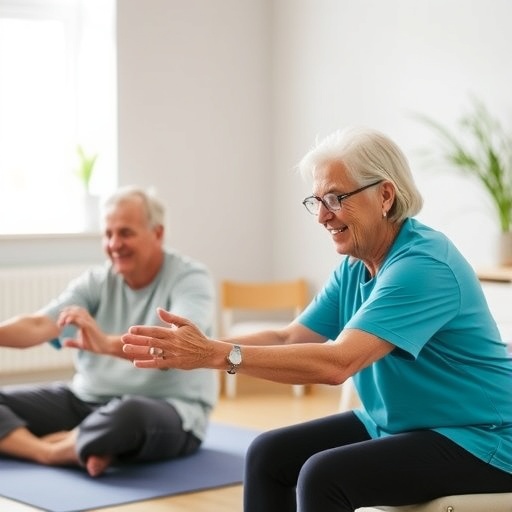
In an era where the population is aging rapidly, the transition into residential care facilities becomes a significant concern for many individuals, their families, and support systems. Distinctly, a team of researchers has made notable strides in understanding this transitional phase and how targeted interventions can dramatically enhance the quality of life for new residents. The study, led by Scott et al., investigates the effects of a tailored exercise program designed specifically for individuals moving into Australian residential care facilities. The findings reveal profound implications for improving both independence and social connection among this vulnerable demographic.
The concept of transitioning into residential care is fraught with emotional and psychological challenges. Many individuals experience a sense of loss, increased anxiety, and isolation as they leave the familiarity of their homes. This transitional phase often amplifies feelings of helplessness and dependence. The research conducted by Scott, Raynor, Dare, and their colleagues delves deep into these emotional and social repercussions, offering innovative solutions through structured exercise programs to alleviate such transitional stresses.
Exercise, as established in various studies, is not only pivotal for physical health but also serves as an essential tool for emotional well-being. The tailored exercise program implemented in this study is unique in its design, focusing on the specific needs and capabilities of individuals new to residential care. This program was not a one-size-fits-all approach; rather, it was adapted to meet the varying fitness levels and interests of the participants, fostering an inclusive environment where everyone is encouraged to engage in physical activity.
At the core of this study is the acknowledgment that social connections are crucial for mental health. The researchers highlighted that many new residents initially struggle to forge relationships with fellow residents or staff. The exercise program served as a platform to encourage socialization, where participants not only improved their physical health but also built friendships and support networks. Through group exercises and shared activities, residents reported feeling more connected and less isolated, which is integral to their overall quality of life.
Furthermore, the structured nature of the exercise program was designed to promote a sense of routine and stability amidst the upheaval of moving into a new environment. The researchers noted that for individuals who had lost their daily routines, participating in a regular exercise regimen offered a necessary structure. This predictability can serve as a comforting factor, helping residents adapt more quickly to their new living situations, thus fostering a smoother transition into their new lives.
The research also sheds light on the direct impact of exercise on cognitive function and mental clarity for older adults. As individuals age, cognitive decline can become a pressing concern. However, engaging in regular physical activity has been shown to enhance cognitive capabilities and protect against decline. The tailored exercise program not only aimed to improve physical health but also focused on cognitive engagement, stimulating the brain through various coordinated movements and exercises that encourage mental acuity.
This study emphasizes a holistic approach to health care within residential facilities, suggesting that physical activity should be integrated into the daily routine of residents. The long-term effects of such an initiative can transform the way care is delivered, with an emphasis on preventive measures rather than solely reactive care. By embedding exercise into the lifestyle of residents, care facilities can enhance the overall wellbeing and satisfaction of their residents, creating a thriving community atmosphere.
Moreover, the findings of this research could influence policy changes regarding the standard practices of care facilities. As more evidence emerges regarding the benefits of tailored exercise programs, regulators and administrators may consider incorporating such initiatives into the mandatory care standards for residential facilities. This shift could lead to enhanced training for staff and a more comprehensive understanding of how to support the physical and emotional wellbeing of aging populations.
In summary, the implications of Scott et al.’s research extend far beyond the individuals directly involved in the study. The insights garnered from their findings could inform best practices across facilities and reshape approaches to elder care. The potential for improving quality of life through targeted exercise programs presents an exciting avenue for future research, particularly in developing further tools and resources that facilities could utilize to optimize their care strategies.
As society navigates the challenges of an aging population, it is imperative that we prioritize interventions that not only sustain health but also enhance the emotional and social wellbeing of older adults. The successful implementation of these tailored exercise programs could serve as a beacon of hope for improved living conditions and quality of life for new residents entering residential care facilities. By fostering independence and connection, we can ensure that these individuals do not merely exist but thrive in their new environments.
The commitment shown by researchers like Scott, Raynor, and Dare in exploring these fundamental issues epitomizes the path forward in transforming the landscape of elder care. Harnessing the power of community, connection, and physical engagement stands at the forefront of this journey, driving a paradigm shift towards comprehensive and compassionate care for our aging population.
With ongoing support and interest in such research, the next steps will be to refine these exercise programs further, ensuring they cater to varying needs and preferences across diverse populations. The focus on participation and inclusivity will remain paramount, as each individual deserves the right to experience joy, socialization, and an improved quality of life in their later years. As we look to the future, the potential for tailored exercise programs to bridge gaps in social connection and promote independence stands as a testament to the innovative spirit of contemporary health research.
In conclusion, the evidence suggests that by integrating exercise as part of the transition into residential care, we can radically improve not just physical health but also mental and emotional wellbeing, paving the way for a brighter, more connected future for our aging population. The role of research in this endeavor cannot be understated, as it continues to uncover pathways for enhancing the lives of those who have contributed so much to society and now seek a fulfilling and connected existence in their later years.
Scott, S., Raynor, A., Dare, J. et al. Enhancing independence and social connection: the impact of a tailored exercise program on new residents transitioning into Australian residential care facilities.
BMC Health Serv Res (2026). https://doi.org/10.1186/s12913-026-14012-4
Cite Scienmag News
Ophelia Keating. (January 10, 2026). Boosting Independence: Tailored Exercise for New Residents. Scienmag. https://scienmag.com/boosting-independence-tailored-exercise-for-new-residents/
Ophelia Keating. "Boosting Independence: Tailored Exercise for New Residents." Scienmag, 10 January 2026, https://scienmag.com/boosting-independence-tailored-exercise-for-new-residents/. Accessed 3 September 2026.
Ophelia Keating. "Boosting Independence: Tailored Exercise for New Residents." Scienmag. January 10, 2026. https://scienmag.com/boosting-independence-tailored-exercise-for-new-residents/


