


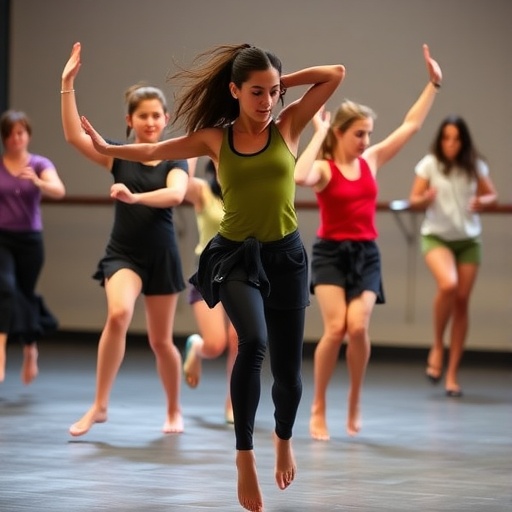
In a groundbreaking development that could redefine therapeutic approaches to adolescent mental health, researchers have embarked on a pioneering randomized controlled trial investigating the efficacy of dance-movement therapy (DMT) for teenagers suffering from depression. This innovative study, led by Valjakka, Pylvänäinen, Lindgren, and colleagues, stands at the intersection of psychology, neuroscience, and expressive arts, aiming to validate a novel treatment modality amidst rising global rates of adolescent depression.
Depression during adolescence represents a substantial public health concern, with often debilitating impacts on emotional development, social functioning, and academic performance. Conventional treatments, largely centered on psychopharmacology and cognitive behavioral therapy, while effective for many, do not universally alleviate symptoms and can present barriers such as stigma, side effects, or limited accessibility. This new protocol brings forward dance-movement therapy—a therapeutic practice integrating physical movement and psychological principles—as a promising complementary or alternative intervention.
Dance-movement therapy is grounded in the premise that the mind and body are inextricably linked, and that expressive bodily movement can facilitate emotional resonance, psychological insight, and somatic regulation. Historically, DMT has been employed for a variety of conditions including trauma, anxiety, and developmental disorders, but its application in adolescent depression remains comparatively under-explored. The current trial seeks to rigorously assess whether structured, therapist-led dance interventions can mitigate depressive symptoms more effectively or sustainably than existing approaches.
The study’s design adheres to the gold standard of clinical research—randomized controlled methodology—to ensure that findings are robust, replicable, and minimally biased. Participants will be randomly assigned to either the DMT intervention group or a control group receiving standard treatment. This design allows for a direct comparison of outcomes and controls for placebo effects and other confounding variables. Importantly, the trial will incorporate longitudinal follow-up assessments to monitor both episodic improvements and long-term efficacy.
Crucial to the success of this endeavor is the multidisciplinary expertise of the research team, which encompasses psychological science, psychiatry, and embodied movement therapy. Each facet contributes to the development of a carefully tailored DMT protocol, sensitive to the cognitive and emotional needs of adolescents. Sessions are designed to balance creative expression, emotional processing, and physical activity—an approach hypothesized to synergistically improve mood regulation, self-esteem, and social connectedness.
From a neurobiological perspective, the team hypothesizes that engaging in structured movement interventions may promote neuroplasticity in brain circuits affected by depression, including the prefrontal cortex and limbic system. Prior studies have indicated that movement-based therapies can influence stress hormone regulation and enhance endorphin release, both of which contribute to mood stabilization. Investigating these mechanisms forms an integral secondary aim within the trial.
The context of the study is particularly timely, as adolescent mental health services worldwide grapple with unprecedented demand and insufficient resources. The COVID-19 pandemic has exacerbated mental health challenges for young people, heightening the urgency for accessible, engaging, and holistic treatment options. By validating DMT’s therapeutic potential, this research could herald a shift towards more integrative mental health care models that draw on creativity and embodied experience to complement conventional psychiatric interventions.
Moreover, the trial’s protocol features rigorous outcome measurement, utilizing standardized depression rating scales, qualitative interviews, and physiological indicators such as heart rate variability to capture multi-dimensional treatment effects. This comprehensive assessment framework not only strengthens the validity of findings but also provides valuable insight into how different aspects of wellbeing are modulated through dance-movement therapy.
An important ethical consideration addressed by the research team involves ensuring cultural competence and psychological safety for participants. The therapy sessions respect diverse backgrounds and emotional boundaries, offering a flexible yet evidence-informed structure aimed at maximizing therapeutic alliance and participant comfort. This approach recognizes that movement expression varies widely across cultural contexts and personal histories, emphasizing individualized care within a research setting.
Preliminary pilot work preceding the main trial has produced encouraging hints of DMT’s viability as an intervention for depression. Participants reported enhanced mood, reduced anxiety, and improved coping skills following dance therapy participation. These pilot findings informed the current trial design, shaping recruitment strategies, intervention intensity, and therapist training protocols to optimize efficacy and reproducibility.
This study’s potential impact extends beyond adolescent psychiatry to broader conversations on mind-body medicine, pedagogical practices, and community mental health initiatives. Should dance-movement therapy demonstrate significant benefits, schools, youth centers, and healthcare providers might adopt DMT to foster preventive mental health care, promote resilience, and build supportive peer networks through shared embodied experiences.
The anticipated findings will also stimulate further scientific exploration into the neuropsychological underpinnings of expressive arts therapies and their place within multimodal treatment frameworks. Integrating biometric data with qualitative narratives of emotional transformation will enrich understanding of how creative movement catalyzes change at physiological, cognitive, and social levels.
As the trial unfolds, the research team remains committed to transparency and knowledge dissemination, intending to publish detailed results in leading psychology and psychiatry journals, and to share intervention materials openly to facilitate replication. Engaging with stakeholders including adolescents, parents, educators, and clinicians forms a core dissemination strategy, ensuring that evidence translates into tangible community benefits.
In essence, this randomized controlled trial holds promise not only in potentially expanding the therapeutic arsenal against adolescent depression but also in reshaping how we conceptualize healing as an embodied, relational, and creative process. By harnessing the transformative power of dance and movement, the study embodies a forward-thinking paradigm that bridges science and art for mental health restoration.
As global mental health challenges intensify, innovative approaches such as this study into dance-movement therapy herald a hopeful horizon where treatment is not merely about symptom reduction but about rekindling vitality, connection, and self-expression in young lives shadowed by depression. The ripple effects of such work could influence policy, clinical practice, and cultural attitudes toward mental health in profound and enduring ways.
Cite Scienmag News
Glenn Wilkins. (January 9, 2026). Dance-Movement Therapy Trial Targets Adolescent Depression. Scienmag. https://scienmag.com/dance-movement-therapy-trial-targets-adolescent-depression/
Glenn Wilkins. "Dance-Movement Therapy Trial Targets Adolescent Depression." Scienmag, 9 January 2026, https://scienmag.com/dance-movement-therapy-trial-targets-adolescent-depression/. Accessed 4 September 2026.
Glenn Wilkins. "Dance-Movement Therapy Trial Targets Adolescent Depression." Scienmag. January 9, 2026. https://scienmag.com/dance-movement-therapy-trial-targets-adolescent-depression/


