


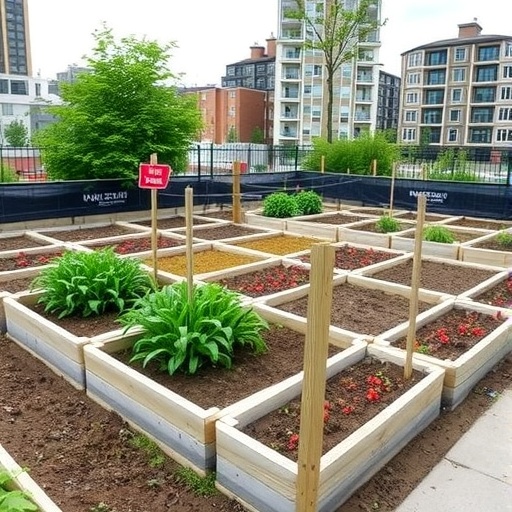
In an era where urban sprawl relentlessly encroaches on natural landscapes, the sustainability of peri-urban agriculture emerges as a pivotal focus for researchers and policymakers worldwide. The latest study authored by Mendoza Beltran, Toboso-Chavero, Arosemena Polo, and colleagues offers groundbreaking insights into how circular nutrient systems can dramatically enhance the ecological and economic viability of farming operations situated at the fringe of urban centers. This research underscores the critical role of nutrient recycling in transforming peri-urban agriculture from a fragile endeavor susceptible to environmental degradation into a resilient model of sustainable food production.
Peri-urban agriculture, defined as farming activities occurring on the outskirts of cities, faces unique challenges that threaten its sustainability. These include limited land availability, pollution pressures, water scarcity, and the dependency on external inputs like chemical fertilizers and pesticides. The study emphasizes that conventional linear resource flows—where nutrients are extracted from the soil and lost through runoff or harvested crops—are unsustainable in these densely populated transitional zones. The researchers propose shifting to circular nutrient management, where waste streams and organic residues are reintegrated into farming cycles to replenish soil fertility naturally.
Central to this innovative approach is the concept of nutrient circularity, which revolves around closing the loop on nutrient flows by recycling organic waste from urban and peri-urban sources. The team demonstrates through rigorous techno-ecological analysis how nutrients contained in food scraps, green waste, and sewage sludge can be processed and safely reintroduced into peri-urban agricultural systems. Such recycling not only mitigates nutrient losses and pollution but also reduces dependence on synthetic fertilizers, which are both environmentally costly and economically taxing.
The study delves deeply into the biochemical and ecological mechanisms underpinning nutrient cycling within agro-ecosystems. It highlights how microbial activity in soils mediates the transformation and mobilization of essential elements like nitrogen and phosphorus. By maintaining optimal soil microbial communities through organic amendments sourced from recycled urban waste, farmers can sustain soil health, enhance plant uptake of nutrients, and promote biodiversity. This biological foundation is critical to ensuring the long-term productivity and resilience of peri-urban farms.
Furthermore, the authors explore innovative technologies and management practices that enable efficient nutrient recovery and recycling. These include advanced composting techniques, bio-digestion processes for organic waste, and the use of tailored biochar additives that augment nutrient retention and soil structure. The deployment of digital monitoring tools for nutrient tracking allows farmers to precisely match nutrient supply with crop demand, minimizing excesses that often lead to groundwater contamination or greenhouse gas emissions. Integration of such smart agronomic practices represents a major leap toward sustainable peri-urban food systems.
The economic implications of adopting circular nutrient approaches are equally compelling. The research presents detailed cost-benefit analyses showing that nutrient recycling reduces input costs and improves farm profitability over time. By decreasing the need for costly chemical fertilizers and enhancing soil productivity, farmers gain greater independence from volatile global fertilizer markets. Additionally, the study highlights potential revenue streams through the valorization of organic waste, which can be transformed into marketable soil amendments and bioenergy products, creating circular urban-rural linkages.
Social dimensions are not overlooked in this comprehensive examination. The authors underscore the opportunities for community engagement and job creation linked to localized nutrient recycling infrastructure. Peri-urban regions, often home to diverse populations, can leverage circular nutrient initiatives to foster inclusive economic development, food security, and environmental education. The study advocates for multi-stakeholder collaboration involving urban planners, farmers, waste managers, scientists, and policymakers to co-design adaptive governance frameworks that support circular peri-urban agriculture.
Importantly, the study recognizes the heterogeneity of peri-urban landscapes across different regions and calls for context-specific adaptations of circular nutrient strategies. Variables such as climate, soil types, urban density, and cultural practices influence the feasibility and design of nutrient recycling systems. The authors propose a decision-support framework combining spatial analysis, life cycle assessment, and participatory approaches to tailor interventions that optimize sustainability outcomes while respecting local conditions and needs.
From an environmental perspective, circular nutrient management in peri-urban agriculture significantly contributes to mitigating pollution and climate change. The research illustrates how closing nutrient loops reduces nitrogen leaching and phosphorus runoff, which are major contributors to water eutrophication. Furthermore, by enhancing soil organic matter and promoting healthy microbial populations, circular fertilization enhances carbon sequestration potentials of peri-urban soils. Reduced reliance on synthetic fertilizers also curbs emissions associated with their manufacture and application, lowering the overall agricultural carbon footprint.
The study also addresses potential risks and trade-offs inherent to nutrient recycling strategies. The safety concerns related to contaminants, pathogens, and heavy metals in recycled organic waste are thoroughly examined. The authors recommend rigorous processing standards, quality control measures, and regulatory oversight to ensure that nutrient recycling practices are safe for human health and ecosystems. They emphasize continuous monitoring and adaptive management as vital components of responsible circular nutrient implementation.
A compelling aspect of this research is its integration of a systems-thinking perspective, which situates nutrient circularity within broader urban sustainability agendas. By linking food production, waste management, water quality, and energy use, the study highlights the interconnectedness of peri-urban systems and the multifunctional benefits of circular nutrient flows. This holistic view informs the design of resilient urban-rural interfaces where agriculture supports sustainable livelihoods, biodiversity conservation, and ecosystem services.
Looking forward, the study identifies key research gaps and priority areas to advance the field of nutrient circularity in peri-urban agriculture. These include the development of scalable nutrient recovery technologies, socio-economic studies to understand stakeholder motivations and barriers, and long-term field trials to validate ecosystem service enhancements. The authors call for greater interdisciplinary collaborations and policy innovation to accelerate the transition towards truly circular nutrient economies in the face of rapid urbanization.
The implications of this work extend beyond peri-urban agriculture to global sustainability goals, including the United Nations’ Sustainable Development Goals (SDGs). By demonstrating actionable pathways to close nutrient loops, reduce pollution, and enhance food system resilience, the research contributes significantly toward zero hunger (SDG 2), clean water and sanitation (SDG 6), sustainable cities and communities (SDG 11), and responsible consumption and production (SDG 12). It thus positions circular nutrient management as a transformative lever for inclusive and sustainable development.
In sum, the novel insights and rigorous analyses presented by Mendoza Beltran and colleagues pave the way for a paradigm shift in peri-urban agriculture. Harnessing the power of circular nutrients reconciles the pressing demands of urban growth with the imperatives of environmental stewardship and social equity. This study not only enriches the scientific understanding of nutrient cycles but also delivers practical frameworks for real-world applications, promising a more sustainable and resilient future for food systems at the urban fringe.
Cite Scienmag News
Alan Morgan. (January 9, 2026). Circular Nutrients Boost Peri-Urban Agriculture Sustainability. Scienmag. https://scienmag.com/circular-nutrients-boost-peri-urban-agriculture-sustainability/
Alan Morgan. "Circular Nutrients Boost Peri-Urban Agriculture Sustainability." Scienmag, 9 January 2026, https://scienmag.com/circular-nutrients-boost-peri-urban-agriculture-sustainability/. Accessed 3 September 2026.
Alan Morgan. "Circular Nutrients Boost Peri-Urban Agriculture Sustainability." Scienmag. January 9, 2026. https://scienmag.com/circular-nutrients-boost-peri-urban-agriculture-sustainability/


