


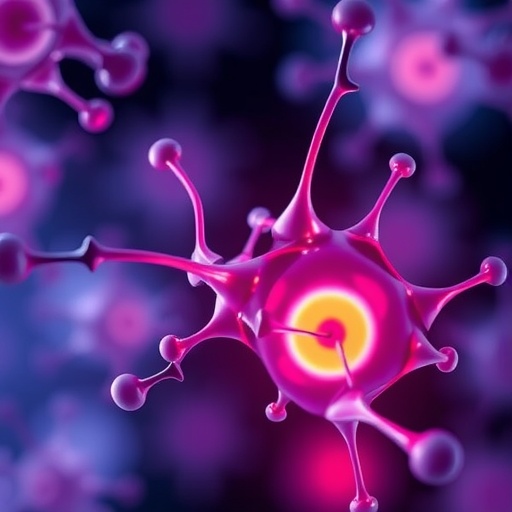
In a groundbreaking study that could redefine the future landscape of regenerative medicine, researchers have revealed a novel approach for expanding hematopoietic stem cells (HSCs) ex vivo through the mechanical activation of the Piezo1 ion channel. This pivotal discovery opens up new vistas in stem cell biology, promising significant advancements in therapeutic applications, including bone marrow transplants and treatment of various blood disorders.
Hematopoietic stem cells, the progenitors responsible for the entire blood system, have long been at the center of medical research due to their unique ability to replenish all blood cell types. However, scaling up HSCs outside the human body while preserving their stemness and functionality has remained a critical challenge, limiting clinical applications. Addressing this bottleneck, the new study delves into the mechanotransduction pathways that regulate HSC behavior, spotlighting the mechanosensitive Piezo1 channel as a key player in this process.
Piezo1, a mechanically activated ion channel, responds to physical stimuli by allowing calcium influx into cells, thereby initiating intracellular signaling cascades that influence cell fate decisions. Until now, the relationship between Piezo1 activation and hematopoietic stem cell expansion had been poorly understood. By precisely modulating mechanical cues to transiently activate Piezo1, the research team demonstrated a controlled method to amplify HSC populations while maintaining their pluripotency and self-renewal capacity.
The researchers employed a sophisticated ex vivo culture system where HSCs were subjected to carefully calibrated mechanical stretch, mimicking physiological forces encountered within the bone marrow niche. The transient nature of this mechanical stimulation was paramount, preventing potential deleterious effects of chronic activation while harnessing the beneficial signals that transient Piezo1 opening delivers. This nuanced method allowed for a reproducible and significant increase in the number of functional hematopoietic stem cells.
At the molecular level, transient Piezo1 activation induced a cascade of intracellular events, including an upsurge in calcium signaling, which subsequently activated downstream pathways linked to stem cell proliferation and survival. Notably, the study elucidated the involvement of specific transcription factors and epigenetic modulators that govern the balance between self-renewal and differentiation, ensuring that expanded HSCs did not lose their unique identity or engraftment potential upon transplantation.
This mechanotransductive approach contrasts sharply with traditional methods relying heavily on biochemical factors such as cytokines and growth factors, which have limitations in efficiency and can induce unwanted differentiation. By harnessing physical forces, the researchers provided an orthogonal strategy that adds an extra dimension of control over stem cell fate, potentially circumventing previous challenges faced in the field.
Moreover, the study’s findings underscore the importance of the bone marrow microenvironment, where mechanical forces play a nuanced yet critical role in regulating hematopoiesis. This paradigm shift towards recognizing mechanical inputs as vital regulators opens new avenues for tissue engineering and regenerative therapies, where the emulation of native biophysical conditions can enhance therapeutic outcomes.
Exploiting the Piezo1 channel’s capacity to sense and transduce mechanical stimuli represents a sophisticated intersection of biophysics and cell biology. This approach also raises intriguing questions about how other mechanically sensitive channels and receptors may influence stem cell niches across various tissues, hinting at a broader framework of mechanobiology in regenerative medicine.
Importantly, the transient nature of Piezo1 activation ensures that the stimulation does not induce cellular stress or apoptosis, issues that often plague prolonged mechanical manipulations. This temporally precise activation preserves cell integrity and function, a critical consideration for clinical translation, where safety and efficacy remain paramount.
The implications of this study extend beyond hematopoietic stem cells, presenting a model that could be adapted to other stem cell types, including mesenchymal and neural stem cells, which also reside in mechanically dynamic environments. This suggests a universal principle whereby calibrated mechanical stimuli can be harnessed to improve stem cell expansions and therapeutic potential.
Furthermore, the research integrates state-of-the-art bioengineering techniques to deliver mechanical cues, combining microfabrication and materials science approaches to create platforms capable of mimicking in vivo mechanical environments. Such innovations pave the way for scalable manufacturing of stem cells tailored for transplantation and disease modeling.
From a clinical perspective, the ability to expand HSCs ex vivo with enhanced efficiency and fidelity has far-reaching consequences. It could dramatically improve the availability and quality of hematopoietic stem cells for treatments, reducing the dependency on donor matches and addressing current shortages in transplantable cells.
This work also advocates for the inclusion of mechanical parameters in the design of stem cell culture protocols, which traditionally have emphasized chemical supplementation without accounting for physical forces. Incorporating such biomechanical insights will refine culturing conditions, ultimately leading to more robust and clinically viable cell products.
As the study unfolds new dimensions in stem cell biology, it invites a multidisciplinary collaboration between biologists, engineers, and clinicians to explore and perfect the use of mechanotransduction pathways for therapeutic ends. The convergence of these fields promises to accelerate the development of next-generation regenerative treatments, potentially transforming patient care paradigms.
In sum, by unveiling how transient mechanical activation of the Piezo1 channel facilitates the ex vivo expansion of hematopoietic stem cells, this research anchors a seminal advance in regenerative medicine. It exemplifies the profound potential of integrating biophysical cues with stem cell biology, heralding a future where mechanobiology-driven therapies become standard practice.
Cite Scienmag News
Drew Townsend. (January 9, 2026). Mechanical Activation Boosts Hematopoietic Stem Cell Growth. Scienmag. https://scienmag.com/mechanical-activation-boosts-hematopoietic-stem-cell-growth/
Drew Townsend. "Mechanical Activation Boosts Hematopoietic Stem Cell Growth." Scienmag, 9 January 2026, https://scienmag.com/mechanical-activation-boosts-hematopoietic-stem-cell-growth/. Accessed 3 September 2026.
Drew Townsend. "Mechanical Activation Boosts Hematopoietic Stem Cell Growth." Scienmag. January 9, 2026. https://scienmag.com/mechanical-activation-boosts-hematopoietic-stem-cell-growth/


