


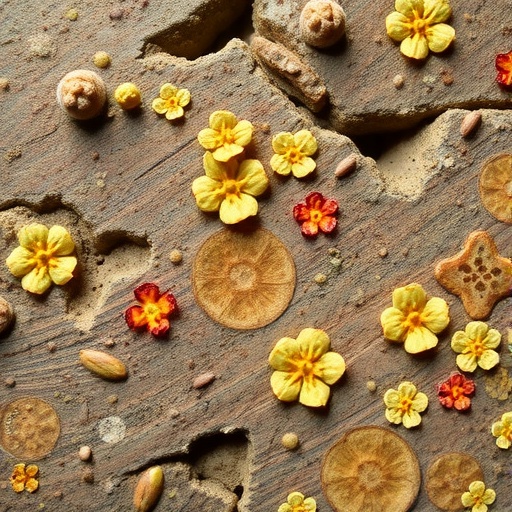
In a groundbreaking study published in Commun Earth Environ, researchers have made significant strides in understanding the evolution of terrestrial ecosystems during the Middle Devonian period, particularly focusing on land plants. The study, conducted by a team of eminent scientists led by Dong Song, reveals that these ancient flora were not only abundant but also richly endowed with surface resins that played critical roles in their ecology and interactions with their environment. This discovery sheds new light on the complex relationships between plants and their ecological counterparts, including insects and microbial life forms.
These surface resins, which consist of complex organic compounds, were not merely byproducts of plant metabolism but served essential functions in terms of plant defense mechanisms, reproductive strategies, and possibly even interactions with other organisms. The research provides evidence that the resins may have aided in deterring herbivory, thereby ensuring that these early plants could thrive in a rapidly evolving ecosystem. The findings highlight how these plants developed sophisticated chemical defenses long before the advent of flowering plants, indicating a remarkable level of evolutionary adaptation.
Through meticulous examination of fossil records and chemical analysis of preserved plant materials, the research team identified the presence of various types of resinous substances. These compounds are hypothesized to have assisted in protecting the plants from environmental stressors such as ultraviolet radiation and desiccation, which were prevalent during this geological epoch. Understanding these chemical profiles offers insights into the ecological strategies employed by plants of the time, underscoring their resilience and adaptability.
The implications of this research extend beyond just the evolutionary narrative of plant life; they also provide a foundation for future studies in paleobotany and ecology. By understanding the functional roles of these ancient resins, scientists can draw parallels with contemporary plant species, particularly concerning how modern flora have evolved similar chemical pathways for defense. Moreover, this research may inform conservation efforts, as it highlights the importance of chemical diversity in maintaining ecosystem health and resilience to disturbances.
In the context of plant-animal interactions, the presence of these resins likely played a role in shaping the diversity and behavior of herbivorous insects that coexisted with these early land plants. The study suggests that the evolving chemical landscape of the Devonian flora influenced the evolutionary trajectories of these insects, indicating a co-evolutionary dynamic that fostered biodiversity. This revelation prompts a reevaluation of how early land ecosystems functioned and the interdependencies that were established during this critical period in Earth’s history.
Additionally, the study emphasizes the importance of fossilized resin as a resource for paleoenvironmental reconstruction. Resins encapsulate not only plant tissues but also a myriad of organisms trapped within them. By analyzing these inclusions, researchers can gain further insight into the biodiversity of the Devonian period, including the presence and diversity of insects, fungi, and microorganisms that played integral roles in the ecosystem. This aspect of the research highlights the multifaceted nature of fossil resins, serving as a remarkable window into the past.
The methodology employed in the study was rigorously designed to ensure the accuracy of the findings. The team utilized advanced analytical techniques, including gas chromatography-mass spectrometry (GC-MS), to dissect the complex composition of the resins. These techniques enabled them to identify specific compounds responsible for the intriguing properties observed, providing a clear picture of the biochemical pathways active in these ancient plants. Such technological integration into paleontological research paves the way for even deeper investigations into other aspects of ancient plant biology.
Furthermore, the research underscores a burgeoning interest in the chemical ecology of ancient plants and its relevance to modern ecological studies. As contemporary ecosystems face unprecedented challenges due to climate change and habitat destruction, understanding the resilience and adaptability of past flora can inform approaches to conservation and restoration efforts. Insights gained from the Devonian period may reveal strategies that plants have historically employed to cope with environmental changes, offering a blueprint for future adaptability.
The findings from this study are particularly timely given the current global emphasis on sustainability and ecological balance. By examining the historical precedents set by past ecosystems, scientists can better appreciate the importance of biological diversity and the intricate relationships that bind various life forms together. The study serves as a clarion call for the scientific community to explore how past evolutionary adaptations can guide present-day practices and policies aimed at preserving the integrity of our natural world.
In conclusion, the research presented by Song and colleagues marks a significant milestone in our understanding of Devonian ecosystems. The abundant surface resins identified in Middle Devonian land plants not only provide a glimpse into the complexities of ancient plant life but also reinforce the interconnectedness of life forms throughout Earth’s history. This work sets the stage for future exploration of plant evolution, interactions among species, and the ongoing narrative of life that continues to unfold on our planet.
As the field of paleobotany continues to evolve, studies such as this will remain pivotal in unraveling the mysteries of our planet’s past, as well as contributing to our ongoing efforts to understand and address contemporary ecological challenges.
Song, D., Wang, T., Zhong, N. et al. Abundant surface resins present on Middle Devonian land plants.
Commun Earth Environ (2026). https://doi.org/10.1038/s43247-025-03161-9
Cite Scienmag News
Gavin Prescott. (January 8, 2026). Middle Devonian Plants Showcase Rich Surface Resins. Scienmag. https://scienmag.com/middle-devonian-plants-showcase-rich-surface-resins/
Gavin Prescott. "Middle Devonian Plants Showcase Rich Surface Resins." Scienmag, 8 January 2026, https://scienmag.com/middle-devonian-plants-showcase-rich-surface-resins/. Accessed 3 September 2026.
Gavin Prescott. "Middle Devonian Plants Showcase Rich Surface Resins." Scienmag. January 8, 2026. https://scienmag.com/middle-devonian-plants-showcase-rich-surface-resins/


