

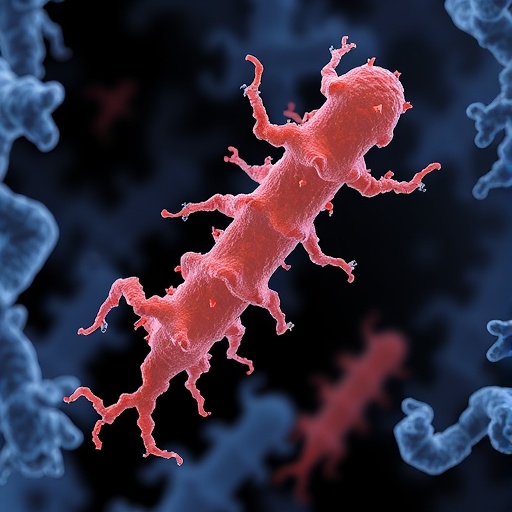
In a groundbreaking study, researchers have delved deep into the genetic secrets of one of the world’s most infamous pathogens, Bacillus anthracis. This organism is widely recognized as the causative agent of anthrax, a disease known for its potential to affect both livestock and humans. With a history anchored in bioweapon discussions and public health threats, understanding its genomic adaptability and virulence is of paramount importance. A team of scientists, led by Y.S. Sekar and including Chellapandi P. and K.P. Suresh, has employed advanced machine learning techniques to conduct a comprehensive pan-genomic and comparative analysis of this bacterium, aiming to shed light on its evolutionary traits and pathogenic mechanisms.
The implications of this research are profound, particularly in the context of bioterrorism and infectious disease control. Bacillus anthracis is notorious for its bioweapon potential, and a thorough understanding of its genomic blueprint could aid in developing more effective vaccines and therapeutic strategies. By leveraging machine learning algorithms, the researchers aimed to dissect the genomic data at an unprecedented scale, extracting meaningful patterns that could reveal insights into the organism’s adaptability to various environments and hosts.
Machine learning techniques have transformed the paradigm of data analysis, enabling researchers to process vast amounts of genomic information that would be otherwise insurmountable. This research employed these techniques to integrate multiple genomic sequences and characterize the pan-genome of Bacillus anthracis. Pan-genomic analyses offer a new lens through which scientists can view genetic variations among pathogens, elucidating how certain strains might evolve greater virulence or resistance to treatment.
One pivotal finding of this research is the discovery of unique genomic features that contribute to the virulence of specific Bacillus anthracis strains. By comparing genomic sequences from different strains, researchers identified genes that are closely associated with virulence. These genetic markers could potentially serve as targets for vaccine development or therapeutic interventions. Understanding which strains are more virulent allows health authorities to establish more effective monitoring systems and response protocols, particularly in regions prone to anthrax outbreaks.
In addition to identifying virulence factors, the study’s machine learning approach allows for a predictive modeling of how Bacillus anthracis might adapt in response to various selection pressures, whether they originate from host immune responses or environmental factors. Predictive models indicate that as our strategies for combating this pathogen evolve, so will the pathogen itself. This gives rise to the critical need for continuous surveillance of Bacillus anthracis strains, ensuring we stay one step ahead in the arms race against infectious diseases.
The comparative analysis aspect of the research provided insights into how genetic exchange occurs among different strains of Bacillus anthracis. Horizontal gene transfer is a significant mechanism by which bacteria enhance their survival and adaptation. The findings suggest that environmental factors or interactions with other bacterial species could facilitate the transfer of virulence genes, further complicating our efforts to manage this pathogen. This emphasizes the importance of understanding the ecological niches that harbor Bacillus anthracis, as they may serve as reservoirs for genomic variation.
Furthermore, the research highlights the role of the environment in shaping genomic fitness and adaptability. It is evident that factors such as soil composition, temperature fluctuations, and the presence of other microorganisms can significantly influence the genetic evolution of Bacillus anthracis. Exploring these environmental interactions provides a holistic view of how the bacterium thrives and poses risks to both animal and human health, highlighting the need for interdisciplinary approaches in studying infectious diseases.
The potential for genomic surveillance emerges as a critical recommendation from this study. The ability to track genetic changes over time can provide actionable intelligence for public health officials and policymakers. Implementing real-time genomic surveillance could enhance our response capabilities, enabling quicker interventions during anthrax outbreaks. This proactive approach has the potential to mitigate public health risks before they escalate, ultimately saving lives and resources.
Ethical considerations also come to the forefront when discussing research involving dangerous pathogens. The dual-use nature of such studies, where findings can be applied for both beneficial and harmful purposes, necessitates a careful examination of how genomic data is utilized. As researchers unlock the genetic secrets of Bacillus anthracis, they must remain vigilant about the implications their work may have on biosafety and biosecurity.
In conclusion, the research spearheaded by Y.S. Sekar and colleagues not only enhances our understanding of Bacillus anthracis but also sets the stage for future studies exploring the genomic landscapes of other pathogens. By marrying machine learning with comparative genomics, researchers are paving the way for innovative approaches in infectious disease control and treatment. The comprehensive insights gleaned from this study underscore the importance of continual research, vigilance, and the integration of advanced analytical tools in responding to ongoing and emerging threats from infectious diseases.
As the scientific community eagerly anticipates more findings stemming from this innovative work, it is imperative that ongoing research remains transparent and collaborative. In this age of rapid technological advancement, harnessing the power of genomic research in a responsible manner could redefine our strategies not only against Bacillus anthracis but also myriad other infectious agents that continue to challenge public health globally.
Cite this news
SCIENMAG. (January 7, 2026). Machine Learning Unveils Bacillus anthracis Adaptability and Virulence. https://scienmag.com/machine-learning-unveils-bacillus-anthracis-adaptability-and-virulence/
SCIENMAG. "Machine Learning Unveils Bacillus anthracis Adaptability and Virulence." Scienmag, 7 January 2026, https://scienmag.com/machine-learning-unveils-bacillus-anthracis-adaptability-and-virulence/. Accessed 28 August 2026.
SCIENMAG. "Machine Learning Unveils Bacillus anthracis Adaptability and Virulence." Scienmag. January 7, 2026. https://scienmag.com/machine-learning-unveils-bacillus-anthracis-adaptability-and-virulence/


