


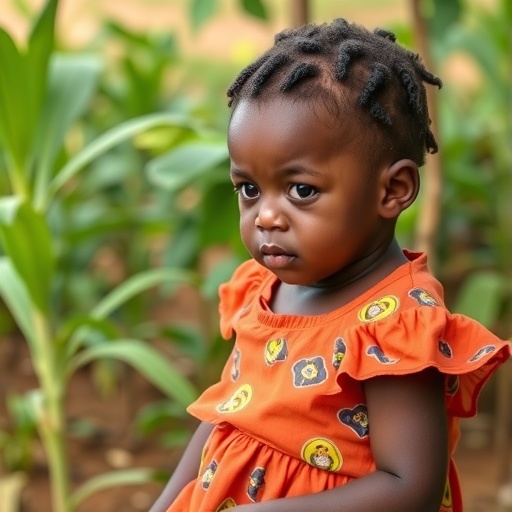
In a groundbreaking study that explores the intersection of environmental factors and child mortality, researchers Isabirye and Poovendhree shine a light on the pressing issue of child health in Liberia. Their comprehensive survival analysis presents a detailed examination of the environmental determinants that contribute to child mortality rates in a country struggling with numerous socio-economic challenges. Understanding these determinants is crucial for formulating effective public health strategies and interventions aimed at reducing premature deaths among children.
Child mortality continues to be a significant concern in many parts of the world, especially in low-income countries where the vulnerabilities are heightened by poor access to healthcare, inadequate sanitation, and limited educational resources. Liberia, a nation still recovering from years of civil unrest and economic instability, showcases a stark landscape where such challenges persist. This study aims to unravel the complex web of environmental factors linked to child mortality, offering a poignant reminder of the need for targeted interventions.
The researchers implemented a survival analysis methodology to assess how various environmental factors influence child mortality rates in Liberia. This statistical approach allows for a nuanced understanding of the time until an event occurs—in this case, child death—while taking into account the variability and complexity of contributing factors. This methodology not only strengthens the reliability of the findings but also enables the identification of specific areas where interventions can be effectively applied.
The study identified several key environmental factors that correlate with child mortality. These include access to clean water, adequate sanitation facilities, and air quality. The interplay between these variables sheds light on the critical importance of environmental health in ensuring the survival of young children. For instance, children exposed to contaminated water sources are at an increased risk of contracting waterborne diseases, which can be fatal in regions where healthcare access is limited.
Moreover, the findings emphasize the role of socio-economic status as a mediating factor in child mortality. Families living in poverty are less likely to afford basic sanitary services and clean water, thereby placing their children at greater risk. This aspect of the study aligns with global health initiatives aimed at addressing poverty as a fundamental barrier to improving child health outcomes. By highlighting these relationships, the research advocates for integrated approaches that tackle both environmental and socio-economic challenges.
The implications of these findings extend beyond Liberia’s borders, as they offer insights applicable to other regions facing similar challenges. Child mortality is a global issue, and understanding the environmental determinants can guide health policies and interventions in various socio-economic contexts. By focusing on evidence-based strategies, policymakers can allocate resources more effectively, ensuring that interventions target the most vulnerable populations.
In recent years, global health organizations have laid out ambitious goals to reduce child mortality, particularly in regions where the rates are disproportionately high. This study provides a crucial piece of the puzzle, indicating that addressing environmental health is vital for meeting these goals. Clean water and sanitation have been recognized as fundamental human rights, and their promotion is imperative for fostering a healthy future generation.
The research conducted by Isabirye and Poovendhree further underscores the significance of local data in informing national health policies. Policymakers and health officials can use the insights derived from this survival analysis to develop tailored strategies that resonate with the specific environmental conditions prevailing in Liberia. Improving child health requires a contextual understanding of the factors at play, and this study serves as a model for similar investigations in other regions.
As the study anticipates future research, it encourages a multidisciplinary approach to understand child mortality better. Collaboration between environmental scientists, public health experts, and policymakers can catalyze innovations in tackling the environmental determinants associated with child health. By creating an integrated research framework, stakeholders can work together towards developing scalable interventions that can be adapted to different ecosystems.
The urgency of this research cannot be overstated, as child mortality remains a pressing issue with respect to global health equity. By addressing the environmental factors that contribute to child mortality, the study not only highlights a pathway towards reducing these rates but also emphasizes the moral obligation to protect the health and well-being of future generations. The stakes are high, and swift action is necessary to reverse harmful trends.
In summary, Isabirye and Poovendhree’s research opens avenues for further exploration into the critical connection between environmental health and child survival in Liberia. The study’s emphasis on survival analysis as a useful tool for understanding these issues provides a clear framework for future investigations. As the world grapples with persistent child mortality rates, studies like this remind us of the powerful influence environmental conditions have on health outcomes, and the responsibility we carry to address these vulnerabilities effectively.
By illuminating the challenges faced by children in Liberia, this research serves not only as a call to action but also as a catalyst for dialogue among stakeholders. As we look toward a future where child mortality is significantly reduced, understanding and acting upon the environmental determinants of health will be crucial. Policymakers, health practitioners, and researchers must unite in their efforts to create a world where every child can not only survive but thrive.
Isabirye, A., Poovendhree, R. Survival analysis of environmental determinants related to child mortality in Liberia.
BMC Pediatr (2026). https://doi.org/10.1186/s12887-025-06478-8
Cite Scienmag News
Ophelia Keating. (January 6, 2026). Exploring Environmental Factors Influencing Child Mortality in Liberia. Scienmag. https://scienmag.com/exploring-environmental-factors-influencing-child-mortality-in-liberia/
Ophelia Keating. "Exploring Environmental Factors Influencing Child Mortality in Liberia." Scienmag, 6 January 2026, https://scienmag.com/exploring-environmental-factors-influencing-child-mortality-in-liberia/. Accessed 4 September 2026.
Ophelia Keating. "Exploring Environmental Factors Influencing Child Mortality in Liberia." Scienmag. January 6, 2026. https://scienmag.com/exploring-environmental-factors-influencing-child-mortality-in-liberia/


