


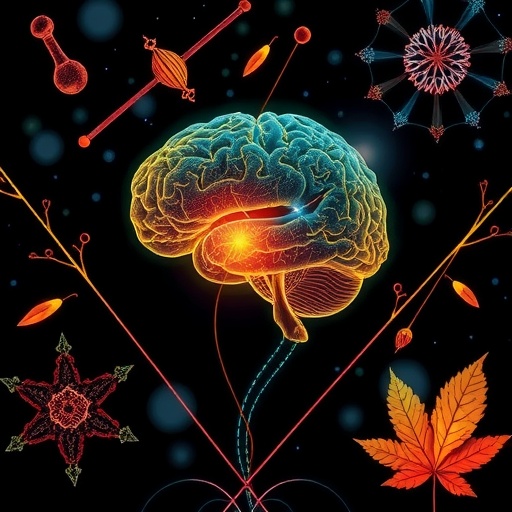
In the evolving landscape of medical science, the integration of traditional medicine with contemporary neuroscience offers a transformative pathway toward holistic healthcare. A groundbreaking study led by Gonzalez, Amoateng, Obiri, and colleagues underscores the immense potential of constructing an evidence-based framework that bridges centuries-old traditional medical practices with cutting-edge neuroscientific research. This initiative not only broadens the horizons of mental health treatment but also fosters a symbiotic relationship between two realms often perceived as disparate. The fusion of these disciplines heralds a new era, promising innovative therapeutic modalities that are grounded in both empirical observation and cultural knowledge.
Traditional medicine, with its rich tapestries of herbal remedies, spiritual healing, and psychosomatic treatments, has been practiced globally for millennia. Despite its widespread use, many of its methodologies have remained outside the rigorous scrutiny of modern scientific validation. Neuroscience, conversely, thrives on quantifiable data, mechanistic insights, and reproducibility. The challenge, and opportunity, lies in harmonizing the subjective experiential nature of traditional therapies with the objective metrics valued in neuroscience. By doing so, researchers aim to unearth the mechanistic underpinnings behind traditional practices, elucidating how such interventions modulate brain function, neurochemical pathways, and overall mental health.
This paradigm shift requires meticulous methodologies designed to capture the nuanced effects of traditional medicines. Advances in neuroimaging, electrophysiology, and biomarker assays permit unprecedented observation of brain activity alterations induced by traditional compounds and rituals. For instance, functional magnetic resonance imaging (fMRI) can pinpoint cerebral regions impacted by herbal constituents, while electroencephalography (EEG) can track real-time neuronal oscillations during meditative or ritualistic practices. These technologies enable neuroscientists to move beyond anecdotal reports and establish causal relationships between traditional interventions and neurological outcomes.
The accumulation of such neuroscientific evidence holds profound implications for mental health, particularly in the treatment of mood disorders, cognitive decline, and neurodegenerative diseases. Traditional medicine often incorporates multi-target approaches, combining biochemical, psychological, and social elements within a single therapeutic framework. This holistic approach contrasts with many reductionist pharmacological strategies focused on single molecular targets. Understanding how these complex traditional systems interact with the brain’s intricate networks can inspire novel polypharmacological interventions or psychosocial therapeutic frameworks that integrate mind, body, and environment.
Collaboration between neuroscientists and traditional medical practitioners is pivotal to this integrative endeavor. Traditional healers bring invaluable experiential knowledge and contextual understanding of the cultural dimensions influencing health and illness. Their perspective enriches research questions and helps tailor scientific protocols to respect community values and traditional ethics. Meanwhile, neuroscientists contribute rigorous experimental design, data analysis skills, and mechanistic insights. This interdisciplinary dialogue fosters mutual respect and knowledge exchange, which is crucial for developing culturally sensitive and scientifically validated mental health treatments.
Despite the promise, several challenges demand attention. Standardization of traditional remedies, quality control, and reproducibility of clinical outcomes remain complex issues. Natural products may vary in composition depending on geographic and seasonal factors, complicating the pharmacological profiling necessary for neuroscientific studies. Additionally, the intricate placebo effects embedded in traditional rituals require careful differentiation from genuine neurobiological changes, necessitating sophisticated control conditions in research trials. Resolution of these barriers will rely heavily on advances in analytical chemistry, pharmacogenomics, and clinical trial methodology.
Moreover, ethical considerations underpin this research frontier. Intellectual property rights, benefit sharing, and recognition of indigenous knowledge holders must be navigated carefully to avoid cultural exploitation. Transparent communication and community engagement are essential to ensure that research is conducted respectfully and that benefits accrue equitably. This ethical dimension also expands the role of neuroscientists beyond laboratory settings to active participation in global health diplomacy and policy-making.
The rise of digital technologies and artificial intelligence further accelerates the potential to decode traditional medicine’s complexities. Machine learning algorithms can analyze large datasets encompassing genetic, neuroimaging, and clinical variables, potentially identifying novel biomarkers and therapeutic targets embedded within traditional formulations. AI-driven drug discovery platforms may simulate interactions between herbal constituents and neural receptors, streamlining the development of new psychotropic agents. These technological synergies exemplify how tradition and innovation can coalesce to rejuvenate mental health research.
Beyond the laboratory and clinic, public perception and acceptance represent another crucial axis. Bridging the gap between traditional beliefs and scientifically rigorous treatments requires effective science communication strategies. This involves not only debunking misconceptions but also highlighting the empirical successes of integrated approaches. Empowering patients with accurate information fosters informed decision-making and adherence, which are vital for long-term therapeutic efficacy.
Furthermore, this integrative research has significant implications for global health equity. Traditional medicine remains the primary healthcare resource for vast populations, especially in low- and middle-income countries. Leveraging empirical validation can enhance the credibility and accessibility of effective traditional interventions, thereby improving mental health outcomes in underserved communities. Policymakers and global health organizations stand to benefit from evidence-based frameworks that inform sustainable incorporation of traditional medicine into national health systems.
Education and training reforms are equally imperative to sustain this interdisciplinary integration. Medical curricula and neuroscience programs should incorporate modules on ethnopharmacology, cultural psychiatry, and traditional healing philosophies. Likewise, traditional practitioners could be provided with basic scientific literacy to engage constructively with research processes. Creating such hybrid educational ecosystems will empower future generations of healthcare providers to navigate and innovate at this intersection effectively.
The study by Gonzalez and colleagues serves as a clarion call to the scientific community, highlighting the untapped reservoir of knowledge residing in traditional medicine. It advances the narrative that evidence-based scrutiny need not undermine cultural heritage but can, in fact, revitalize it. The authors set forth a roadmap emphasizing methodological rigor, interdisciplinary collaboration, and ethical accountability as cornerstones for this endeavor. Their vision encompasses a future where neuroscientific validation amplifies the therapeutic repertoire, enhancing both personalized and community-level mental health care.
Ultimately, the convergence of neuroscience with traditional medical wisdom embodies a broader scientific philosophy: embracing complexity, diversity, and interdisciplinarity to solve human health challenges. The brain and mind are intricate tapestries woven from biological, psychological, and cultural threads. Recognizing and harnessing these multifaceted influences offers a promising avenue to conquer mental illnesses that have long resisted simplistic interventions. As this research area matures, it may redefine paradigms of healing, blurring the boundaries between ancient knowledge and modern science to foster a more inclusive, effective, and compassionate approach to mental health.
This integrative pursuit holds the potential not only to innovate treatments but also to catalyze transformative cultural shifts. It invites neuroscientists to expand their ontologies beyond molecular pathways to include ritual, belief, and communal experience as neural modulators. Conversely, it challenges traditional medicine to evolve through scientific validation while retaining its holistic ethos. The synthesis crafted here is not merely additive but generative—crafting new models of health that honor tradition, embrace innovation, and prioritize human well-being in profoundly interconnected ways.
As neuroscience continues to unravel the mysteries of the mind, embracing traditional medicine within its fold represents a bold, forward-thinking stride. The collaboration between these two paradigms promises to yield comprehensive, culturally sensitive mental health solutions that resonate globally. The work initiated by Gonzalez and colleagues stands as a pioneering beacon, encouraging researchers, clinicians, and communities worldwide to co-create this visionary future where scientific rigor meets ancestral wisdom for the betterment of humanity.
Gonzalez, B.L., Amoateng, P., Obiri, N.K. et al. Building evidence-based knowledge in traditional medicine provides an opportunity for neuroscientists and traditional medical practitioners.
Nat. Mental Health (2026). https://doi.org/10.1038/s44220-025-00557-6
Cite Scienmag News
Cassandra Pierce. (January 5, 2026). Bridging Neuroscience and Traditional Medicine Through Evidence. Scienmag. https://scienmag.com/bridging-neuroscience-and-traditional-medicine-through-evidence/
Cassandra Pierce. "Bridging Neuroscience and Traditional Medicine Through Evidence." Scienmag, 5 January 2026, https://scienmag.com/bridging-neuroscience-and-traditional-medicine-through-evidence/. Accessed 3 September 2026.
Cassandra Pierce. "Bridging Neuroscience and Traditional Medicine Through Evidence." Scienmag. January 5, 2026. https://scienmag.com/bridging-neuroscience-and-traditional-medicine-through-evidence/


