

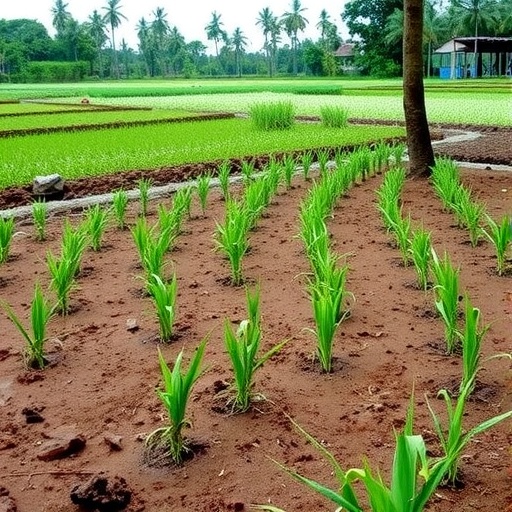
In a groundbreaking correction to a previously published study, researchers have revealed essential insights into the distribution of nephrotoxic trace elements in rice paddy soils of Sri Lanka. This work has profound implications for public health, particularly in the context of rising concerns regarding chronic kidney diseases of unknown etiology. The alarming presence of trace elements such as arsenic (As), cadmium (Cd), and lead (Pb) has raised significant questions about the safety of rice consumption and its potential links to severe health conditions.
As rice is a staple food for millions in Sri Lanka, the findings of this study cannot be overstated. The researchers delved into the soil composition across various rice paddy fields, meticulously assessing the concentrations of these harmful trace elements. Their extensive fieldwork resulted in the collection of soil samples, which were subjected to rigorous laboratory analyses. Such meticulous scientific endeavors underscore the seriousness with which this research topic is treated, given the dire health implications associated with nephrotoxicity.
Arsenic, a notorious environmental contaminant, has been linked to numerous health issues, including skin lesions, respiratory problems, and particularly, kidney-related ailments. The findings of excessive arsenic presence in the soil raise a significant alarm, particularly for communities relying heavily on homegrown rice. Each grain of rice harvested from these contaminated fields may carry toxic residues, leading to a potential health crisis that could escalate if left unaddressed.
Cadmium, another metal under the spotlight in this study, is known for its bioaccumulative properties, posing chronic health threats. Long-term exposure to cadmium can lead to kidney damage and bone fragility. In the context of the Sri Lankan population, whose dietary preferences heavily involve rice, the implications are particularly worrisome. The potential link between dietary cadmium intake from rice and increasing rates of chronic kidney disease underscores a critical public health issue that requires immediate attention.
Additionally, lead contamination cannot be overlooked. Once overwhelmingly present in various environments due to industrial activities and improper waste disposal, lead remains a persistent threat to human health. The presence of lead in rice paddy soils points to an environmental and health hazard that could exacerbate the existing burdens of kidney diseases for which the etiology remains unknown.
The relationship between the soil’s trace element profile and the rising incidence of renal conditions has prompted the researchers to ponder the broader implications of their findings. Chronic kidney diseases of uncertain origin have puzzled health officials and researchers alike, leading to increased scrutiny of the environmental factors at play. The core of this grievance highlights the necessity of linking agricultural practices to health outcomes, particularly in vulnerable populations exposed to environmental contaminants.
Field studies and laboratory confirmations serve as critical methodologies in advancing our understanding of nephrotoxic elements. The scientific rigor employed in the sampling process, combined with state-of-the-art analysis techniques, enhances the reliability of the data. These revelations affirm that addressing environmental health is paramount, advocating for more transparent and collaborative efforts between agricultural stakeholders and health policymakers.
In light of these findings, immediate measures must be implemented to safeguard public health. This may include initiating soil remediation projects in affected areas, educating farming communities about the risks tied to contaminated soils, and promoting safer agricultural practices. It also calls for heightened regulatory oversight to ensure food safety standards are upheld, thereby minimizing the risks associated with dietary exposure to toxic trace elements.
Addressing nephrotoxicity requires a multi-faceted approach that encompasses scientific research, community health initiatives, and government interventions. For instance, public health campaigns could be introduced to raise awareness about the dangers of consuming produce tainted with heavy metals while also advocating for soil testing and safe agricultural practices. Empowering local farmers with knowledge and resources can play a transformative role in mitigating the consequences of heavy metal accumulation.
Furthermore, as communities grapple with the pressing health implications of trace elements in their environment, there is an urgent need for long-term epidemiological studies. Understanding the correlation between soil contamination levels and disease incidences can pave the way for effective interventions. Such research should also extend to neighboring regions to assess whether similar problems are endemic across the broader landscape of rice cultivation in South Asia.
In conclusion, the ongoing discourse surrounding nephrotoxic trace elements in rice paddy soils demands immediate action and investigation. The interconnectedness of agricultural practices and public health presents a poignant narrative underscored by the plight of communities afflicted by chronic kidney diseases. As this correction clarifies, the scientific community is faced with both a challenge and an opportunity to amend systems that have inadvertently jeopardized human health. Proactive strategies grounded in collaboration and research are vital for addressing this complex issue and safeguarding future generations.
Subject of Research: Distribution of nephrotoxic trace elements in rice paddy soils of Sri Lanka and their association with chronic kidney diseases of unknown etiology.
Article Title: Correction to: Distribution of nephrotoxic trace elements (As, Cd and Pb) in rice paddy soils of Sri Lanka and their association with chronic kidney diseases of unknown etiology.
Article References:
Suriyagoda, L., Weerasooriya, T., Rajapaksha, I. et al. Correction to: Distribution of nephrotoxic trace elements (As, Cd and Pb) in rice paddy soils of Sri Lanka and their association with chronic kidney diseases of unknown etiology.
Environ Monit Assess 198, 81 (2026). https://doi.org/10.1007/s10661-025-14932-4
Image Credits: AI Generated
DOI: 10.1007/s10661-025-14932-4
Keywords: nephrotoxic trace elements, arsenic, cadmium, lead, rice paddy soils, chronic kidney disease, public health, environmental contaminants.


