


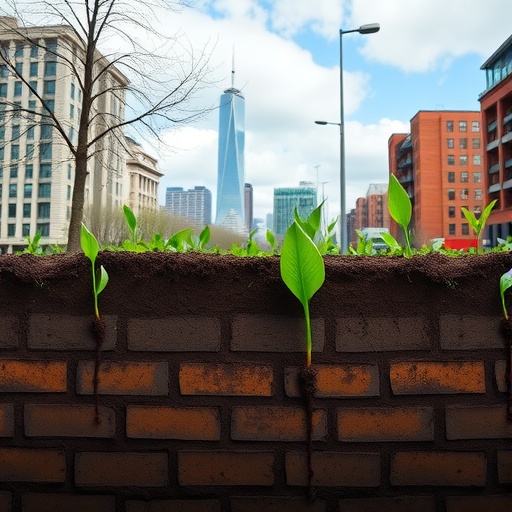
Urban areas often serve as melting pots of human activity, technology, and commerce, but they also harbor some of the most significant environmental challenges. Among these, metal contamination in urban soils poses severe risks to both ecological health and human safety. Recent research conducted by a group of dedicated scientists highlights the alarming contamination levels found in urban soils across three of the United States’ largest cities: Pittsburgh, New York City, and Los Angeles. In this compelling study, the authors delve deep into the geochemical phase distributions of metals, elucidating the nuanced dynamics underlying the presence of these toxic elements.
Pittsburgh, once lauded as the steel capital of the world, has a rich industrial history. However, this industrious past has left a legacy of soil contamination. The study meticulously analyzes samples collected from various neighborhoods in Pittsburgh, revealing patterns indicative of heavy metal accumulation resulting from industrial activities, traffic emissions, and urban runoff. The concentration levels of metals such as lead, cadmium, and arsenic are alarmingly high in certain areas, raising concerns about their impact on human health, particularly for vulnerable populations including children and the elderly.
In comparison, New York City has its own distinctive contamination profile. With its diverse geography and dense population, the metal distribution reveals how urbanization influences soil composition. The researchers employed sophisticated geochemical analysis techniques to investigate the binding forms of metals, enhancing our understanding of how urban landscapes modify the fate of these contaminants. The findings underscore the effects of green spaces and urban gardening, suggesting that certain organic practices may help mitigate metal accumulation in city soils.
Los Angeles, famously known for its sprawling urban environment and heavy reliance on automobiles, also presents a unique case. The researchers found that heavy traffic has led to significant deposition of metals in areas near major roadways. The correlation between high traffic zones and increased metal concentrations was corroborated through geo-statistical analyses, shedding light on the transportation sector’s critical role in urban metal contamination. The implications of these findings extend beyond the confines of each city, reflecting broader trends observed in urban environments worldwide.
One of the notable aspects of this research is the comparative approach taken by the authors. By juxtaposing the soil metal contamination levels and geochemical distributions in three major cities, they unveil a tapestry of factors that contribute to urban soil quality. This comparative analysis not only serves to highlight the unique environmental challenges faced by each city but also paves the way for collaborative urban policy approaches to address these pressing issues.
Different geochemical processes at play in the urban environment further complicate the contamination scenario. The researchers meticulously outline the differences in metal speciation, where metals exist in various chemical forms, affecting their mobility, bioavailability, and toxicity. These distinctions are critical because they inform strategies for remediation and risk assessment. Knowing how metals are bound within the soil matrix can empower city planners and environmental scientists to create more targeted and effective clean-up strategies.
Additionally, the study discusses the potential sources of these contaminants, emphasizing the role of atmospheric deposition, industrial discharge, and historical land use practices. The intricate relationship between urban planning and soil health is underscored by a discussion on how past industrial activities continue to reverberate through soil contamination levels today. It serves as a reminder that the legacies of industrialization do not just vanish; instead, they morph into a complex set of environmental challenges that urban communities must face.
The implications of heavy metal contamination extend far beyond the immediate environment. Public health concerns are paramount, particularly in densely populated urban centers where exposure routes may include contaminated soil dust, urban agriculture, and groundwater infiltration. The study underscores the urgent need for public awareness campaigns aimed at educating residents on soil safety practices, particularly in areas designated for community gardening or recreational activities.
In light of these findings, mitigating strategies are paramount. The research articulates a pathway forward, suggesting that urban planners and policymakers should integrate soil health assessments into broader urban development frameworks. Implementing such strategies would not only improve soil quality but could also enhance community resilience against environmental challenges. Sustainable practices such as phytoremediation, the use of plants to detoxify contaminated soils, could also be explored in collaboration with local communities.
Furthermore, the role of governmental regulations cannot be overlooked. Enhanced policies targeting better waste disposal and stricter emissions standards for industries could serve to reduce soil contamination levels significantly. Advocating for such regulations can foster a public and political dialogue focused on environmental justice, ensuring that vulnerable populations are given a voice in decision-making processes that affect their health and well-being.
Ultimately, this research brings to the forefront the importance of interdisciplinary approaches in addressing urban soil contamination issues. Collaboration between environmental scientists, urban planners, public health officials, and community activists will be essential in crafting solutions that are socially equitable and environmentally sustainable. The study is not just an academic endeavor; it serves as a clarion call for action, urging stakeholders to acknowledge the intricacies of urban ecology and the imperative to safeguard our urban soils for future generations.
As the findings from this research ripple through the academic community and the public sphere, they present both a reflection and a challenge: to reconsider how urban environments are designed, managed, and sustained. The stakes have never been higher, and thus, a collective response is non-negotiable. To maintain the health of our urban soils is to uphold the health of our cities and their inhabitants, ensuring a more sustainable future in the face of climate change and urbanization pressures.
In conclusion, the research underscores the urgency of addressing urban soil contamination through informed, science-based interventions. It stands as a crucial piece of a larger dialogue on environmental health, sustainability, and urban resilience. The collective insight gained from Pittsburgh, New York City, and Los Angeles offers a roadmap for navigating future challenges in urban soil management, highlighting that we have the power to affect change in the very foundations of our cities.
Avkopashvili, M., Bain, D.J., Maxim, A. et al. Urban soil metal contamination and geochemical phase distributions in Pittsburgh: a cross-city comparison with New York City and Los Angeles.
Environ Sci Pollut Res (2026). https://doi.org/10.1007/s11356-025-37342-y
Cite Scienmag News
Violet Maxwell. (January 4, 2026). Comparing Urban Soil Metal Contamination Across Cities. Scienmag. https://scienmag.com/comparing-urban-soil-metal-contamination-across-cities/
Violet Maxwell. "Comparing Urban Soil Metal Contamination Across Cities." Scienmag, 4 January 2026, https://scienmag.com/comparing-urban-soil-metal-contamination-across-cities/. Accessed 4 September 2026.
Violet Maxwell. "Comparing Urban Soil Metal Contamination Across Cities." Scienmag. January 4, 2026. https://scienmag.com/comparing-urban-soil-metal-contamination-across-cities/


