


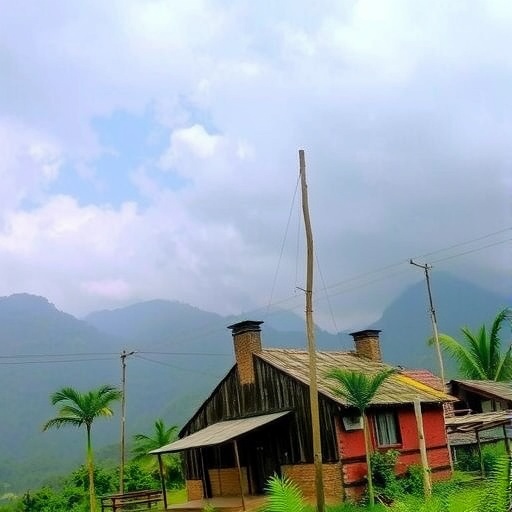
In the lush embrace of the Western Ghats, a region celebrated for its biodiversity and ecological significance, a potent new strategy for replenishing groundwater has emerged. Researchers from India have revealed ground-breaking insights into the potential of site-specific surface runoff harvesting. In a captivating study, Kaliraj, Shunmugapriya, Pitchaimani, and their team explore innovative applications of geospatial techniques, turning the tides on traditional water management practices. Their findings not only highlight urgent environmental concerns but also offer a blueprint for sustainable living in water-scarce regions.
The Western Ghats, a UNESCO World Heritage site, plays a crucial role in the hydrological cycle of India. However, shifting climatic patterns coupled with human activities have exacerbated water scarcity issues in many areas. This study addresses the pressing need for effective groundwater management strategies, particularly in mountainous watersheds where conventional methods have often fallen short. By harnessing geospatial technologies, researchers aim to create systems that are not just reactive but also proactive.
Surface runoff, the water flow that occurs when excess rainwater flows over the ground, is often seen as a nuisance that contributes to erosion and flooding. However, the researchers flip this perspective, showcasing how this seemingly wasted resource can be collected and stored through targeted interventions. The concept of capturing and utilizing runoff, especially within the context of the Western Ghats, opens up exciting possibilities for sustainable water management.
Geospatial techniques equipped the research team with advanced tools to analyze the terrain, vegetation cover, and rainfall patterns across the watershed. By integrating satellite imagery with local data, they identified optimal sites for runoff harvesting infrastructure. These sites were selected based on a balance between environmental impact and practical utility, ensuring that the solutions devised would blend seamlessly into the local ecosystem. This meticulous approach demonstrates the team’s commitment to both ecological preservation as well as meaningful community engagement.
The implications of the research are significant. With groundwater levels depleting at alarming rates across much of India, the need for innovative solutions has never been more urgent. By employing targeted surface runoff harvesting methods, communities can effectively supplement their groundwater stores. This approach not only enhances water supply security in times of drought but also contributes to the overall resilience of local ecosystems. The findings suggest that such practices could be adapted to various regions worldwide, making them a potential cornerstone for global sustainability efforts.
Additionally, the study emphasizes the importance of community involvement in water resource management. The research team conducted workshops and consultations with local stakeholders to ensure that the models they developed were not only scientifically sound but also socially acceptable. By fostering collaboration between scientists, policymakers, and local communities, the researchers are laying the foundation for sustainable and equitable water management practices that prioritize the needs of all stakeholders.
Another noteworthy aspect of the research is the detailed examination of the ecological ramifications of runoff harvesting. The researchers meticulously assessed how converting surface runoff into groundwater would affect local biodiversity, subsequently unveiling potential pathways for restoring native ecosystems. By ensuring that practices aimed at augmenting groundwater did not come at the expense of ecological integrity, this study serves as a vital example of how sustainability and biological diversity can go hand in hand.
The findings of this research could usher in a new era in water management practices within India and beyond. As populations grow and climate change continues to pose challenges, innovative solutions like those proposed by Kaliraj and colleagues offer hope for a more sustainable future. The potential for technology-driven water conservation methods cannot be overstated, particularly as urbanization places new strains on natural resources.
Moreover, the geospatial tools utilized in this study—ranging from remote sensing to advanced modeling techniques—provide a template for future research. These technologies enhance our understanding of hydrological processes and open up new avenues for investigating water management in diverse geographical contexts. As the world grapples with water scarcity, leveraging technology in natural resource management will be paramount in navigating the complexities of climate change.
While the study focuses on the Western Ghats, its findings and methodologies are highly transferable. Water scarcity is a global issue affecting millions, and the principles behind site-specific surface runoff harvesting can be adapted for use in various landscapes across continents. Coupled with strong research backing, this approach could spearhead a significant shift in how societies view and utilize their water resources, reshaping the future of agricultural practices, urban planning, and environmental conservation.
In conclusion, the research spearheaded by Kaliraj, Shunmugapriya, and Pitchaimani not only illuminates a viable method for groundwater augmentation but also inspires a broader conversation on sustainability in water management. By demonstrating the potential of surface runoff harvesting, the study challenges traditional paradigms and paves the way for innovative solutions that fuse technological advancements with traditional ecological knowledge. The confluence of these elements creates a fertile ground for transformative change, offering hope for communities striving towards a sustainable, water-secure future.
As climate action becomes increasingly urgent, initiatives like this one remind us that solutions are often found at the intersection of science and local wisdom. The Western Ghats project exemplifies how strategic planning, community engagement, and technological advancements can work together to create adaptive strategies that withstand the test of time. The world watches closely, hoping that the insights gleaned from this research will inspire a wave of sustainable practices that honor both people and the planet.
As this excitement unfolds, the importance of showcasing successful models cannot be understated. Sharing the experiences, challenges, and triumphs of the Western Ghats study across platforms and communities may ignite a widespread interest in sustainable water practices. In a world desperate for positive narratives and actionable change, the journey of harnessing nature’s bounty through intelligent design and collaboration serves as a beacon of hope.
The future of groundwater management may lie in the very techniques championed by this groundbreaking study, offering a path to resilience and sustainability that reflects the profound interconnectedness of our ecosystems. Through the lens of the Western Ghats, we see not just a case study, but an invitation to think differently about our relationship with water. The ongoing dialogue around resource management is just beginning, and its trajectory will shape the environment for generations to come.
Kaliraj, S., Shunmugapriya, S., Pitchaimani, V.S. et al. Groundwater augmentation through site-specific surface runoff harvesting in the Western Ghats mountainous watershed, India: insights from geospatial techniques.
Discov Sustain (2026). https://doi.org/10.1007/s43621-025-02452-7
Cite Scienmag News
Margaret Porter. (January 3, 2026). Enhancing Groundwater in Western Ghats via Runoff Harvesting. Scienmag. https://scienmag.com/enhancing-groundwater-in-western-ghats-via-runoff-harvesting/
Margaret Porter. "Enhancing Groundwater in Western Ghats via Runoff Harvesting." Scienmag, 3 January 2026, https://scienmag.com/enhancing-groundwater-in-western-ghats-via-runoff-harvesting/. Accessed 5 September 2026.
Margaret Porter. "Enhancing Groundwater in Western Ghats via Runoff Harvesting." Scienmag. January 3, 2026. https://scienmag.com/enhancing-groundwater-in-western-ghats-via-runoff-harvesting/


