


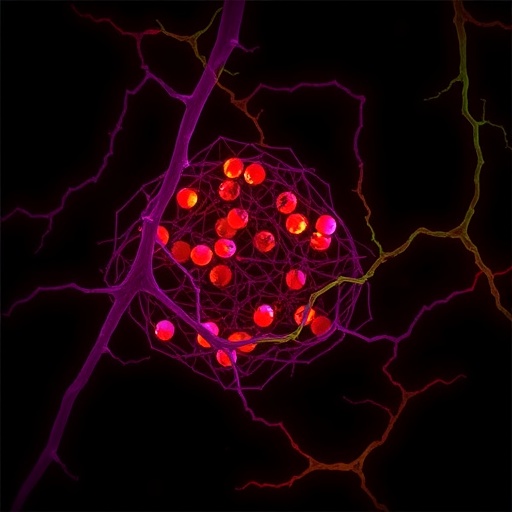
In the relentless pursuit of understanding cancer biology, recent advances in single-cell technologies have unveiled intricate details of the tumor microenvironment that were once hidden in bulk tissue analyses. A groundbreaking study by Jiang et al. published in Medical Oncology sheds light on the complex interplay between specific fibroblast populations and their role in hepatocellular carcinoma (HCC), the predominant form of primary liver cancer. This research heralds a paradigm shift by elucidating how distinct fibroblast stromal lineages orchestrate extracellular matrix (ECM) remodeling and immune modulation, driving tumor progression in HCC.
Hepatocellular carcinoma continues to pose a significant clinical challenge worldwide due to its aggressive nature and poor prognosis. While the malignant hepatocytes themselves have been extensively studied, growing evidence implicates the tumor microenvironment (TME) as a vital determinant of cancer evolution and therapeutic resistance. Fibroblasts, being key components of the stromal compartment, contribute not only structurally but also functionally, influencing cancer cell behavior and immune responses. However, the heterogeneity of these fibroblasts within HCC has remained largely unexplored—until now.
Utilizing state-of-the-art single-cell RNA sequencing (scRNA-seq), Jiang and colleagues meticulously profiled fibroblast populations isolated from HCC tumors and adjacent non-tumorous liver tissues. This high-resolution approach allowed the identification of discrete fibroblast subtypes with lineage-specific gene expression signatures, unveiling functional diversity that was previously masked. Their findings underscore that fibroblasts in HCC are not a homogeneous population; instead, lineage-specific subsets distinctively contribute to ECM remodeling and modulate the immune landscape.
The study revealed two major fibroblast stromal subtypes within the HCC TME. The first subtype exhibited a strong profibrotic transcriptional profile characterized by overexpression of collagen and other matrix components, contributing directly to ECM deposition and stiffening of the tumor stroma. This matrix remodeling is pivotal, as a dense, altered ECM not only supports tumor growth and invasiveness but also creates a physical barrier limiting immune cell infiltration and therapeutic drug delivery. Such fibrotic stroma resembles features of liver cirrhosis, emphasizing the harsh microenvironment faced by immune effector cells.
Conversely, the second fibroblast subtype was more immunomodulatory in nature. These cells showed enrichment of chemokines and cytokines implicated in immune cell recruitment and polarization. Intriguingly, this subtype exhibited expression patterns related to immunosuppression, suggesting an active role in establishing an immune-privileged niche that favors tumor immune escape. The dual functionality of these fibroblast subtypes — sculpting ECM architecture while dampening anti-tumor immunity — exemplifies their multifaceted influence on HCC progression.
Dissecting the molecular pathways underpinning these lineage-specific fibroblast functions, the researchers identified key regulatory networks driving stromal cell specialization. Transforming growth factor-beta (TGF-β) signaling emerged as a central axis governing profibrotic fibroblast activation, consistent with its well-documented role in fibrosis and tumorigenesis. Meanwhile, the immunomodulatory fibroblast subtype was associated with heightened NF-κB pathway activity, further linking inflammatory signaling to immune landscape reprogramming.
Beyond mere characterization, the study explored how these fibroblast subsets spatially organize within the tumor milieu using integrative spatial transcriptomics and immunohistochemistry. The profibrotic fibroblasts preferentially localized at invasive tumor fronts, reinforcing their role in ECM remodeling to facilitate metastatic spread. In contrast, immunomodulatory fibroblasts were enriched in perivascular regions, potentially affecting immune cell trafficking and function. This spatial heterogeneity underscores the complexity of stromal-tumor-immune crosstalk in HCC’s ecosystem.
Importantly, the authors demonstrated that the abundance and activation states of these fibroblast subtypes correlated with clinical parameters such as tumor grade and patient survival. Higher expression of fibrotic markers aligned with advanced disease and poorer outcomes, supporting the clinical relevance of their findings. This correlation hints at the therapeutic potential of targeting fibroblast-mediated pathways to disrupt ECM remodeling and improve immune responsiveness in HCC.
In a striking series of functional assays, Jiang et al. manipulated fibroblast subpopulations in ex vivo co-culture models of HCC, observing pronounced effects on tumor cell proliferation and immune cell cytotoxicity. By dampening profibrotic fibroblast activity, there was a notable reduction in collagen deposition and stiffness, enhancing T-cell infiltration and killing efficiency. Conversely, blockade of fibroblast-derived immunosuppressive cytokines revitalized anti-tumor immunity, showcasing promising avenues to exploit stromal vulnerabilities.
These findings provide compelling evidence that distinct fibroblast lineages serve as master regulators within the HCC microenvironment, coordinating the physical and immunological landscapes that either thwart or facilitate cancer progression. The study’s integrative use of single-cell genomics, spatial biology, and functional validation embodies the cutting-edge approach essential for unraveling the multifactorial nature of tumor ecosystems.
From a translational perspective, the delineation of fibroblast heterogeneity opens doors for innovative therapeutic strategies. Targeting the profibrotic fibroblast subset could attenuate the desmoplastic barrier, rendering tumors more accessible to chemotherapies and immunotherapies. Concurrently, modulating the immunosuppressive fibroblast network might potentiate immune checkpoint blockade efficacy by dismantling stromal-induced immune evasion.
Furthermore, the comprehensive fibroblast lineage atlas generated by this study offers valuable biomarkers for patient stratification and treatment monitoring. Imaging agents or liquid biopsy approaches could be developed to non-invasively assess stromal composition, guiding personalized interventions. Ultimately, such stromal-centric paradigms could synergize with existing oncologic therapies to achieve durable clinical responses in HCC.
The revolutionary insight presented by Jiang et al. exemplifies the transformative impact of single-cell technologies in cancer research. Their work not only advances fundamental understanding of stromal heterogeneity in hepatocellular carcinoma but also charts a promising course for stromal-targeted interventions. As the field moves toward integrated, systems-level cancer therapeutics, dissecting and manipulating the tumor microenvironment remains a cornerstone of next-generation oncology.
This study is a clarion call to researchers and clinicians alike, emphasizing the need to transcend tumor cell-centric views and embrace the intricate cellular ecosystems that govern cancer biology. The elucidation of lineage-specific fibroblast subtypes as pivotal architects of ECM remodeling and immune modulation in HCC lays a robust foundation for future explorations aimed at conquering this formidable malignancy.
With hepatocellular carcinoma representing a global health burden with limited effective treatments, the insights from this research spotlight fibroblasts as critical allies or adversaries in cancer progression. Targeting these stromal drivers holds the promise to reshape therapeutic landscapes and improve patient outcomes, heralding a new era where the microenvironment is as actionable a target as the tumor itself.
In conclusion, the elegant integration of cutting-edge single-cell techniques with functional and spatial analyses in this study unravels the complexity of fibroblast subtypes in HCC. As we deepen our understanding of how these stromal cells modulate ECM architecture and immune landscapes, new windows for precision medicine emerge. Jiang et al. have not only illuminated a vital facet of hepatocellular carcinoma biology but also provided a roadmap for harnessing stromal biology to combat cancer more effectively.
Cite Scienmag News
Rowan B. (January 3, 2026). Single-Cell Study Identifies Fibroblast Roles in Liver Cancer. Scienmag. https://scienmag.com/single-cell-study-identifies-fibroblast-roles-in-liver-cancer/
Rowan B. "Single-Cell Study Identifies Fibroblast Roles in Liver Cancer." Scienmag, 3 January 2026, https://scienmag.com/single-cell-study-identifies-fibroblast-roles-in-liver-cancer/. Accessed 28 August 2026.
Rowan B. "Single-Cell Study Identifies Fibroblast Roles in Liver Cancer." Scienmag. January 3, 2026. https://scienmag.com/single-cell-study-identifies-fibroblast-roles-in-liver-cancer/


