


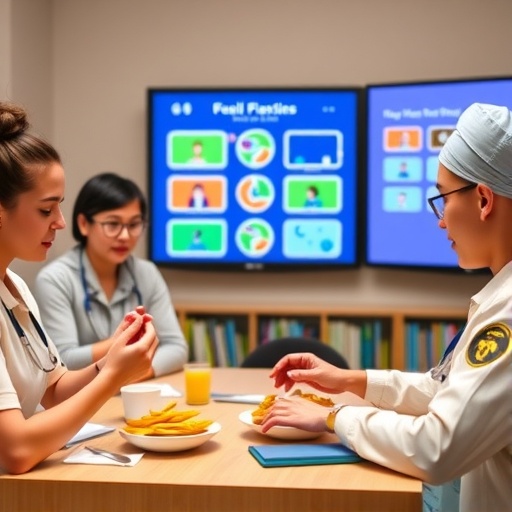
In a groundbreaking study published in BMC Medical Education, researchers have revealed compelling evidence on the impact of gamification in nutrition education, particularly among nursing students. The work, led by renowned experts including Bavil, R.G., Samad-Soltani, T., and Ghanbari-Homaie, S., demonstrates a transformative approach in the way medical education can be delivered. With gamification strategies applied in the curriculum, nursing students exhibited marked improvements in both knowledge retention and practical performance in nutritional context.
The concept of gamification involves integrating game-like elements into educational settings, thereby fostering a more engaging and interactive learning atmosphere. This study stands as a testament to the efficacy of such techniques. Nursing students who participated in the study underwent a tailored program that included challenges, reward systems, and team-based activities targeting essential nutritional knowledge. Such techniques were not merely additive; they fundamentally altered the students’ engagement levels in the subject matter.
Traditional educational methods often struggle to maintain student interest and commitment. However, by incorporating gamified elements, educators can stimulate enthusiasm and enhanced motivation among nursing students. The study highlighted that gamification promotes active participation, encouraging students to engage positively with course material. In the face of overwhelming information that healthcare students must assimilate, gamification helps distill critical concepts into digestible and memorable formats.
The researchers assessed the nursing students’ progress through a mixed-methods approach, indicating a marked improvement in knowledge acquisition. Pre- and post-intervention assessments demonstrated that students exhibited not only a deeper understanding of nutritional guidelines but also an increased ability to apply this knowledge practically. This includes enhanced confidence in advising patients regarding dietary choices, a crucial aspect in nursing practice.
Moreover, the study conducted follow-up observations that further corroborated the findings. Students retained higher levels of nutritional knowledge over time, suggesting that the gamification approach effectively ingrained essential facts into their long-term memory. This retention is particularly vital in the medical field, where timely and accurate knowledge can have profound effects on patient care.
Engagement metrics also skyrocketed throughout the duration of the study. Students reported higher satisfaction and enthusiasm levels during sessions that incorporated gamified elements. This transformation in attitude toward learning points to significant implications for how nursing education can evolve, making it more aligned with the preferences and learning styles of today’s students.
The enduring effects of gamification could even extend beyond nutrition education. The foundational techniques and strategies can be adapted to various other medical disciplines, potentially altering the landscape of how practitioners are educated across multiple specializations. This adaptability underscores the innovative nature of the study’s findings, motivating other educators to experiment with similar methodologies in their curricula.
Critics may challenge the sustainability of gamification, pondering whether its novelty can hold student interest over extended periods. However, researchers point out that ongoing integration and variation in game elements can maintain student engagement. Dynamic gamification experiences, which evolve alongside technological advancements, may offer solutions that keep learning fresh and exciting.
Moreover, the implications of this study extend into public health education. Given the critical state of nutritional knowledge within greater society, the principles of gamification may serve to inspire broader public outreach programs. By making nutrition education engaging and accessible to the general population, the ripple effects could potentially lead to improved dietary habits and overall health outcomes.
As healthcare continues to evolve in response to modern challenges, the incorporation of innovative teaching methods is essential. Gamification stands out as a beacon of possibilities, enabling students not only to learn but also to thrive in their chosen fields of nursing and healthcare. Awareness of nutritional science can significantly influence patient outcomes, and equipping future nurses with the tools and knowledge needed in this arena is paramount.
In conclusion, the research-led by Bavil and colleagues marks a significant step forward in educational methodologies within healthcare. The results underscore the potent effectiveness of gamification in enhancing the knowledge and performance of nursing students in nutrition. As the findings circulate throughout academia, one can anticipate a growing interest in implementing such strategies across various courses and educational platforms, heralding a new era in medical training.
The study not only advocates for a shift in educational paradigms but also underscores the intrinsic value of engagement in learning. By embracing gamification, the medical education system can foster a generation of healthcare professionals who are not only well-informed but also passionate about their roles in advocating for healthier communities.
Bavil, R.G., Samad-Soltani, T., Ghanbari-Homaie, S. et al. Impact of gamification-based nutrition education on nursing students’ knowledge and performance: a before-after intervention study.
BMC Med Educ (2026). https://doi.org/10.1186/s12909-025-08486-9
Cite Scienmag News
Daisy Hatcher. (January 3, 2026). Gamification Boosts Nutrition Knowledge in Nursing Students. Scienmag. https://scienmag.com/gamification-boosts-nutrition-knowledge-in-nursing-students/
Daisy Hatcher. "Gamification Boosts Nutrition Knowledge in Nursing Students." Scienmag, 3 January 2026, https://scienmag.com/gamification-boosts-nutrition-knowledge-in-nursing-students/. Accessed 1 September 2026.
Daisy Hatcher. "Gamification Boosts Nutrition Knowledge in Nursing Students." Scienmag. January 3, 2026. https://scienmag.com/gamification-boosts-nutrition-knowledge-in-nursing-students/


