


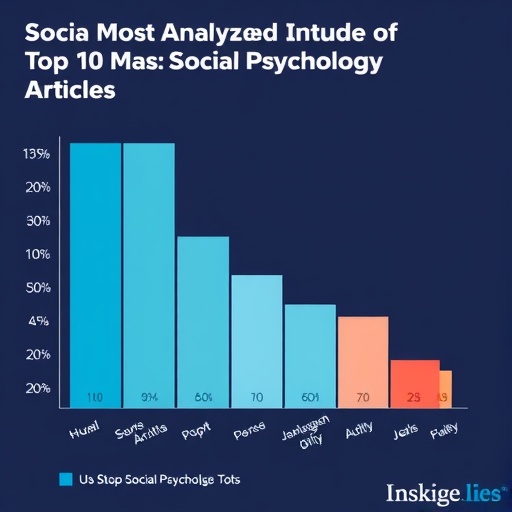
In a groundbreaking study, researchers Yu and Chen embarked on an extensive bibliometric and altmetric analysis to uncover the most influential articles in the realm of social psychology over a period spanning from 2000 to 2024. This meticulously curated analysis centered around the top 100 most cited articles within the discipline, offering invaluable insights into the evolving landscape of social psychology. What sets this study apart is not merely its ambition, but also the relevance of its findings in understanding the complexities of human behavior.
Social psychology, with its intricate focus on the interplay between individual thoughts, feelings, and behaviors in context to societal influences, has seen considerable evolution in its paradigms over the last two decades. Yu and Chen’s study dives deep into the citation metrics and altmetric data of pivotal articles published since the turn of the millennium, shedding light on which pieces have resonated most profoundly with the academic community and broader public alike. In doing so, they illuminate varying areas of inquiry that have captured attention and influenced current research trajectories.
In the realm of bibliometrics, citation counts serve as a critical measure of academic influence and scholarly impact. The authors highlight how these metrics not only reflect the popularity of certain topics but also signal the intellectual movements within social psychology. The collected data, which spans various themes such as group dynamics, social cognition, and interpersonal relationships, showcases the shifting focus of research priorities and societal questions in an increasingly interconnected world.
One of the fascinating aspects highlighted in the analysis is the rise of altmetrics, which provide a different lens through which to view scholarly impact. These metrics capture the discussion and dissemination of research findings beyond traditional academic circles, including social media engagement, news mentions, and online discussions. The authors argue that aligning bibliometrics with altmetrics offers a more complete picture of an article’s influence, revealing not just academic significance but also public reach and relevance.
Notably, the study identifies key articles that have become cornerstones of social psychology literature. The authors detail how these influential papers have not only generated significant citations but have also sparked wider discussions in public understanding of psychology. This intersection of academic research and public discourse underscores the significance of social psychology in addressing pressing societal issues ranging from mental health awareness to public policy reforms.
Furthermore, the analysis reveals demographic trends in authorship and institutional representation within the top-cited articles. Yu and Chen delve into how the affiliations of authors correlate with their research output, presenting vital information about diversity and representation in social psychology. This portion of their findings emphasizes the importance of inclusive research practices that can significantly enrich the field and broaden its relevance.
Another pivotal area of focus within this comprehensive analysis is the temporal evolution of topics within social psychology. By mapping out citation trajectories over time, Yu and Chen illustrate how certain themes have gained prominence, while others have waned in interest. The authors notice that discussions around social media’s impact on behavior, particularly post-2020, have surged, reflecting societal shifts in context due to global events such as the COVID-19 pandemic. This emphasis on real-time relevance connects the academic findings with everyday experiences, providing further model specificity to social psychological phenomena.
In conclusion, Yu and Chen’s bibliometric and altmetric analysis not only charts an academic landscape but also reveals profound insights into how social psychology has responded to contemporary challenges. The implications of this research are far-reaching, prompting psychologists, educators, and policymakers to reconsider the pathways of knowledge creation and dissemination within the field. By examining the intersection of academic rigor and public engagement, this study positions itself as a crucial reference point for understanding the trajectory of social psychology in the coming years.
As the authors suggest, the insights gleaned from this analysis of the top 100 most cited articles may encourage new researchers to align their work with prevailing trends or highlight gaps in the literature that need addressing. The comprehensive nature of this study serves as a call to action for the community, urging scholars to engage with the broader public, ensuring that their findings translate into actionable knowledge. The study not only enriches the existing body of knowledge in social psychology but also emphasizes the responsibility of psychologists in addressing societal issues through their research endeavors.
In essence, Yu and Chen’s analysis conveys a powerful message: the significance of research in social psychology extends beyond academia; it embarks on a journey towards fostering a better understanding of human behavior, which can ultimately lead toward improved social outcomes. By shining a light on the most cited works, the study offers a roadmap for future explorations that are as relevant to academics as they are to society at large, reaffirming the critical role social psychology plays in bridging the gap between theory and real-world application.
Cite Scienmag News
Glenn Wilkins. (December 27, 2025). Top 100 Most Cited Social Psychology Articles Analyzed. Scienmag. https://scienmag.com/top-100-most-cited-social-psychology-articles-analyzed/
Glenn Wilkins. "Top 100 Most Cited Social Psychology Articles Analyzed." Scienmag, 27 December 2025, https://scienmag.com/top-100-most-cited-social-psychology-articles-analyzed/. Accessed 4 September 2026.
Glenn Wilkins. "Top 100 Most Cited Social Psychology Articles Analyzed." Scienmag. December 27, 2025. https://scienmag.com/top-100-most-cited-social-psychology-articles-analyzed/


