


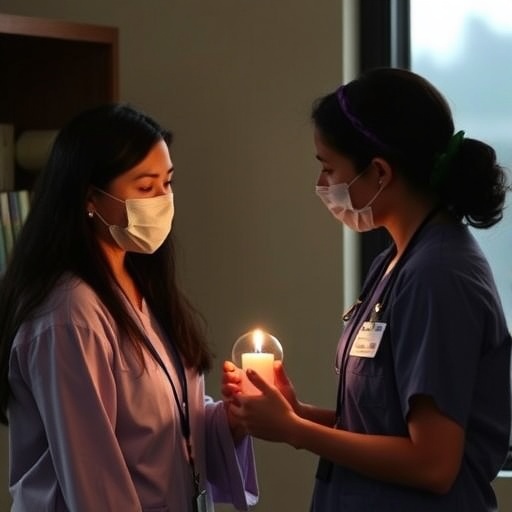
In the evolving landscape of healthcare, the significance of spiritual competence among nursing students has emerged as a critical aspect of their education and future practice. A recent cross-sectional study conducted by Janatolmakan, Kahrizi, Rezaeian, and colleagues highlights this pivotal theme, probing into how well nursing students are prepared to address the spiritual needs of their patients. The growing recognition of spirituality in patient care signifies a shift towards a more holistic approach, underscoring the need for nurses to possess not just clinical skills but also an empathetic understanding of their patients’ spiritual dimensions.
The study’s findings indicate a pressing necessity for educational institutions to reevaluate their curricula. As healthcare systems increasingly prioritize patient-centered care, understanding the spiritual landscape can enhance the quality of care provided to patients. Spirituality is often intertwined with health outcomes, and nurses play a vital role in recognizing and responding to the spiritual challenges faced by patients. By fostering spiritual competence, nursing programs can prepare students to better meet these complex needs.
One of the standout features of this research is its comprehensive nature, which surveys various nursing colleges to gather data on students’ perceived spiritual competence. The responses highlight a trend: while students exhibit a basic awareness of spiritual issues, there exists a significant gap in their confidence and ability to address these challenges in clinical settings. This revelation is crucial, as it suggests that while the awareness of the importance of spiritual care is growing, the practical skills necessary to implement such care effectively are lacking.
A key component of the study involved analyzing the factors that contribute to spiritual competence. The researchers discovered that personal beliefs, academic training, and exposure to spiritual care practices during clinical placements all significantly influenced students’ readiness to engage with patients’ spiritual needs. Notably, those who felt more comfortable discussing spirituality and those who had received specific training reported higher levels of spiritual competence. This correlation points to the imperative for nursing education programs to integrate comprehensive training focused on spirituality and holistic care into their curricula.
Furthermore, the study delved into the perceptions of faculty members overseeing nursing education. Insights from these educators reveal a shared concern regarding the adequacy of current training programs in equipping future nurses with the necessary skills to address spiritual care. Faculty highlighted that discussions around spirituality often take a back seat to more traditional topics, which can lead to a lack of preparedness for students entering the workforce. This concern aligns with wider discussions in health education about the need for a more balanced approach that includes various dimensions of care, including spiritual and emotional intelligence.
The implications of spiritual competence extend beyond personal patient interactions; they can deeply influence teamwork and interprofessional collaborations as well. Nursing students who are equipped to engage in spiritual discussions can foster a more holistic team dynamic, promoting a culture of care that values all aspects of a patient’s wellbeing. As healthcare teams increasingly operate in interconnected and multidisciplinary environments, the ability to support each other in addressing spiritual concerns could lead to improved patient outcomes and satisfaction.
Despite the encouraging data revealing students’ desire to enhance their spiritual competence, barriers to this growth remain. Limited opportunities for practice in clinical settings and the hesitance of faculty to engage deeply in spiritual discussions can hinder progress. To counteract these barriers, various strategies can be employed. Workshops, mentorship programs, and reflective practices can create more opportunities for students to explore spirituality in a safe and guided manner. Moreover, integrating such topics into simulation exercises can provide realistic scenarios in which students can practice these essential skills.
As healthcare becomes increasingly complex, the acknowledgment of spirituality as a dimension of patient care cannot be overstated. The COVID-19 pandemic has further exemplified the tumultuous interplay between physical health and spiritual wellbeing. The emotional strain on patients navigating their health journeys has heightened the relevance of spiritual care, urging nursing education systems to respond promptly. Embracing spiritual competence in nursing curriculums is no longer a luxury but a necessity in this new normal.
The exploration of spiritual competence among nursing students presents a valuable opportunity for continued scholarly discourse. Drawing from the insights of Janatolmakan et al.’s research, one can sense the urgent call to action for educational institutions. The need for interventional studies to implement effective training modules aimed at enhancing spiritual competence is apparent. If nursing educators can develop and evaluate these educational strategies systematically, the results could not only transform nursing education but ultimately lead to better care for patients.
Ultimately, this exploration also emphasizes the moral and ethical imperatives inherent in nursing as a profession. The principle of holistic care must firmly underlie nursing philosophies, challenging practitioners to evolve alongside the changing needs of patients. Spiritual health, once sidelined in discussions of patient care, should take its rightful place at the forefront, guiding healthcare professionals in their journeys to support patients fully. Nursing students are the next generation of practitioners who will uphold this essential tenet, and it is crucial that they are well-prepared for such responsibility.
Moving forward, communities and healthcare organizations should consider partnerships with educational institutions to champion initiatives that foster spiritual competence. Engaging in collaborative efforts could lead to the development of frameworks that support nursing students in gaining practical experience in spiritual care. Such a community-oriented approach not only enhances learning but also reinforces the commitment of healthcare systems to meet the holistic needs of patients.
In conclusion, as this crucial study by Janatolmakan and colleagues suggests, the journey towards integrating spiritual competence into nursing education is not without its challenges, but it is one worth pursuing. The potential benefits for patients and healthcare outcomes cannot be overstated. Empowering nursing students with the necessary competencies to address spiritual dimensions in healthcare promises a future where patients not only receive care but also find solace, understanding, and hope during their most vulnerable moments. It is this very essence of nursing that aspires to heal not just the body, but the spirit as well, establishing a framework for a more compassionate healthcare system.
Janatolmakan, M., Kahrizi, M., Rezaeian, S. et al. Spiritual competence among nursing students: A Cross-Sectional study.
BMC Med Educ (2025). https://doi.org/10.1186/s12909-025-08512-w
Cite Scienmag News
Celia A. (December 27, 2025). Nursing Students’ Spiritual Competence Explored in Study. Scienmag. https://scienmag.com/nursing-students-spiritual-competence-explored-in-study/
Celia A. "Nursing Students’ Spiritual Competence Explored in Study." Scienmag, 27 December 2025, https://scienmag.com/nursing-students-spiritual-competence-explored-in-study/. Accessed 29 August 2026.
Celia A. "Nursing Students’ Spiritual Competence Explored in Study." Scienmag. December 27, 2025. https://scienmag.com/nursing-students-spiritual-competence-explored-in-study/


