


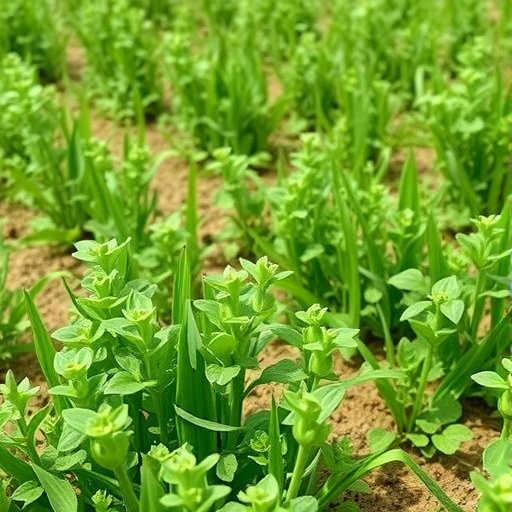
In a groundbreaking study published in BMC Genomics, researchers focused on the PHD family of genes in alfalfa, scientifically known as Medicago sativa. These findings are particularly significant in the context of agriculture and plant genetics, as drought stress poses severe challenges to crop productivity worldwide. Alfalfa, an important forage crop, is cultivated extensively for livestock feed and has been embraced for its nutritional benefits. As climate variability escalates, understanding how plants cope with drought has become crucial for ensuring food security.
The PHD (Plant Homeodomain) finger genes are a diverse group implicated in various regulatory functions in plants. In particular, they play a critical role in developmental processes and stress responses. The genomic identification of these genes in alfalfa provides crucial insights into their expression patterns under drought conditions, potentially guiding future breeding efforts for better drought resistance. This research offers a novel perspective on how we might enhance the resilience of important crops against water scarcity.
The methods employed in the study were comprehensive, involving genome-wide identification techniques that allowed the researchers to pinpoint all PHD family genes in the alfalfa genome. This bioinformatics approach was fundamental to developing a robust understanding of gene expression dynamics under stress. By utilizing advanced sequencing technologies and computational analyses, Wu and colleagues could compile a thorough database of the PHD gene family in Medicago sativa that had previously been underexplored.
Following the identification of these genes, the study progressed to analyzing their expression patterns. This involved subjecting alfalfa plants to controlled drought conditions to monitor how different PHD genes respond to water scarcity. The expression profiles revealed that certain genes were significantly upregulated, indicating their potential involvement in drought response mechanisms. Such findings suggest that these genes may be critical for enhancing drought tolerance in alfalfa, paving the way for future genetic studies and breeding strategies.
Moreover, the implications of this research extend beyond mere identification and expression analysis. Understanding the regulatory networks associated with these PHD genes could unearth new pathways for manipulating plant resilience. The exploration of epigenetic modifications and the interaction between different signaling pathways can provide a comprehensive understanding of how plants manage stress at a molecular level. As climate change increasingly impacts agricultural practices, this research offers a transformative approach to developing crops that can thrive in changing environments.
Importantly, the integration of genomic data with physiological assessments reveals the complexity of plant responses to drought. Alfalfa exhibits a range of adaptive strategies, from root development to leaf area reduction, all of which may involve the orchestration of PHD family gene regulation. Such multifaceted responses illustrate the adaptability of this crop species and highlight its potential as a model for understanding drought resistance in other plants.
The study’s results underscore the importance of the PHD genes not only in alfalfa but also in broader plant biology. The identification of conserved motifs among Arabidopsis and other model organisms suggests that insights gained from this research may inform genetic engineering and molecular breeding efforts across various crops. This interconnectedness of plant species highlights the value of comparative genomics in agricultural research.
As this field evolves, the application of genome editing technologies such as CRISPR/Cas9 presents exciting opportunities for enhancing drought tolerance in alfalfa. Through targeted modifications of key genes identified in this study, researchers could potentially create more resilient varieties, ultimately contributing to sustainable agricultural practices. This progress is essential as global agricultural production faces increasing pressure from climate change and population growth.
Furthermore, the rising interest in sustainable agricultural practices necessitates the need for crops that require less water and are more resilient under environmental stress. With alfalfa serving as a valuable forage crop, enhancing its drought tolerance not only benefits livestock production but also supports broader ecosystem health. By reducing water usage and improving the sustainability of forage systems, such research can have far-reaching effects on agricultural practices worldwide.
As climate conditions continue to evolve, the role of genetic research to support sustainable agriculture becomes ever more critical. This study has set the groundwork for future investigations into the genetic basis of drought tolerance, emphasizing the essential role of PHD genes. Building on these findings, future research could explore the potential for developing multi-stress tolerant crops that can withstand a variety of biotic and abiotic stresses, thus ensuring food security amid climate variability.
In conclusion, the research conducted by Wu et al. represents a significant advancement in our understanding of how PHD family genes contribute to drought stress tolerance in alfalfa. By comprehensively identifying these genes and analyzing their expression patterns, this study opens new avenues for biotechnological applications aimed at enhancing crop resilience. The prospect of breeding improved varieties that can thrive under adverse conditions holds considerable promise for future agricultural sustainability.
As we look forward to ongoing innovations in plant genetics, studies like this highlight the necessity for collaborative research efforts across disciplines to tackle the complexities of climate change. With the continuous evolution of both scientific inquiry and agricultural technologies, the future of crop resilience appears more promising than ever. Understanding the genetic mechanisms at play in plants like alfalfa will ultimately contribute to developing solutions that meet global food demands sustainably.
Cite Scienmag News
Juliet Wilcox. (December 26, 2025). Drought Stress: PHD Gene Expression in Alfalfa. Scienmag. https://scienmag.com/drought-stress-phd-gene-expression-in-alfalfa/
Juliet Wilcox. "Drought Stress: PHD Gene Expression in Alfalfa." Scienmag, 26 December 2025, https://scienmag.com/drought-stress-phd-gene-expression-in-alfalfa/. Accessed 1 September 2026.
Juliet Wilcox. "Drought Stress: PHD Gene Expression in Alfalfa." Scienmag. December 26, 2025. https://scienmag.com/drought-stress-phd-gene-expression-in-alfalfa/


