


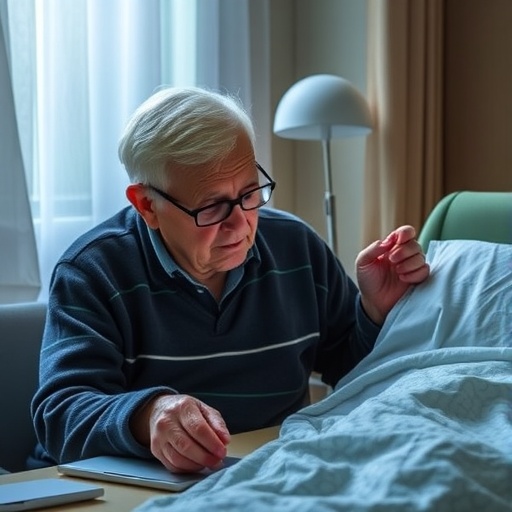
In recent years, the intersection between mental health and physical wellbeing has garnered increased attention from researchers, particularly in vulnerable populations such as the elderly. A multi-center cohort study conducted by Jin et al. has shed new light on the alarming association between self-reported loneliness and the incidence of community-acquired pneumonia among older adults. This phenomenon, prevalent yet often overlooked, prompts an urgent discussion about how loneliness can exacerbate health risks in this demographic.
This study aims to delve into the complex relationship between loneliness and pneumonia in older individuals, elucidating why addressing mental health is as critical as tackling physical health issues. Community-acquired pneumonia, a significant health threat for older adults, poses substantial risks due to weakened immune systems and other age-related health complications. The findings from this multi-center study highlight how loneliness not only impacts emotional well-being but also significantly correlates with physical diseases like pneumonia.
Loneliness is often defined as a subjective feeling of being isolated or disconnected from others, and it is particularly pronounced among the elderly. With societal changes leading to increased isolation, many older adults find themselves cut off from social interactions that are vital for their emotional and physical health. The study conducted by Jin and colleagues echoes previous research indicating that loneliness can lead to a decline in overall health, yet this specific focus on community-acquired pneumonia reveals critical intersections that demand attention from healthcare providers.
Within the framework of this research, the authors gathered data from various institutions, emphasizing the necessity of a broad, multi-center approach to fully comprehend the scale of loneliness’ impact. Participants were asked about their feelings of loneliness, alongside their medical histories, which included instances of pneumonia. The multi-faceted approach ensured a diverse representation and rich data, enabling researchers to draw robust conclusions.
Remarkably, the results of the study indicated that older adults who reported higher degrees of loneliness were significantly more likely to experience incidents of pneumonia compared to their less lonely counterparts. This correlation raises essential questions about the physiological mechanisms that may underpin this link. It is suggested that loneliness could trigger stress responses in the body, potentially leading to inflammation and reduced immune response, both of which are crucial in the context of infections such as pneumonia.
Moreover, the study probes deeper into potential confounding factors such as pre-existing health conditions and socio-economic status. Understanding these variables helps delineate the direct effects of loneliness on health outcomes, reinforcing the notion that interventions addressing loneliness could play a crucial role in improving health among older adults. Given the aging global population, the implications of this research extend far beyond individual health, impacting public health policies and resource allocation.
Another insightful aspect of this study is its focus on the concept of self-reported loneliness, which may differ from objectively measured isolation. This subjective experience can vary greatly among individuals, highlighting the complexity of mental health issues. It suggests that just because someone may physically be surrounded by others—whether in a community or a care facility—does not mean that they do not feel lonely. The internal, emotional landscape of older adults must be acknowledged and addressed to improve their overall health outcomes.
The implications of the findings from this study are profound. They suggest that healthcare providers should be vigilant not only in treating physical ailments but also in screening for mental health challenges such as loneliness. Comprehensive approaches, including social interventions and community outreach programs, could significantly enhance the quality of life for older adults and reduce their susceptibility to infectious diseases like pneumonia.
In conclusion, Jin et al.’s research opens a vital discourse about the intertwined nature of emotional and physical health among older adults. It emphasizes the urgency of addressing loneliness as a public health concern, particularly in light of the growing population of aging individuals. With community-acquired pneumonia posing a substantial risk, the establishment of supportive environments and increased social connectivity may offer a dual benefit—mitigating loneliness while enhancing physical health.
As we move forward, the findings from this multi-center cohort study underscore the need for a reimagined approach to elderly care—one that holistically considers both mental and physical health. The pathway to healthier aging lies not only in medical advancements but also in fostering strong community ties and emotional support systems, ensuring that older adults are both seen and heard in a society that often overlooks them.
By focusing on comprehensive health strategies that include mental well-being, stakeholders can better address the challenges faced by older populations. As this research illustrates, tackling loneliness could ultimately serve as a critical measure in preventing diseases like community-acquired pneumonia and enhancing the overall quality of life for older adults everywhere.
In conclusion, the intricate relationship between loneliness and health is irrefutably highlighted by this multi-centered study, echoing a clarion call for a shift in how we view aging and wellness. It is imperative that as a society, we not only seek to improve the health of our elderly population but also strive to nourish their connections and relationships, fostering a sense of belonging that transcends the challenges of aging.
Jin, J., Wang, Y., Weng, B. et al. The prevalence and influence of self-reported loneliness in the older with community-acquired pneumonia: a multi-center cohort study.
BMC Geriatr (2025). https://doi.org/10.1186/s12877-025-06741-8
Cite Scienmag News
Ophelia Keating. (December 25, 2025). Loneliness and Its Impact on Older Pneumonia Patients. Scienmag. https://scienmag.com/loneliness-and-its-impact-on-older-pneumonia-patients/
Ophelia Keating. "Loneliness and Its Impact on Older Pneumonia Patients." Scienmag, 25 December 2025, https://scienmag.com/loneliness-and-its-impact-on-older-pneumonia-patients/. Accessed 1 September 2026.
Ophelia Keating. "Loneliness and Its Impact on Older Pneumonia Patients." Scienmag. December 25, 2025. https://scienmag.com/loneliness-and-its-impact-on-older-pneumonia-patients/


