


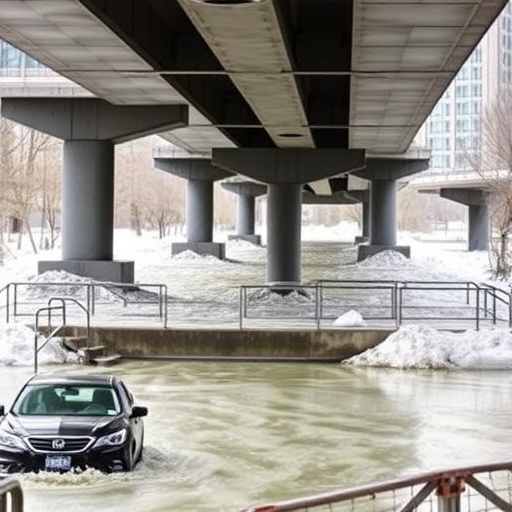
In an era defined by climate change and increasingly erratic weather patterns, urban infrastructure is put to the test like never before. One of the critical challenges facing cities across the globe is the increased risk of pluvial flash flooding. As more precipitation accumulates in shorter time frames, overpasses and other key structures are under growing pressure to remain resilient. Recent research conducted by Ziya, Sushama, and Almansour, featured in the journal Discover Cities, endeavors to shed light on this pressing issue, specifically focusing on the city of Montreal.
Montreal, a vibrant metropolis known for its rich culture and history, is not exempt from the threats posed by extreme weather phenomena. The city, traversed by intricate networks of bridges and overpasses, serves as the ideal case study for investigating the impacts of pluvial flash floods. As the authors articulate, urban areas with significant topographical variations face unique challenges when it comes to water management and flood mitigation strategies.
The study emphasizes that flash floods can result from intense short-duration rainfall, leading to rapid accumulation of water in urban landscapes. This phenomenon is particularly exacerbated in highly developed areas where natural drainage systems have been disrupted by concrete surfaces. The research team utilized advanced hydrological models to simulate how various levels of rainfall intensity impact overpass structures. Notably, the models were calibrated to reflect both current and projected climate scenarios, allowing accurate assessments of potential future impacts.
What sets this research apart is its detailed examination of the structural loads imposed on overpasses during pluvial flash flood events. The investigation revealed that these infrastructures are at risk of being overwhelmed by water volumes not previously accounted for in traditional engineering calculations. The implications of these findings extend beyond mere structural integrity; they highlight the necessity for municipalities to rethink their flood resilience strategies amid changing climate realities.
The potential failure of overpasses during flooding events could have catastrophic consequences, from obstructing transportation routes to causing significant damage to surrounding properties. In Montreal, such failures could disrupt the daily lives of thousands and impede emergency response efforts in times of crisis. The researchers argue for a re-evaluation of design standards to accommodate the heightened risks posed by climate change, particularly as urban populations continue to expand.
In their comprehensive analysis, the authors underscore the significance of incorporating climate projections into urban planning processes. As increasing rainfall variability becomes a hallmark of climate change, it becomes imperative for city planners and engineers to integrate such data into infrastructure development strategies. This means not only designing more robust overpasses but also investing in green infrastructure solutions, such as permeable surfaces and urban vegetation, which can reduce the speed and volume of runoff.
Alarmingly, the findings of the study align with global trends indicating that many cities are unprepared for the flooding and infrastructure strains induced by climate change. While numerous regions have begun implementing adaptive strategies, the speed and scale at which changes need to be made far exceed current efforts. This situation highlights a critical need for interdisciplinary collaboration among urban planners, engineers, and meteorologists to devise innovative solutions.
Moreover, public awareness and community engagement play crucial roles in addressing climate-related infrastructure challenges. The study by Ziya and colleagues advocates for increased education on flood risks and proactive measures that communities can take. Enhancing local flood preparedness and encouraging citizen involvement can significantly improve urban resilience to extreme weather in the long term.
With a multifaceted approach that includes data analysis, stakeholder engagement, and adaptation strategies, cities like Montreal can develop the tools necessary to manage and mitigate the impacts of pluvial flooding. Drawing from the insights of this research, it becomes clear that the intersection of climate science and urban infrastructure planning is more vital than ever.
As the effects of climate change continue to unfold, the call for immediate action becomes increasingly urgent. The future of urban overpasses and, by extension, urban cities themselves, depends on progressive thinking and innovative engineering. The ongoing discussions surrounding flood management must evolve to reflect the realities of a world facing unprecedented weather variability.
In conclusion, the research conducted by Ziya, Sushama, and Almansour is a wake-up call for cities globally, not just in Canada. As urban areas become more susceptible to the hazards of climate change, this invaluable study equips decision-makers with the knowledge needed to safeguard infrastructure against effective pluvial flash floods. With the right measures and a commitment to adaptive strategies, we can transform our cities into resilient bastions against nature’s unpredictable elements.
The time for action is now. The research stands as a beacon of understanding, urging cities to bolster their defenses against flooding events. Each city can incorporate these findings and adapt their infrastructure planning to mitigate the severe consequences of increasingly frequent flash floods. This insight serves as a crucial reminder that robust infrastructure and an innovative approach to urban planning are not just beneficial; they are essential for our communities’ survival and prosperity.
Cite Scienmag News
Violet Maxwell. (December 25, 2025). Assessing Pluvial Flash Flood Impacts on Montreal Overpasses. Scienmag. https://scienmag.com/assessing-pluvial-flash-flood-impacts-on-montreal-overpasses/
Violet Maxwell. "Assessing Pluvial Flash Flood Impacts on Montreal Overpasses." Scienmag, 25 December 2025, https://scienmag.com/assessing-pluvial-flash-flood-impacts-on-montreal-overpasses/. Accessed 3 September 2026.
Violet Maxwell. "Assessing Pluvial Flash Flood Impacts on Montreal Overpasses." Scienmag. December 25, 2025. https://scienmag.com/assessing-pluvial-flash-flood-impacts-on-montreal-overpasses/


