


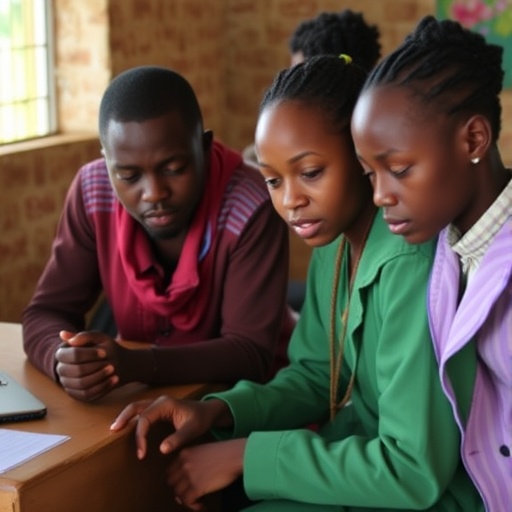
In recent years, the landscape of higher education has been significantly transformed by the increasing complexities of student life. Among the most noteworthy trends is the emergence of work-study programs, which allow students to balance academic pursuits with practical work experience. A recent study conducted by P.B. Tumuheki delves into this phenomenon, exploring the motivations behind students’ decisions to engage in work-study trajectories across Ugandan universities. This research not only sheds light on the reasons behind this choice but also highlights the broader implications for educational policy and job market readiness.
The study presents a multi-layered exploration of student motivations, utilizing qualitative and quantitative approaches to collect comprehensive data. It is particularly timely, given that the global job market is rapidly evolving, and many employers are seeking graduates with practical experience. Tumuheki’s research underscores the importance of understanding what drives students to pursue a work-study balance, especially in a context where educational resources may be limited and economic pressures are high.
Central to the investigation are the diverse factors influencing students’ decisions. Many students expressed a strong desire for financial independence, viewing work-study arrangements as a crucial way to support their educational expenses. In Uganda, where economic challenges are prevalent, the necessity of earning an income while studying cannot be underestimated. This financial motivation is often further compounded by family expectations and the responsibility students feel to contribute to household incomes.
Additionally, Tumuheki’s research reveals that beyond financial motivations, students are also driven by the desire to gain relevant work experience. As the competition for jobs intensifies, students recognize that having practical skills and experience can give them an edge in the job market. This realization has led many to actively seek out work-study opportunities that align with their field of study, thereby enhancing their employability upon graduation.
The study also examines the social dynamics involved in work-study programs. Many students reported that working while studying helped them develop professional networks that would be invaluable in their future careers. These networks can open doors to internships and job placements, providing a crucial bridge between academia and the professional world. The social dimension of work-study experience appears to foster a sense of community among students, creating peer support systems that complement their academic endeavors.
Moreover, Tumuheki’s findings indicate that academic performance, often perceived as jeopardized by work commitments, can actually improve in some cases. Students involved in work-study programs frequently reported better time-management skills, as they learn to juggle their responsibilities effectively. Successful navigation of the dual demands of work and study can lead to enhanced self-discipline and improved academic outcomes, challenging the common narrative that employment detracts from educational success.
Importantly, the study also addresses the challenges faced by students in balancing work and study commitments. Many participants noted the stress and fatigue associated with managing both responsibilities, which can sometimes lead to burnout. This aspect of work-study life highlights the need for universities to be aware of the burdens placed on students and to provide adequate support systems to help them manage their commitments successfully.
Tumuheki emphasizes the role of institutional support in enabling successful work-study arrangements. Universities are urged to establish policies that facilitate students’ engagement in work-study programs while also ensuring that students have access to academic resources and mental health support. By fostering an environment that recognizes the unique challenges faced by work-study students, institutions can help them thrive both academically and professionally.
In light of the findings, the research also raises critical questions about the role of government and educational policy in supporting work-study initiatives. There is a clear need for policies that provide financial aid and resources to students pursuing work-study opportunities, as well as incentives for employers to offer flexible work arrangements that are accessible to students. Such measures could help to create a more supportive ecosystem for student employment, ultimately leading to better educational outcomes.
The implications of Tumuheki’s research extend beyond Uganda, as the trends observed are reflective of a global shift towards integrating work and study experiences in higher education. As educational institutions around the world reassess their approaches to student engagement, the insights gleaned from this study will be invaluable in shaping future initiatives geared towards holistic student development.
This exploration of student motivations for engaging in work-study trajectories underscores the importance of nurturing a symbiotic relationship between education and employment. By addressing the financial, social, and academic dimensions of this experience, Tumuheki’s research paves the way for a greater understanding of how such programs can better serve students and prepare them for success in a competitive job market.
Through this profound investigation into the motivations of students engaged in work-study programs, Tumuheki invites educators, policymakers, and employers to rethink their strategies for supporting students in their dual roles. The findings advocate for a reimagined educational landscape that fully acknowledges and embraces the multifaceted realities of student life in the context of work and study.
As education systems worldwide adapt to the demands of the modern economy, the insights from Tumuheki’s study could act as a catalyst for the evolution of work-study programs, fostering environments where students can thrive academically while gaining essential experience for their future careers. The ongoing dialogue initiated by this research is crucial, as stakeholders in the education sector work in tandem to cultivate supportive, enriching, and practical learning experiences for all students.
Moving forward, it will be critical to monitor the long-term impacts of integrating work-study opportunities into educational frameworks, not only in Uganda but globally. The intersections of work and study present unique challenges and opportunities that deserve continued exploration and discussion, ensuring that every student is equipped for a successful transition into the workforce.
Tumuheki, P.B. A multi-layered exploration of students’ motivations for pursuing a work-study trajectory in Ugandan universities. Discov Educ 4, 558 (2025). https://doi.org/10.1007/s44217-025-00989-3
Cite Scienmag News
Celia A. (December 25, 2025). Unpacking Students’ Work-Study Motivations in Uganda. Scienmag. https://scienmag.com/unpacking-students-work-study-motivations-in-uganda/
Celia A. "Unpacking Students’ Work-Study Motivations in Uganda." Scienmag, 25 December 2025, https://scienmag.com/unpacking-students-work-study-motivations-in-uganda/. Accessed 28 August 2026.
Celia A. "Unpacking Students’ Work-Study Motivations in Uganda." Scienmag. December 25, 2025. https://scienmag.com/unpacking-students-work-study-motivations-in-uganda/


