


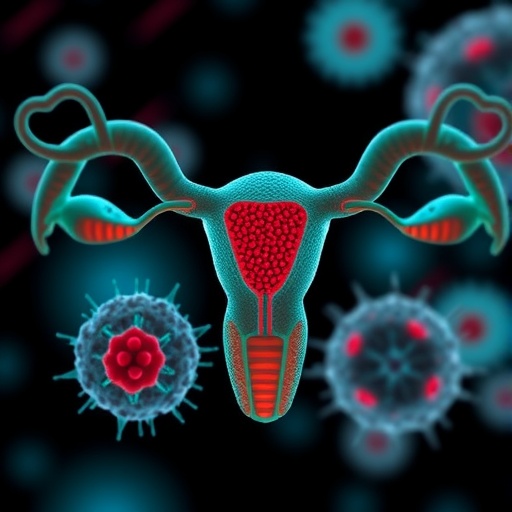
A revolutionary study sheds light on the aging process of the ovaries, placing extracellular vesicles derived from mesenchymal stem cells in the spotlight as game-changers in women’s reproductive health. Conducted by a team led by researchers Zhang, Chang, and Chang, this groundbreaking research promises to redefine our understanding of ovarian aging, particularly its inflammation-related aspects. By leveraging advanced biological techniques and methodologies, the researchers have unveiled critical mechanisms that contribute to the detrimental effects of aging on ovarian function.
At the heart of this study lies the crucial role of inflammation as a known contributor to various age-related health conditions. Within the ovarian context, the presence of inflammatory mediators has been linked to reduced fertility and compromised reproductive performance. By addressing inflammation, this research showcases a dual benefit: not only does it offer potential solutions for mitigating ovarian aging, but it also opens avenues for improved fertility treatments for women facing age-related reproductive challenges.
The researchers focused on a specific pathway involving LGALS3BP and NF-κB, two proteins that play significant roles in inflammatory processes within the body. LGALS3BP, a galectin-binding protein, is implicated in various inflammatory diseases and is suggested to be a major player in the ovarian aging process. NF-κB, on the other hand, is a well-documented transcription factor that, when activated, leads to the expression of pro-inflammatory cytokines. Together, the overactivation of this pathway has been shown to accelerate the aging of ovarian cells, resulting in diminished ovarian reserve and functionality.
To explore the therapeutic potential of mesenchymal stem cell-derived extracellular vesicles, the researchers formulated experimental conditions that mimicked ovarian aging. By isolating these extracellular vesicles, rich in bioactive compounds, the team was able to administer them to aged ovarian cells. Remarkably, the results indicated a significant reduction in inflammatory markers, suggesting that these vesicles possess inherent properties that can effectively modulate the inflammatory response in ovarian tissues.
One of the most compelling aspects of this research is the mode of action of these extracellular vesicles. It appears they operate through multiple mechanisms, including the inhibition of the LGALS3BP/NF-κB signaling pathway. The vesicles seem to deliver specific molecular signals that counteract the inflammatory cascade typically associated with ovarian aging. This nuanced interaction underscores the potential of extracellular vesicles as not just passive carriers of cellular products, but active participants in cellular communication aimed at rejuvenating cellular functions.
The implications of these findings extend beyond merely understanding ovarian aging; they highlight a transformative therapeutic strategy. By harnessing the regenerative properties of mesenchymal stem cells and their extracellular vesicles, researchers may develop novel treatments that promote ovarian health and combat age-related infertility. This aligns with the ongoing quest for innovative reproductive interventions that stand to benefit women globally, regardless of age.
Furthermore, the research also reinforces the potential of regenerative medicine in addressing not only ovarian aging but various other age-related physiological changes. As scientists continue to unravel the complexities of cell-to-cell communication and the biological functions of extracellular vesicles, the prospects for developing targeted therapies to combat aging-related challenges appear increasingly promising.
The study stands as a testament to the power of collaboration and interdisciplinary research in uncovering the nuances of biological aging. By integrating cellular biology, molecular medicine, and stem cell research, the team has paved the way for future studies that may delve deeper into the multifaceted relationships governing reproductive health. As additional studies validate these findings and expand upon them, we may witness a paradigm shift in how we approach aging in women.
Ultimately, the authors are hopeful that their discoveries will encourage further investigation into the therapeutic applications of extracellular vesicles in other organs, thereby broadening the horizons of regenerative medicine. In a world increasingly focused on longevity and quality of life, such breakthroughs in reproductive research are of utmost importance and relevance.
As researchers prepare for clinical trials, the excitement surrounding the practical applications of these findings continues to grow. The potential for extracellular vesicles to serve as a safe and effective treatment adds a layer of optimism for those grappling with the challenges of aging fertility. The implications for reproductive health, not just for individuals but for society as a whole, could be profound.
The journey ahead may be filled with challenges, yet the possibilities emerging from this research inspire hope. Researchers aim not only to enhance fertility outcomes but also to transform the narratives surrounding women’s health, aging, and reproductive choices. As more people become aware of the potential impact of these findings, the conversation surrounding women’s health and aging may shift dramatically, revealing new paths toward empowerment and informed decision-making.
In summary, as we stand on the cusp of a new era in reproductive health research, the insights gleaned from this study can catalyze transformative changes within a crucial area of women’s health. By dampening inflammation and improving ovarian function, mesenchymal stem cell-derived extracellular vesicles represent an exciting frontier, bridging the gaps between science, healthcare, and women’s well-being.
Zhang, S., Chang, M., Chang, Y. et al. Mesenchymal stem cells derived extracellular vesicles ameliorate ovarian aging through inhibiting LGALS3BP/NF-κB induced inflammation.
J Ovarian Res (2025). https://doi.org/10.1186/s13048-025-01943-5
Cite Scienmag News
Beatrice Stafford. (December 23, 2025). Stem Cell-Derived Vesicles Combat Ovarian Aging Inflammation. Scienmag. https://scienmag.com/stem-cell-derived-vesicles-combat-ovarian-aging-inflammation/
Beatrice Stafford. "Stem Cell-Derived Vesicles Combat Ovarian Aging Inflammation." Scienmag, 23 December 2025, https://scienmag.com/stem-cell-derived-vesicles-combat-ovarian-aging-inflammation/. Accessed 1 September 2026.
Beatrice Stafford. "Stem Cell-Derived Vesicles Combat Ovarian Aging Inflammation." Scienmag. December 23, 2025. https://scienmag.com/stem-cell-derived-vesicles-combat-ovarian-aging-inflammation/


