

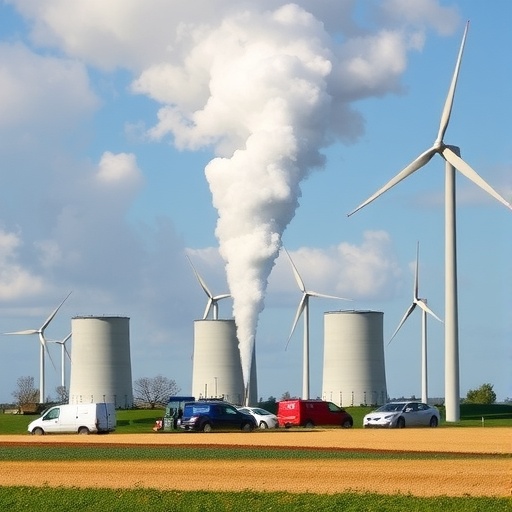
The recent study by R. Trabelsi delves deep into the critical nexus between energy sources and carbon dioxide emissions, all through the lens of two global giants: the United States and China. This comparison not only highlights the differing energy policies and practices but also exposes the intricate relationship between renewable and fossil energy resources and their respective impacts on CO₂ emissions across various sectors. Given the pressing challenge of climate change, understanding this dynamic is increasingly vital as nations strive for sustainable development.
China and the United States are two of the largest consumers of energy and, correspondingly, the two largest emitters of carbon dioxide globally. This research seeks to engage with the intricacies of their energy consumption patterns, evaluating the sectoral emissions of CO₂ in response to varying energy strategies. With the backdrop of climate accords and international commitments to reduce greenhouse gas emissions, Trabelsi’s findings offer significant implications for policy-makers and environmental advocates alike.
The methodology applied in this study is robust, utilizing empirical data derived from open sources over a substantial timeframe. This approach ensures that the findings are reflective of real-world dynamics, providing a sound basis for analysis. The author employs a variety of statistical tools to ascertain the weight of renewable versus fossil energy in shaping CO₂ emissions across different economic sectors, rendering a comprehensive picture of energy consumption trends.
An essential aspect discussed in the study is the transition from fossil fuels to renewable resources. The urgency to shift towards cleaner energy sources is accentuated by the stark reality of climate-related disasters fueled by carbon emissions. The paper highlights how investments in renewable technologies can significantly mitigate CO₂ emissions, particularly in the manufacturing and transportation sectors, which are major contributors to overall emissions in both nations.
Trabelsi’s research emphasizes the role of government policies in influencing energy consumption patterns. For instance, the contrasting energy policies of the two nations—China’s aggressive investments in renewable energy infrastructure versus the United States’ fluctuating energy policies—are scrutinized. The implications of these policies not only affect domestic emissions but also set a precedent for global energy practices and climate action strategies.
The study sheds light on sectoral analysis, dissecting the emissions data into relevant categories such as industry, transportation, and residential sectors. This granularity allows for a nuanced understanding of which sectors are leading in emissions and where the most significant improvements can be made. For instance, the findings reveal that while the industrial sector in China relies heavily on coal, the U.S. has seen remarkable progress in transitioning to cleaner alternatives within the same sector.
However, the research does not shy away from acknowledging the challenges. Transitioning to renewable energy systems comes with its own set of hurdles, including economic dependence on fossil fuels, infrastructural limitations, and political resistance. Trabelsi illustrates how these obstacles shape the pace at which both countries can feasibly reduce their sectoral emissions, highlighting that change is rarely linear or straightforward.
Moreover, the study posits that technological advancements play a crucial role in this energy transition narrative. Innovations in energy storage, grid management, and efficiency improvements are discussed as vital components that can aid in reducing CO₂ emissions. The author emphasizes that fostering an environment conducive to research and development can accelerate the shift towards sustainable energy sources in both nations.
On a global scale, the findings of this study are pivotal. As countries around the world grapple with the ramifications of climate change, understanding the pathways to decarbonization is essential. The empirical evidence presented demonstrates that strategies effective in the United States may not be directly translatable to China and vice versa, necessitating tailored approaches.
In conclusion, Trabelsi’s research serves as a clarion call to re-evaluate energy strategies and their implications on climate change. As nations worldwide ponder the future of energy consumption and its environmental impacts, the findings urge decision-makers to prioritize investments in renewable energy, push for policy reforms, and promote innovative solutions to combat the pressing challenge of CO₂ emissions. The transition to a sustainable future hinges on collective action and informed choices driven by empirical evidence.
Resulting from such an inquiry, the pathways to a low-carbon economy can be navigated more effectively, ultimately leading to a healthier planet for future generations. As we stand at this critical juncture, the insights gleaned from the U.S. and China energy paradigms may serve as blueprints for other nations aspiring to achieve similar sustainability goals in the face of a climate crisis.
Trabelsi, R. Impact of renewable and fossil energy on sectoral CO2 emissions: empirical evidence from the United States and China.
Discov Sustain (2025). https://doi.org/10.1007/s43621-025-02320-4
Cite Scienmag News
SCIENMAG. (December 22, 2025). Renewable vs. Fossil Energy: CO2 Emissions Insights. https://scienmag.com/renewable-vs-fossil-energy-co2-emissions-insights/
SCIENMAG. "Renewable vs. Fossil Energy: CO2 Emissions Insights." Scienmag, 22 December 2025, https://scienmag.com/renewable-vs-fossil-energy-co2-emissions-insights/. Accessed 28 August 2026.
SCIENMAG. "Renewable vs. Fossil Energy: CO2 Emissions Insights." Scienmag. December 22, 2025. https://scienmag.com/renewable-vs-fossil-energy-co2-emissions-insights/


