


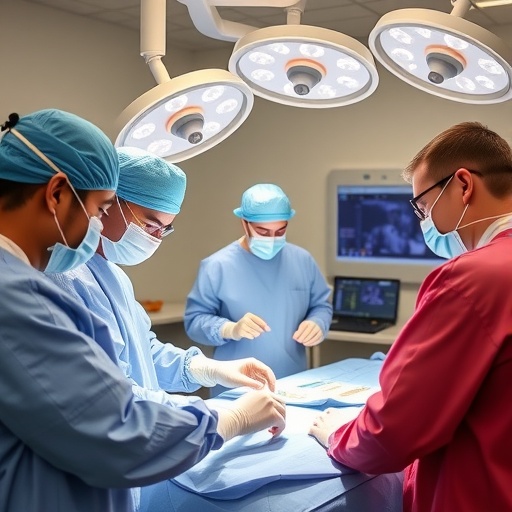
A groundbreaking study has emerged from the collaborative efforts of researchers, shedding light on the profound impact of structured reflective sessions on the medical education of operating room technology students. The research is a part of a larger discourse on innovative educational practices and aims to enhance both theoretical knowledge and clinical skills within this vital sector of healthcare. As healthcare continues to evolve, it becomes increasingly crucial to equip future healthcare professionals with the tools needed to thrive in dynamic operating environments.
At the heart of this study lies a rigorous methodology based on the Solomon four-group design, an experimental framework that enhances the reliability of the findings. This approach allows researchers to assess the influence of reflective practices on learners by utilizing multiple groups, providing a nuanced understanding of how structured interventions can lead to improved outcomes. By strategically incorporating reflective sessions, the study seeks to unlock insights that will not only benefit the students involved but also influence curricular decisions in medical education.
The importance of structured reflection in medical training cannot be overstated. Traditionally, medical education has leaned heavily toward rote learning and technical skill acquisition, often neglecting the cognitive and emotional aspects of clinical practice. This study aims to fill that gap by introducing systematic reflection sessions that encourage students to synthesize their learning, engage in critical thinking, and develop a deeper understanding of their roles as future healthcare providers.
Participants in the study were divided into several groups, each experiencing varying degrees of intervention intensity. Those assigned to the experimental groups engaged in structured reflective sessions, allowing them to process their experiences in a guided manner. In contrast, control groups received standard instruction without the reflective component, serving as a benchmark for measuring the effects of the intervention. Through this experimental setup, the researchers gathered invaluable data about the efficacy of integrating structured reflection into medical curricula.
Initial findings have indicated that students who participated in structured reflective sessions demonstrated significant improvement in their clinical decision-making skills and overall confidence when faced with real-world challenges. These students reported a greater ability to articulate their thought processes during clinical scenarios, highlighting the positive impact of reflection on self-awareness and professional growth. They felt more prepared to enter the operating room, indicating that reflective practices may bridge the gap between theoretical knowledge and practical application.
Moreover, beyond individual skill enhancement, the study also indicated a ripple effect on group dynamics and teamwork in clinical settings. Participants who engaged in reflective practices tended to foster a greater sense of collaboration and communication among their peers. This is particularly important in the operating room, where teamwork and clear communication are paramount to patient safety and successful outcomes. The findings suggest that integration of reflective practices in training might cultivate a culture of learning and support among future healthcare teams.
The significance of these findings extends beyond the immediate cohort of students involved in the study. As medical education institutions seek to adapt to the ever-changing landscape of healthcare delivery, insights from this research offer a pathway toward improving teaching methodologies and learning environments. By adopting a more reflective approach within curricula, programs can proactively address the challenges faced by students, ultimately enhancing the quality of patient care delivered by the next generation of healthcare professionals.
The potential for structured reflection extends beyond clinical skills and interpersonal dynamics. It also has implications for lifelong learning and professional development, as the ability to reflect critically on one’s experiences is a core competency for any medical professional. Given the rapid advancements in medical science and technology, promoting a culture of continuous improvement through reflection is essential for ensuring that healthcare providers remain adept and informed.
As the medical workforce grapples with increasing complexity in patient care, the role of reflective practice becomes ever more pertinent. Engagement in structured reflections equips students with the resilience and adaptability needed to navigate challenging scenarios that arise in the operating room. As they reflect on their experiences and learn from both successes and failures, they cultivate the mindset necessary for responding to unpredictable clinical situations.
The study’s outcomes are not only a promise for enhanced educational practices but also emphasize the importance of research in shaping the future of medical education. By presenting empirical evidence that underscores the benefits of structured reflective sessions, the researchers contribute to a growing body of literature aimed at transforming how healthcare professionals are trained. This evidence can serve as a catalyst encouraging other institutions to consider adopting similar frameworks into their educational practices.
Ultimately, the ripple effects of structured reflective sessions might extend into the broader healthcare community. As more students graduate with enhanced knowledge and refined clinical skills, the quality of patient care is likely to improve substantially. The transformation of operating room technology students from mere participants to confident practitioners can have far-reaching consequences, influencing patient outcomes and healthcare systems as a whole.
In conclusion, this pioneering study showcases the critical need for innovative approaches in medical education. By leveraging structured reflection, educators can not only uplift individual self-efficacy among students but also foster an environment conducive to teamwork, communication, and lifelong learning. As medical programs worldwide consider the implications of these findings, the integrated approach to education may very well define the trajectory of future healthcare practices.
Exploring avenues for future research is essential as well. As this study indicates promising results, the next step will be to explore how structured reflection can be effectively integrated across different facets of medical education. Investigating various domains, including surgical training, emergency care, and patient communication, could provide richer insights into how reflection across disciplines can bolster education and practice.
At the core of medical training lies the aspiration to produce not just competent professionals but compassionate individuals. The thoughtful incorporation of reflective practices fosters the development of empathetic providers equipped to advocate for their patients. As the lines between training and practice continue to blur in the ever-evolving landscape of healthcare, integrating structure and reflection may ultimately represent a pivotal step in preparing future healthcare heroes for the journey ahead.
Cite Scienmag News
Courtney Benton. (December 21, 2025). Structured Sessions Boost Skills in Operating Room Students. Scienmag. https://scienmag.com/structured-sessions-boost-skills-in-operating-room-students/
Courtney Benton. "Structured Sessions Boost Skills in Operating Room Students." Scienmag, 21 December 2025, https://scienmag.com/structured-sessions-boost-skills-in-operating-room-students/. Accessed 1 September 2026.
Courtney Benton. "Structured Sessions Boost Skills in Operating Room Students." Scienmag. December 21, 2025. https://scienmag.com/structured-sessions-boost-skills-in-operating-room-students/


